SrI: SrImathE SatakOpAya nama: SrImathE rAmAnujaya nama: Srimath varavaramunayE nama:
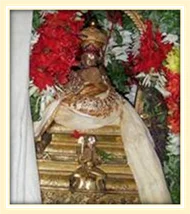
pinbazhagiya perumAL jIyar at the lotus feet of nampiLLai, SrIrangam
vArthAmAlai contains significant concepts from our philosophy, sampradhAyam, as passed down by our pUrvAchAryas. These upadhESams, along with their important life events, were summarised by pinbazhagarAm perumAL jIyar (nampiLLai’s very dear Sishya and the author of 6000 padi gurumparA prabhAvam). While the historical events can be comprehended through reading, the in-depth analysis of our sidhdhAntham – specifically chith, achith, ISvaran which have been analysed in many vArthais and explained can be a bit difficult to grasp. A good amount of knowledge in SAsthram and fundamentals of vEdhAntham is required to understand these sections. puththUr swAmy has provided detailed explanations for these complex concepts, with which we are learning this grantham. We are also grateful to puththUr swAmy for having published this grantham.
The following article is a translation from SrI u vE sArathy thOthAthri swAmy’s thamizh kAlakshEpam on this vArthAmAlai grantham. We are grateful to swAmy for giving us this opportunity and also for his continuous help in publishing these.
In this context, vArthais means teachings given by AchAryas passed down through disiciplic succession. These vArthais have been summarised in this grantham.
While reading this, an important points to keep in mind is that occasionally we may find the same concept repeated across different vArthais with slightly different interpretations. This occurs because the focus of explanation differs among different AchAryas to emphasise specific aspects.
vArthai 33
Summary of vArthai 33:
- SEshathvam – the state of accepting perumAL as refuge and performing kainkaryam is explained
- thirumanthram comprises three words – praNavam, nama: and nArAyaNAya.
- Those who don’t understand that bhagavAn is the master and we are his servants, have a lack of knowledge in praNavam.
- Those who think body and AthmA are the same, have a lack of knowledge in nama:.
- Those who don’t have interest in performing kainkaryam, have a lack of knowledge in nArAyaNAya Sabdham.
- iLayaperumAL demonstrated knowledge of servitude.
- bharathAzhwAn demonstrated subservience and ananya SaraNathvam, or the state of having emperumAn alone as refuge.
- SathrugnAzhwAn demonstrated the highest level of bhagavath kainkaryam, which is performing kainkaryam to bhAgavathas.
- pirAtti and nammAzhwAr demonstrated SEshathva gyAnam, ananya SaraNathvam, and kainkarya ruchi.
Thirty-third vArthai
SEshathva gyAnam ilAdhArkku praNavaththil anvayamillai; dhEhAthma abhimAnigaLukku namassil anvayam illai; kainkarya ruchi illAdhArkku nArAyaNa padhaththil anvayam illai. SEshathva gyAnam irukkumpadiyai iLaiyaperumAL Achariththuk kAttinAr; enganE ennil – perumAL ‘nil’ enna, pirAttiyai munnittuk koNdu perumAL svAthanthryaththai azhiththup perumALukkum pirAttikkum adimai seygaiyAlum, ellai nilaththilE pirAttiyaip pirindhu paththu mAsam ARi irundha perumAL, iLaiyaperumALaip pirindhu pagal amudhu seyyAdhE “nAn unnai anRi ilEn kaNdAy” enRu pinthodarndhu iLaiyaperumALai, “nI enai anRi illai” enRu pinthodarum padiyA irukkaiyAlum;
svarakshaNaththil anvayam illAdha athyantha pArathanthryaththai SrI bharathAzhwAn Achariththuk kAttinAr; enganE ennil – “en magan mOvAyezha vENum” enRa kaikEyi AgiRa kALarAthriyinudaiya pApappattOlaiyaich chuttu “na mantharAyA nacha mAthurasyA dhOshO na rAjyO nacha rAgavasya | mathpApamEvAthra nimiththamASIth vana pravESa raghunandhanasya ||”, “vilalApa sabhAmadhyE jagarhE cha purOhitham”, “rAjyancha ahancha rAmasya dharmam vakthumihArhasi”, punaindha jadaiyum, uduththa mara uriyum, puzhudhiyArndha vadivum, thaLarndha nadaiyumAy, svarUpa hAniyai viLaippiththup piNanthinni irundha dhESaththai vittu, “enakku” enRu kaikEyi vayiRRil piRappu pinnE thaLLa, perumAL aruL munnE nadaththa, oru nadaiyilE onbadhu nadai nadandhu, ezhundharuLi irundha chithrakUtaththilE chenRu, vaguththa thiruvadigaLaip peRRu vidaikoNdu, pinbu avadhyam viLaikkum padaivIttil pugAdhE puRappadai vIttilE – “rAmAgamana kAnkshai”yOdE padhinAlAttainAL irundhapadiyAlum. ISvaranaip pENugaiyai SrISathrughnAzhwAn Achariththuk kAttinAr; enganE ennil – perumAL alladhu aRiyAdha SrIbharathAzhwAnai alladhaRiyAdhE, perumAL ugappin ellai nilaththilE adimai seygaiyAlum.
immUnRu arthaththaiyum pirAtti Achariththuk kAttinAL; enganE ennil; – kaikEyi varavyAjaththAlE perumAL vanaththukku ezhundharuLugiRa pOdhu piriyAdhE pinthodharndha uNarththiyAlum, perumALaip pirindhu thani irundha anRu thani iruppu mARath thAn thurumbu naRukkAdha svarakshaNaththil aSakthiyAlum, parikaramAy vandha thiruvadivAlilE kOLuththina neruppai “SIthO bhava” enRu aviththu ISvaranaip pENugaiyAlum.
ivvarthaththaip parmAchAryarAna nammAzhwArum AchariththukkAtinAr; enganE ennil; “kaNgaL sivandhu”, “karumANikkamalai”, “nEdumARkadimai” enRu mUnRu thiruvAimozhiyilE.
Explanation:
This vArthai explains these beautiful concepts shown in thirumanthram – SEshathvam (servitude), the state of accepting emperumAn as refuge, and kainkaryam. They are shown in the three words – praNavam, nama: and nArAyanAya. Furthermore, this vArthai has been explained through the personalities of SrI rAmAyaNam, highlighting how iLaiya perumAL, bharathAzhwAn, and SathrughnAzhwAn perfectly embodied these states.
SEshathva gyAnam ilAdhArkku praNavaththil anvayamillai; dhEhAthma abhimAnigaLukku namassil anvayam illai; kainkarya ruchi illAdhArkku nArAyaNa padhaththil anvayam illai
The important point in this vArthai is that those who do not understand that bhagavAn is the master and we are his servants, lack knowledge of praNavam. This means that if we have a clear understanding of praNavam, then we will realise that we are servants of bhagavAn.
Those who think that the body and AthmA are the same and consider taking care of the body is sufficient, lack the knowledge of ‘nama:’.
Those who do not have interest in performing service, lack the knowledge in the third word of the thirumanthram – nArAyanAya.
anvayam illai – means not having inclination or interest
SEshathva gyAnam irukkumpadiyai iLaiya perumAL Achariththuk kAttinAr
SEshathva gyAnam means ‘knowledge of servitude’. Achariththuk kAttinAr means ‘to show through actions”. We can truly understand servitude when we see the actions of iLaiya perumAL. He demonstrated this knowledge through his actions.
enganE ennil – perumAL “nil“ enna, pirAttiyai munnittuk koNdu perumAL svAthanthryaththai azhiththu perumALukkum pirAttikkum adimai seygaiyAlum,
In SrIvachana bhUshaNam, piLLai lOkAchAryar glorifies the nature of iLaiya perumAL in sUthram 83 “pasiyarAy iruppAr atta sORum uNNa vENum adugiRa sORum uNNa vENum ennumAppOlE” (Just as a very hungry person would say that he needs the food which is already cooked and the food which is being cooked). It is explained here in detail about iLaiya perumAL, how he remained well established in his service. The same explanation is illustrated in this vArthai.
iLaiya perumAL has never been separated from perumAL. Therefore, when he observed perumAL departing for the forest along with pirAtti, he wanted to join them. When perumAL asked him to stay back, iLaiya perumAL performed SaraNAgathi to perumAL in pirAtti’s presence and requested, “Do not leave me behind; take me with you ”.
Even though bhagavAn is independent and will act according to his own will, iLaiya perumAL restricted perumAL’s svAthanthryam (independence) by compelling that he has to perform service. In doing so, iLaiya perumAL firmly established his own svarUpam, which is performing service.
iLaiya perumAL removed perumAL’s svAthanthrayam and got his desire fulfilled. His desire was not out of self-interest, but rather to perform service in accordance with his svarUpam. As an incarnation of AdhiSEshan, performing kainkaryam was inherent to iLaiya perumAL; so, he insisted that perumAL accept his service.
In thiruppAvai thaniyan “nILA thunga sthanagiri thatI suptham udhbhOdhya krishNam pArArthyam svam Sruthi Satha siras sidhdham adhyApayanthI | svOchchishtAyAm sraji nigaLitham yA balAthkruthya bhungthE” (kaNNa (SrI krishNa) sleeps on the bosom of nappinnaippirAtti, who is the incarnation of nILA dhEvi (one of the consorts of emperumAn). Her bosom is like the slope of a mountain. ANdAL has imprisoned that kaNNa with the garland that she had donned earlier. She wakes up kaNNa and informs him about her pArathanthryam (being totally dependent on emperumAn) which has been clearly shown in vEdhAnthams which are the end portions of vEdhams. Let my salutations to her, who forcefully goes to emperumAn and enjoys him, be there forever).
Such was ANdAL’s state, and hence she forcefully performs kainkaryam to perumAL and insists that he accept her kainkaryam.
ellai nilaththilE pirAttiyaip pirindhu paththu mAsam ARi irundha perumAL,
perumAL remained separated from pirAtti for ten months,
iLaiyaperumALaip pirindhu pagal amudhu seyyAdhE “nAn unnai anRi ilEn kaNdAy” enRu pinthodarndhu iLaiya perumALai, “nI enai anRi illai” enRu pinthodarum padiyA irukkaiyAlum
iLaiya perumAL remained with perumAL until the end of the avathAram. iLaiya perumAL ascended to paramapadham first, and then perumAL ascended to paramapadham. After iLaiya perumAL ascended to paramapadham, perumAL was unable to bear the separation and did not have his morning bhOgam (food). He followed iLaiya perumAL and left for paramapadham.
For example, during maNavALa mAmunigaL’s thiruavdhyayana, periya perumAL does not take his bhOgam until his AchArya’s thiruvadhyayanam is completed. This incident illustrates the supreme importance perumAL places on his devotees.
In nAnmugan thiruvandhAdhi – 7 “nAnunnai anRi ilEn kaNdAy nAraNanE nI ennai anRi ilai” (Oh nArAyaNa! you would see that I have no refuge other than you, you too, do not have one to take care of, other than me). AzhwAr says, “We both cannot be separated from each other”.
iLaiya perumAL told perumAL that he could not live separated from him. perumAL felt the same way once iLaiya perumAL departed for paramapadham, and so he too ascended to paramapadham.
Thus, this vArthai demonstrates how iLaiya perumAL remained firm in his understanding of servitude. Through this example, one can understand how someone who possesses this knowledge ought to conduct onself.
dhEhAthma abhimAnigaLukku namassil anvayam illai
Those who are bewildered and believe that AthmA and body are the same lack the knowledge of nama:. ‘maha’ [mama] means ‘for me’ and ‘na’ means ‘not’ – hence, it translates to ‘not for me’. That is, ‘I do not exist for myself, but entirely for bhagavAn’. In other words, it is the understanding that it is neither appropriate for me, nor do I have the strength, to protect myself. nama: reveals that bhagavAn alone is the protector.
svarakshaNaththil anvayam illAdha athyantha pArathanthryaththai SrI bharathAzhwAn Achariththuk kAttinAr
bharathAzhwAn possessed extreme pArathanthryam. pArathanthryam means existing exclusively for bhagavAn, following his orders, and acting solely according to his desires.
svarakshaNaththil anvayam illAdha means that we must not endeavour to protect ourselves. bhagavAn must protect us. However, we can take up all actions as kainkaryam.
This aspect – that we can perform anything as kainkaryam but must not do anything to merely protect ourselves – is illustrated by piLLai lOkAchAryar in SrIvachana bhUshaNam. We do not have the ability to even pluck even a blade of grass on our own, yet, as loving service, we might even move a mountain. Many activities performed during uthsavams and thadhIyArAdhanam (service to bhAgavathas) are all done purely as kainkaryam and not as a means to achieve a goal. This is the identity of a servitude.
enganE ennil – “en magan mOvAyezha vENum” enRa kaikEyi AgiRa kALarAthriyinudaiya pApap pattOlaiyaich chuttu
kaikEyi desired for her son, bharathAzhwAn, to rule the kingdom. Ruling a kingdom indicates a state of independence; because a king is the leader, he acts independently, and everything happens according to his desire.
mOvAyezha vENum means growing a moustache and beard.
This is a worldly convention that indicates independence in a male (and dependence in a female). Through the SAsthram, we understand that SrIman nArAyaNan, the purushOththaman (the supreme person), is the only true purushan, or male and all others are females – even those possessing male bodies. Hence, all AthmAs are dependent, and bhagavAn alone is independent.
However, kaikEyip pirAtti believed that bharathAzhwAn, too, should possess this independence and rule like a purushan, just like SrI rAma.
kaikEyi AgiRa kALarAthriyinudaiya pApap pattOlaiyai suttu
kaikEyip pirAtti is compared to ‘kALarAthiri’, or a thick, dark, and long night. Since darkness indicates lack of knowledge, kaikEyip pirAtti’s act is viewed as pushing bharathAzhwAn into ignorance. Because bharathAzhwAn’s true nature is total dependence on the supreme lord, any attempt to force independence on him is akin to pushing him towards ignorance.
pattOlai means a written agreement; here, it refers to the boons she had received from king dhaSaratha. One of the boons was for SrI rAma to go to the forest, and the other was for bharathAzhwAn to rule the kingdom.
pApap pattOlai – That which pleases bhagavAn is puNyam and which displeases him is pApam. Since the boon acquired by kaikEyip pirAtti caused displeasure to bhagavAn, it is considered as a pApap pattOlai.
suttu– such a boon was rejected by bharathAzhwAn.
na mantharAyA nacha mAthurasyA dhOshO na rAjyO nacha rAgavasya | mathpApamEvAthra nimiththamASIth vana pravESa raghunandhanasya ||
In the thiruppAvai -15 “ellE iLam kiLiyE!… ” ANdAL nAchchiyAr says, “nAnE thAn Ayiduga“ (Let the fault be mine). In this pAsuram, ANdAL teaches that if someone accuses us of a fault, we should accept the blame ourselves even if we are innocent. This attitude is the hallmark of a true SrIvaishNava.
The reason for accepting a mistake we did not commit is the realisation that we have existed in this samsAram since time immemorial and have likely committed every possible sin. Even though we have found a righeous path in this life, received AchArya sambandham, and are living accordingly, we are still not perfect in pure conduct. Even if we have not committed that specific mistake in this life, we surely have in a previous one. Therefore, accepting the accusation without objection or defensiveness is the true essence of SrIvaishNava identity.
na mantharAyA – It is said that kaikEyip pirAtti loved SrI rAma so deeply that everyone used to wonder whether SrI rAma was kausalyAp pirAtti’s son or kaikEyip pirAtti’s son. However, her mind was corrupted by mantharA.
bharathAzhwAn initially believed that mantharA was the sole reason SrI rAma was sent to the forest. Later, he realised that mantharA could not be responsible, because it was ultimately kaikEyip pirAtti who accepted the advice.
nacha mAthurasyA – bharathAzhwAn initially thought that SrI rAma had to go to forest only because of kaikEyip pirAtti’s change of mind, and so he held her responsible. However, he changed his mind upon realising that even though kaikEyip pirAtti spoke those words, king dhaSaratha – who was well-versed in dharma SAsthram – should not have accepted it. And so he concluded that mantharA was not to blame.
bharathAzhwAn further contemplated that even though king dhaSaratha asked SrI rAma to leave for the forest, SrI rAma should not have accepted it. At this point, bharathAzhwAn thought it was SrI rAma’s fault.
Then again, he changed his mind, realising it was not even SrI rAma’s fault. Finally, bharathAzhwAn concluded that the situation – where perumAL had to go to the forest – arose mainly due to his own sins that he had to witness such an incident. He believed that if he had not been out of town, he could have prevented it. Therefore, he attributed SrI rAma’s exile to his own sins. This incident is illustrated here as an example of bharathAzhwAn’s state of pArathanthryam.
“vilalApa sabhAmadhyE jagarhE cha purOhitham” “rAjyancha ahancha rAmasya dharmam vakthumihArhasi”
After bharathAzhwAn returned from his uncle’s abode, he came to know that his father had died and SrI rAma had gone to the forest. He was somewhat able to bear that news, but when sage vasishta told him to accept the kingdom and rule, he found it unbearable. He was extremely distressed, wondering whether to cry for his father passing away, or for SrI rAma goning to the forest, or because the burden of the kingdom had been placed on his head. At that moment, he collapsed in front of the royal court and wept.
jagarhE cha purOhitham – purOhithar – priest. bharathAzhwAn became angry with sage vasishta, the royal priest saying that though he had performed the coronation for many kings, he had never crowned a younger brother while the elder brother was still alive.
rAjyancha ahancha rAmasya – bharathAzhwAn says that both the kingdom and he belong to SrI rAma. He states, “Just as the kingdom is SrI rAma’s property, I am also his property”.
punaindha jadaiyum, uduththa maravuriyum, puzhudhiyArndha vadivum, thaLarndha nadaiyumAy, svarUpa hAniyai viLaippiththup piNanthinni irundha dhESaththai vittu
bharathAzhwAn got ready to leave for the forest, just like SrI rAma. He wore matted hair, tree-bark clothes, his body still covered with dirt from his travel, and his walk weakened by exhaustion. In this state, he left the palace where his true nature was destroyed (i.e. where kaikEyip pirAtti lived).
“enakku” enRu kaikEyi vayiRRil piRappu pinnE thaLLa
He left the place where kaikEyip pirAtti lived, but he found it hard to walk because he was afraid that SrI rAma might not want to see him, since he was kaikEyip pirAtti’s son.
perumAL aruL munnE nadaththa
While the regret and fear of being kaikEyip pirAtti’s son pulled him back, he still moved forward towards perumAL by his divine grace.
oru nadaiyilE onbadhu nadai nadandhu
He was able to take one step forward only after taking nine steps. That’s how exhausted he was.
ezhundharuLi irundha chithrakUtaththilE chenRu
perumAL was in chithrakUtam and bharathAzhwAn went there.
vaguththa thiruvadigaLaip peRRu vidaikoNdu
bharathAzhwAn goes to chithrakUtam along with everyone from ayOdhyA. He hopes that even if SrI rAma does not take pity on him, he might empathise with the people of ayOdhyA and show them grace. He believes that if SrI rAma returns for the sake of the people of ayOdhyA, he would be happy. However, perumAL refuses to return, stating that he came to the forest in accordance with the commands of king dhaSaratha and will not return until all fourteen years are complete. Even after repeated pleas, SrI rAma does not relent. Consequently, bharathAzhwAn requests SrI rAma to grant him his divine pAdhukai, saying that he will use them to administer the kingdom.
pinbu avadhyam viLaikkum padaivIttil pugAdhE puRappadai vIttilE
When bharathAzhwAn returned, he chose not to enter thiru ayOdhyA. Recollecting the thoughts of SrI rAma’s departure from this very place made him fearful of the sins that has been caused. He did not want to live in thiru ayOdhyA in SrI rAma’s absence. He stayed on the outskirts in a small village called nandhigrAmam. This place where bharathAzhwAn lived can still be visited today.
“rAmAgamana kAnkshai”yOdE
He lived there waiting for SrI rAma to return, vowing that if he could not see SrI rAma after 14 years, the very next moment he would end his life.
padhinAlAttainAL irundhapadiyAlum
Living for fourteen years in waiting for SrI rAma, bharathAzhwAn demosntrated his dependence on perumAL.
As shown in nama:, emperumAn alone should protect us; this incident demonstrates our dependence on emperumAn. nama: also highlights ananya SaraNathvam – having emperumAn alone as refuge, and is perfectly demonstrated by bharathAzhwAn.
Further, nArAyaNa is explained below by showing how SathrughnAzhwAn demonstrated the meaning of the word nArAyaNAya.
ISvaranaip pENugaiyai SrISathrughnAzhwAn Achariththuk kAttinAr
pEnugai means nurturing.
SathrughnAzhwAn demonstrated how to act in accordance with bhagavAn’s desire. Although SathrughnAzhwAn was primarily devoted to bharathAzhwAn, but how this constitutes bhagavath kainkaryam is explained here.
enganE ennil – perumAL alladhu aRiyAdha SrIbharathAzhwAnai alladhaRiyAdhE perumAL ugappin ellai nilaththilE adimai seygaiyAlum
perumAL was everything for bharathAzhwAn, who knew no one other than perumAL. Similarly, bharathAzhwAn was everything to SathrughnAzhwAn. Just as bharathAzhwAn knew nothing besides perumAL, SathrughnAzhwAn knew nothing besides bharathAzhwAn.
The highest level of happiness for perumAL comes when someone performs kainkaryam for his servants. This concept is explained as prathama parva nishtai and charama parva nishtai. prathama parva nisthai is the first level, being a servant to bhagavAn. charama parva nishtai is the highest level, being a servant of bhAgavathas and AchAryas.
By being a servant to bharathAzhwAn, SathrughnAzhwAn perfectly demonstrated how to bring the ultimate level of happiness to perumAL.
How pirAtti and nammAzhwAr demonstrated these is further explaned below.
immUnRu arthaththaiyum pirAtti Achariththuk kAttinAL; enganE ennil
All three aspects – knowledge of servitude, dependence on perumAL alone as refuge, and the desire to perform loving service – were demonstrated by pirAtti.
kaikEyi vara vyAjaththAlE perumAL vanaththukku ezhundharuLugiRa pOdhu piriyAdhE pinthodarndha uNarththiyAlum
kaikEyip pirAtti had asked for a boon from king dhaSaratha, and based on that, perumAL went to the forest. For perumAL, going to the forest along with pirAtti, enjoying her company there, and killing rAvaNa was the ultimate objective. He simply needed an excuse to achieve this. kaikEyip pirAtti served as that excuse. Even though we may think that kaikEyip pirAtti asked for the boon and king dhaSaratha granted it, it was all bhagavAn’s divine will. It was bhagavAn’s wish to kill rAvaNa and fulfill the prayers of the dhEvathas.
When perumAL went to the forest, pirAtti did not separate from him choosing to stay back for 14 years. Instead, she declared that wherever he resides is heaven for her, and any place without him is hell.
pinthodharndha uNarththiyAlum – uNarththi is the realisation of servitude. Due to having this knowledge that we are servants of bhagavAn, pirAtti followed perumAL. It is said in SAsthram, “yEna yEna dhAthA gachchathi thEna thEna saha gachchathi”, meaning, wherever emperumAn goes, his servants must follow him. Thus, pirAtti demonstrated the SEshathva knowledge.
perumALaip pirindhu thani irundha anRu thani iruppu mARath thAn thurumbu naRukkAdha svarakshaNaththil aSakthiyAlum
This elaborates the meaning of nama:, it reveals that we should not try to protect ourselves; only bhagavAn must protect us. pirAtti demonstrated this principle during her ten month separation from perumAL . When thiruvadi’s tail was set on fire, she ordered the agni dhEvathA not to burn him, and agni dhEvathA obeyed her command. Even if pirAtti had ordered for the destruction of lankA, her word would have been fulfilled. She is the ISvarI for the whole universe, possessing all power. Yet, though the entire universe is under her influence, she did not attempt to protect herself. She firmly believed that taking protection into her hands would diminish the glories of perumAL. Furthermore, she knew she did not have perumAL’s permission to do so, and most importantly, she had realised that self-protection did not align within her true nature.
thurumbu naRukkAdha – In general context, thurumbu refers to the dharbam grass used during vaidhika rituals; and this implies refraining from the practices of karma yOgam, gyAna yOgam or bhakthi yOgam. However, in this specific instance, it signifies that pirAtti did not perform even the tiniest action to change her situation to be united with perumAL.
thurumbu naRukkAdha svarakshaNaththil aSakthiyAlum – Even if we have the strength to perform karma yOgam, gyAna yOgam and bhakthi yOgam, we must not perform them.
Thus, pirAtti demonstrated that she does not have strength to protect herself.
This is described in SrIvachana bhUSaNam, sUthram 82, “pirAtti svaSakthiyai vittAL, dhraupadhi lajjaiyai vittAL“, SrI mahAlakshmi abandoned her ability, dhraupadhi abandoned her shyness.
Through this it has been established that we are subservient to bhagavAn alone and bhagavAn alone must protect us.
parikaramAy vandha thiruvadivAlilE kOLuththina neruppai “SIthO bhava” enRu aviththu ISvaranaip pENugaiyAlum
The third aspect of kainkaryam – the importance of performing kainkaryam for bhagavAn’s servants – and how pirAtti practiced this are explained here with the following example. This represents the highest level of kainkaryam.
The first example demonstrated this same concept through SathrughnAzhwAn’s kainkaryam to bharathAzhwAn, an act that provides highest happiness to bhagavAn.
When thiruvadi went to lankA as perumAL’s servant, his tail was set on fire. Upon hearing that a bhagavAn’s servant’s tail was set on fire, pirAtti immediately prayed, “SIthO bhava“, be cool so that it would not hurt thiruvadi. By praying so and ensuring he was not in pain, pirAtti performed kainkaryam to a servant of bhagavAn; thereby indirectly serving bhagavAn.
Thus, we understand that pirAtti demonstrated three aspects. First, she demonstrated the svarUpam and SEshathva gyAnam revealed in praNavam by going to the forest along with perumAL. Second, she demonstrated that bhagavAn alone is our protector by staying in the aSOka vanam for 10 months without attempting to protect herself. Third, she practiced the principle that performing kainkaryam to bhagavAn’s servants is the highest level of service by saying “sIthO bhava” and ensuring thiruvadi does not feel pain.
ivvarthaththaip parmAchAryarAna nammAzhwArum AchariththukkAtinAr
The same three meanings revealed by praNavam, nama: and nArAyaNaya are demostrated by nammAzhwAr too.
paramAchAryan means first and great AchAryan. In the thaniyan “mAthA pithA yuvathayas thanayA vibhUthi: sarvam ya dhEva niyamEna madhanvayAnAm Adhyasyana: kulapathEr vakuLAbirAmam SrImath thadhangriyugaLam praNamAmi mUrdhnA” – “kulapathEr” refers to nammAzhwAr as the leader of SrIvaishNava kulam.
enganE ennil; “kaNgaL sivandhu”, “karumANikkamalai”, “nEdumARkadimai”, enRu mUnRu thiruvAimozhiyilE
In thiruvAimozhi 8th centum, the three padhigams “kaNgaL sivandhu”, “karumANikkamalai”, “nEdumArkadimai” are shown as examples.
In thiruvAimozhi 8.8 “kaNgaL sivandhu” jIvAthma svarUpam is explained. In thiruvAimozhi 8.8.2 “adiyEn uLLAn udal uLLAn” (Where AzhwAr should have said “en uLLAn“, he said “adiyEn uLLAn“ because AthmA is identified by servitude).
Thus, AthmA’s main identity as servitude, is clearly described here.
The first one and a half pAsurams in this padhigam are about paramAthma svarUpam. The rest 8 and a half pAsurams are about jIvAthma svarUpam. In this padhigam the meaning of praNavam is shown. In thiruvAimozhi 8.9 “karumANikkamalai”, ananyArha SEshathvam is shown. Other than bhagavAn we should not be dependent on anyone else.
In thiruvAimozhi 8.10 “nEdumARkadimai”, the concept of servitude towards bhAgavathas is revealed. It proves we are inherently servitors to bhAgavathas. AzhwAr highlights that ultimate servitude is directed towards bhAgavathas who are dear to bhagavAn, establishing it as the ultimate result and highest form of enjoyment.
Thus in these three padhigams the in-depth meanings revealed by praNavam, nama:, and nArAyaNAya are explained.
vArthai 34
Summary of vArthai 34:
- jIvathmA must consider themselves as:
- servant to bhagavAn.
- Not a servant to anyone else.
- Having the identity of being servant to bhagavAn.
- Free from ahankAram.
- Having sambandham with bhagavAn and his devotees
- As servant, the jIvAthmA must always perform kainkaryam to bhagavAn and his devotees.
thrithy-fourth vArthai
ISvara SEshabhUthan enRum, anya SEshathva nivruththan enRum, thadhvilakshaNa lakshaNa nirUpakan enRum, ahankAra nivruththan enRum, thathsambandha yukthan enRum, kinkarasvabhAvan enRum thannai anusandhippadhu
Explanation:
This vArthai explains how a jIvAthmA must consider itself.
ISvara SEshabhUthan enRum
The first aspect is that we are servants to ISvaran. In this context, ISvaran does not refer to rudhran. Although rudhran is commonly referred to as ISvaran in the world, the literal meaning of the word is ‘one who controls’.
Therefore, it should be understood that rudhran has merely adopted emperumAn’s name, ISvaran, for himself. This is similar to someone being named sArathy, which is originally krishNa’s name. Another reason is that rudhran has acquired the ability to exercise some limited control, and is thus called ISvaran. He received this ability from bhagavAn. In contrast, bhagavAn’s ISvarathvam is intrinsic and absolute. For example, the dhEvathA SanISvaran is not the true ISvaran; he simply holds certain powers. Similarly, rudhran possesses specific powers to control, which is why he is called ISvaran. They have both been granted those powers by bhagavAn.
Ultimately, the true ISvaran is SrIman nArAyaNa, the one to whom we are all SEshabhUthan (servants).
anya SEshathva nivruththan enRum
The thought that we are servant to someone else must not be present within us. We must know clearly that we are not servant to anyone else other than SrIman nArAyaNa and his servants.
thadhvilakshaNa lakshaNa nirUpakan enRum
thadhvilakshaNa – means highest identity. The identity that we are servant to bhagavAn is the highest identity.
jIvAthmA has the identity of being servant to bhagavAn.
ahankAra nivruththan enRum
One of the meanings of ahankAra is having an ego, but another important meaning is the mistaken identification of the body with the AthmA. ahankAram essentailly means understanding ourselves incorrectly. Therefore, jIvAthmA must be free from ahankAram.
thathsambandha yukthan eRum
We must know that we are servant to bhagavAn and his servants.
kinkarasvabhAvan enRum thannai anusandhippadhu
kinkaran means servant. In sanskrit, it is said – ‘kinkarO ithi kinkaraha’. One who is a servant will constantly keep asking “What should I do?”. jIvathmA should consider themselves as having this kinkara svabhAvam, the nature of a servant. One must constantly ask bhagavAn and his servants what service we can perform – and we must not stop with just asking but actively perform that service.
In the next article, we shall continue with the thirty-fifth vArthai.
AzhwAr emperumAnAr jIyar thiruvadigaLE SaraNam
jIyar thiruvadigaLE SaraNam
pinbazhagiya perumAL jIyar thiruvadigaLE SaraNam
Source:
- Audio – https://1drv.ms/u/s!AhgMF0lZb6nnhS-ElJ1dNuswH102?e=RU8MUN
- Video – https://youtu.be/rLbPq2W4vHY
adiyEn vidhyA rAmAnuja dhAsi
archived in https://granthams.koyil.org
pramEyam (goal) – https://koyil.org
pramANam (scriptures) – https://granthams.koyil.org
pramAthA (preceptors) – http://acharyas.koyil.org
SrIvaishNava education/kids portal – http://pillai.koyil.org