SrI: SrImathE SatakOpAya nama: SrImathE rAmAnujAya nama: Srimath varavaramunayE nama:
The following article is a translation from SrI u vE sArathy thOthAthri swAmy’s thamizh kAlakshEpam on this vArthAmAlai grantham. We are grateful to swAmy for giving us this opportunity and his continuous help in reviewing and publishing these.
In this series, we have been experiencing the vArthAmAlai bestowed by pinbazhagarAm perumAL jIyar. pinbazhagarAm perumAL jIyar was the noble disciple of nampiLLai. He possessed immense love for the thirumEni of nampiLLai. He had accepted the sannyAsa ASramam and was a jIyar swAmy, and nampiLLai was in the gruhasthASramam, pinbazhagarAm perumAL jIyar remained an extremely close and intimate disciple, staying with him and performing all services for him.
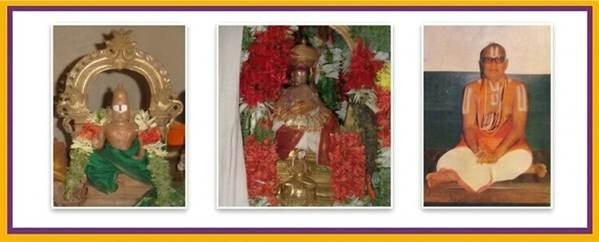
He is the author of guruparamparA prabhAvam 6000 padi. It is pinbazhagarAm perumAL jIyar who documented the history of our pUrvAchAryas up to the time of nampiLLai. He also bestowed upon us this beautiful grantham called vArthAmAlai. The word ‘vArthai’ means a message or a teaching. By compiling many historical events and instructions from the lives of the pUrvAchAryas, he strung them together into a beautiful garland of words for our sake. puththUr swAmy has beautifully published this work, providing a simple, explanatory commentary to clarify the difficult and profound meanings within these vArthais. We have been learning these deep meanings with the help of his commentary.
Many of these vArthais expound upon profound subjects such as the meanings of rahasya thrayam – thirumanthram, dhvayam, charama slOkam, thathva thrayam, and artha panchakam. The 40th vArthai beautifully illuminates the deep meanings embedded within the thirumanthram and the dhvaya mahAmanthram.
Fortieth vArthai
thirumanthraththAlE – rakshakathva prathisambandhi pUrvakamAna rakshyathvam solli, anyaSEshathva nivruththi pUrvakamAna ananyArha SEshathvam solli, achEthana vyAvruththi pUrvakamAna chEthana vailakshaNyam solli, ahankAra mamakAra nivruththi pUrvakamAna svarUpa pArathanthryaththinudaiya ellai solli, aupAdhika nivruththi pUrvakamAna nirupAdhika bandhuthvam solli, apurushArtha nivruththi pUrvakamAna purushArtha svarUpam sollith thalaik kattugiRadhu.
viSEshaNa pradhAnam – ASrayaNam; viSEshya pradhAnam – upAyam; ubhaya pradhAnam – upEyam. rakshakanAy SEshiyAy irukkum iruppai uNarugai – ISvara svarUpam; rakshyamAy SEshamAy irukkum iruppai uNarugai – Athma svarUpam; rakshakathva svAmithvangaL vyavasathithamAnAR pOlE SrIya:pathithvamum vyavasthitham; sva vyathiriktha samastha padhArthangaLum bhagavadh abhimAnaththilE kidakkiRadhu; puRambuLLAr ippadi sollAniRkach cheydhE thAngaL abhimAniyA niRpargaL.
thAy madiyilE kidandhu uRangugiRa prajai svapnaththilE puliyin kaiyilE agappattuk kUppidumApOlE thannai uNarndha dhaSai; kaNNai vizhiththuth thAy mugaththaip pArththu nirbbhayanAy irukkumApOlE – emperumAnai uNarndha dhaSai; upAya dhaSaiyil emperumAnAlE emperumAnaip peRumiththanai ozhiya, thandhAm nanmaikoNdu peRa ninaiyAr – svarUpa gyAnam udaiyAr.
indha svAthanthryam thalai eduththAl akAraththukku arhanallan; oruvanudaiya vruththaththai ittAdhal, janmaththai ittAdhal thaNNiyadhAga ninaikkil makAraththukku arhanallan; piRar thanakku rakshakar enRu irundhAnAgil ukAraththukku arhanallan; thanakkuththAn rakshakan enRu ninaiththapOdhu namassukku arhanallan;
than kAryaththukkuth thAn kadavan enRu ninaiththapOdhu nArAyaNapadhaththukku arhanallan; seydhadhoru kainkaryaththaith thAn ugaththal piRar ugaththal seyyil chathurthikku arhanallan; ivvartham oru adhikAri aRindhu thavirndhapOdhu thirumanthrArtham kaippugundhadhAgak kadavadhu; allAdhapOdhu thirumanthraththOttai sambandham sandhEhamAm iththanai enRu bhattar aruLichcheydhAr.
This vArthai is an upadhESam bestowed by parASara bhattar.
Although many of these concepts have been heard and experienced extensively before, the exact same truths are the presented from many different angles by our pUrvAchAryas . Every single AchArya has experienced the most vital rahasyam – thirumanthram in their own unique way. thirumanthram is referred to as the prathama rahasyam among the rahasya thrayam, possessing an immense glory.
prathama rahasyam mean the very first secret. thirumanthram, or the nArAyaNa manthram is also widely known as the ashtAksharam. It perfectly explains
- svarUpam of jIvAthma,
- svarUpam of paramAthma,
- svarUpam of upAyam,
- svarUpam of the virOdhi and
- svarUpam of the palam
These concepts are elaborated in many places. mumukshuppadi also highlights the revelation of artha panchaka knowledge in the thriumanthram. Such glorious truths contained in both the thirumanthram and dhvaya mahAmanthram are illuminated in this vArthai as well.
Part 1
thirumanthraththAlE – rakshakathva prathisambandhipUrvakamAna rakshyathvam solli
In this first section, six profound aspects are revealed. The thirumanthram consists of three words – praNavam, nama:, and nArAyaNAya. Furthermore, praNavam itself consists of three syllables – a, u, and ma. By analysing the entire manthram in this manner, the six specific truths are explained here.
The first word in the thirumanthram declares the state of rakshyathvam. In this relationship, bhagavAn acts as the protector, while all jIvAthmAs exist as the entities receiving that protection. rakshakathvam denotes this inherent protective nature. His role as the sole protector is established within the akAram – the letter ‘a’. As expounded in the mumukshuppadi commentary, the akAram originates from the samskritha dhAthu (root) “ava rakshaNE”, where the root word itself explicitly signifies rakshaNam, or the act of protection. Because this dhAthu establishes that bhagavAn inherently possesses the quality of protection, the corresponding state of the jIvAthmA being the protected entity is naturally revealed right within the akAram.
anyaSEshathva nivruththi pUrvakamAna ananyArha SEshathvam solli
The ukAram – where the letter ‘u’ explicitly denotes the exclusive emphasis – is meant only for emperumAn. While SEshathvam refers to the state of servitude, anya SEshathvam means being subservient to entities other than emperumAn. nivruththi denotes the complete and categorical rejection of such subservience to others. By first establishing this total removal of subservience to others, the ukAram reveals ananyArha SEshathvam, which is the state of being subservient exclusively to emperumAn.
Furthermore, the suffix Aya (in nArAyaNAya) – representing the hidden dative case – reveals that service is performed for emperumAn as his servitor, while the exclusive emphasis “only for emperumAn” is established directly by the ukAram.
achEthana vyAvruththi pUrvakamAna chEthana vailakshaNyam solli
This truth is contained within the makAram – the letter ‘ma’. This letter denotes the jIvAthmA, and possession of knowledge is its defining attribute.
achEthanam refers to non-sentient entities. Physical objects that we perceive – such as a stone, a piece of wood, a phone, or a flower – all lack knowledge and are categorized as achEthanam. vyAvruththi means being distinct or differentiated. The chEthanam (jIvAthmA) is entirely distinct from all these non-sentient entities. The vailakshaNyam, or the distinct glory of the chEthanam as possessing knowledge, is declared within the makAram.
Thus, through the three letters – akAram, ukAram, and makAram which constitute the praNavam, three core truths are established:
- In the akAram, emperumAn’s protective nature and the protection received by the jIvAthmA are revealed.
- In the ukAram, the truth that the jIvAthmA exists as a servitor exclusively to emperumAn alone is established.
- In the makAram, it is shown that the jIvAthma is a sentient chEthanan, completely distinct from all non-sentient achEthana entities.
ahankAra mamakAra nivruththi pUrvakamAna svarUpa pArathanthryaththinudaiya ellai solli
The word nama: declares the total cessation of ahankAram – the I-ness and mamakAram – Mine-ness. In nama:, ‘ma:’ signifies “I exist for my own sake”, while “na-ma:” negates this, declaring, “I do not exist for my own self-interest”. Thus, realising nama: completely eradicates both ahankAram and mamakAram.
Upon the eradication of these two, the ultimate boundary of svarUpa pArathanthryam – the AthmA’s inherent, complete dependence – is revealed. The svarUpam of the jIvAthmA relies entirely on emperumAn as its sole refuge. pArathanthryam denotes remaining completely subject to emperumAn’s divine will.
While nama: establishes that the jIvAthmA is a servitor dependent on emperumAn, the ultimate boundary extends even further; it reveals that the jIvAthmA is also a servitor to the bhAgavathas and must exist in accordance with their commands and guidance. This principle, that pArathanthryam reaches its culmination in service to bhAgavathas, is what is declared within nama:.
aupAdhika nivruththi pUrvakamAna nirupAdhika bandhuthvam solli
The word nArAyaNa – nArAyaNa and Aya reveals aupAdhika nivruththi pUrvakamAna nirupAdhika bandhuthvam.
The word aupAdhikam refers to that which arises due to a external condition or cause. All worldly relationships in this existence arise solely due to one’s karma. One’s birth, as well as the spouse, children, father, mother, grandfather, grandmother, relatives, and friends one attains, are the fruits corresponding to that karma. emperumAn evaluates one’s karma as if placing it on a scale, measuring out the exact result deserved, neither more nor less. Because these worldly bonds arise purely due to the karma, they are termed aupAdhikam. By negating these conditional relationships and recognising such worldly associates as non-relatives, the nArAyaNa reveals nirupAdhika bandhuthvam, or natural relationship.
The word nirupAdhikam means having no external cause or condition; it denotes a natural, eternal relationship. nArAyaNa is this natural relative. The word nArAyaNa carries two distinct meanings:
- emperumAn is the resting place and abode for all entities.
- emperumAn resides within everyone’s heart as the antharyAmi.
Thus, everyone resides within emperumAn, and emperumAn resides within everyone. Such a relationship exists with no other entity. While earthly parents support a child during early years, one cannot constantly rest upon them after growing up. However, all entities rest upon emperumAn at all times, as emperumAn continuously bears and sustains everyone. Similarly, no worldly relative permanently resides within the heart without separation. emperumAn alone remains as the antharyAmi, never departing, continuously following the AthmA since time immemorial, and constantly guiding the jIvAthmA towards what is good. Existing in this manner, emperumAn alone is the nirupAdhika bandhu, the causeless, eternal relative. This truth is brought out by the word nArAyaNa.
apurushArtha nivruththi pUrvakamAna purushArtha svarUpam sollith thalaik kattugiRadhu
Within nArAyaNAya, there are two parts – nArAyaNa and Aya.
The word Aya denotes performing kainkaryam to emperumAn. purushArtham refers to the ultimate goal to be attained – that is, performing kainkaryam to emperumAn and to bhAgavathas. Everything other than this kainkaryam is apurushArtham. Worldly wealth, self-enjoyment of the soul, and all worldly sensory pleasures are apurushArtham. By completely removing these non-goals, the word Aya establishes the true nature of purushArtham, which is performing continuous kainkaryam for emperumAn.
Thus, the first part of the vArthai demonstrated the six vital truths revealed in the thirumanthram –
- In akAram – emperumAn’s rakshakathvam, or protective nature is established.
- In ukAram – the truth that the jIvAthmA exists as a servitor exclusively to emperumAn alone is revealed.
- In makAram – jIvAthmA is defined as a sentient being distinct from all non-sentient entities.
- In nama: – the complete eradication of ahankAram and mamakAram, establishes svarUpa pArathanthryam, the realization that “I do not exist for my own sake, I exist entirely for emperumAn and the bhAgavathas”.
- In nArAyaNa – understanding that all conditional relatives arising from one’s karma are not true relations, and must be relinquished; emperumAn, who remains eternally, is the natural relative. A true eternal bond exists only between emperumAn and AthmA.
- In Aya – performing kainkaryam to emperumAn is the sole purushArtham. Engaging in worldly pleasures or desiring kaivalyam is completely inappropriate; only bhagavath kainkaryam and bhAgavatha kainkaryam are fitting for AthmA.
The next part explains the truths from the dhvaya mahAmanthram.
Part 2
A beautiful truth embedded in the dhvaya mahAmanthram is presented here very succinctly in a single line.
viSEshaNa pradhAnam – ASrayaNam ; viSEshya pradhAnam – upAyam ; ubhaya pradhAnam – upEyam
viSEshaNa pradhAnam – ASrayaNam
Familiarity with the philosophical terms viSEshaNam and viSEshyam is essential for understanding these concepts clearly. The term viSEshyam refers to the principal entity or object, while viSEshaNam refers to the defining attributes possessed by that entity. For example, wearing thirumaN or maintaining a SikA serves as viSEshaNam – an external identifying attribute. The person possessing these attributes is the viSEshyam.
In this context, it is stated – viSEshaNa pradhAnam – ASrayaNam. ASrayaNam (or samASrayaNam) refers to approaching and surrendering to emperumAn, which is accomplished through the AchArya.
When approaching emperumAn, the defining attribute takes pradhAnam, or primary role. In the divine name SrIman nArAyaNa, nArAyaNa is the viSEshyam, the principal entity, while SrI, pirAtti is the viSEshaNam, the defining attribute . SrIman nArAyaNa denotes emperumAn forever united with pirAtti, standing as the sole refuge.
When approaching emperumAn to seek refuge, pirAtti must be kept at the forefront as the primary focus. This is the meaning of viSEshaNa pradhAnam AsrayaNam, at the time of surrendering to emperumAn, pirAtti’s purushakAram, or the divine mediation is primary, for only through purushakAram does reaching emperumAn become accessible.
viSEshya pradhAnam – upAyam
During the act of surrendering to emperumAn, both the jIvAthmA and pirAtti are necessary. The jIvAthmA must be present because he is the qualified person executing the surrender. Similarly, pirAtti’s purushakAram must be present, for only through her mediation does that SaraNAgathi bear fruit. However, when granting the ultimate fruit, emperumAn bestows it independently, without relying on anyone’s assistance. emperumAn is the primary entity, while pirAtti exists as emperumAn’s defining attribute and identity. This is why the upAyam is designated as viSEshya pradhAnam.
When performing SaraNAgathi, pirAtti must be held onto primarily. To illustrate this through a worldly analogy – when a child needs something from the father, the child approaches through the mother, fearing the father’s potential anger and seeking the mother’s intervention. Yet, when the actual object or wealth is granted, the father himself bestows it. It is the mother who encourages the father to grant it.
Similarly, while pirAtti’s mediation is required to unite the AthmA with emperumAn, emperumAn alone stands as the upAyam that actually bestows the final fruit. This is viSEshya pradhAnam, where emperumAn is primary. In granting salvation, emperumAn acts directly without depending on any external aid.
ubhaya pradhAnam – upEyam
Next, the question arises as to how service should be rendered – whether strictly for pirAtti, with pirAtti as primary and emperumAn secondary, or with emperumAn as primary and pirAtti secondary. The principle established here is ubhaya pradhAnam, meaning that both emperumAn and pirAtti are equal and essential in receiving the service, as it is common to both of them.
Thus, in a single succinct statement, three distinct truths are revealed:
- In approaching for surrender – pirAtti’s mediation is primary.
- In bestowing the result – emperumAn alone stands as the savior.
- In rendering service – both emperumAn and pirAtti together are primary.
These three truths are embedded directly within the dhvaya mahAmanthram.
In the first sentence, “SrIman nArAyaNa charaNau SaraNam prapadhyE”, the word prapadhyE denotes the act of surrender. Surrender is sought at the divine feet of nArAyaNa, who is forever united with pirAtti (hence, SrIman nArAyaNa charaNau), who stands as the sole refuge. In invoking this, SrI (pirAtti) is mentioned first. Thus, the first sentence contains both viSEshaNa pradhAnam ASrayaNam – the necessity of pirAtti’s mediation when surrendering, and viSEshya pradhAnam upAyam – emperumAn as the sole grantor of salvation.
In the second sentence, “SrImathE nArAyaNAya nama:”, prayer is offered for the privilege of performing kainkaryam. The dative expression SrImathE nArAyaNAya explicitly target the divine couple in their eternally united state. Through this sentence, the jIvAthmA prays that eternal kainkaryam be granted to emperumAn and pirAtti together, establishing ubhaya pradhAnam in kainkaryam.
rakshakanAy SEshiyAy irukkum iruppai uNarugai – ISvara svarUpam
Comprehending that emperumAn exists both as the protector and as the supreme master constitutes the true realisation of ISvara svarUpam, or his true nature.
rakshyamAy SEshamAy irukkum iruppai uNarugai – Athma svarUpam
Fully understanding the jIvAthma svarUpam means realising that the jIvAthmA exists inherently as an entity meant to be protected, and that it exists totally subservient to emperumAn. Comprehending this fundamental state constitutes the true realisation of one’s own nature.
rakshakathva svAmithvangaL vyavasathithamAnAR pOlE Sriya:pathithvamum vyavasthitham
Just as rakshakathvam, SEshithvam, and svAmithvam are eternally established in emperumAn, his Sriya:pathithvam – the state of being the consort of SrI – is also firmly and unalterably established.
Even if emperumAn himself wishes to conceal it, he cannot hide his identity as SrIya:pathi. This is illustrated during the vAmana avathAram, where emperumAn incarnated as a brahmachAri. Unable to outwardly reveal pirAtti – who resides eternally on his divine chest – as a brahmachAri, he tried to hide her with a deer skin. Yet, even with the deer skin, he could not truly conceal her, because his state as Sriya:pathi remains inextricably linked to him across all time and circumstances. Therefore, Sriya:pathithvam is vyavasthitham – that is, it reveals the eternal truth that pirAtti never separates from emperumAn.
sva vyathiriktha samastha padhArthangaLum bhagavath abhimAnaththilE kidakkiRadhu
‘sva’ means himself, and ‘vyathiriktha’ means distinct or other than. All entities other than emperumAn – both sentient and non-sentient entities – exist completely encompassed within his abhimAnam, his divine ownership and affection. emperumAn regards all of these as his own property, and everything is contained entirely within that divine embrace. All universes, the eternal realm, material realm, the Athmas residing in both material realm and spiritual realm exists thoroughly submerged within emperumAn’s abhimAnam.
puRambuLLAr ippadi sollAniRkach cheydhE thAngaL abhimAniyA niRpargaL
A profound and subtle distinction is highlighted here regarding the unique nature of the SrIvaishNava viSishtAdhvaitha sidhdhAntham. While other schools of thought and philosophies may accept that emperumAn is the supreme master and that all beings are his servants or property, they often retain a subtle sense of independence. They may declare dhAsya bhAvam, professing to be servants to krishNa, rAma, or nArAyaNa, yet deep down, they harbour the notion that they possess their own independent individuality distinct from emperumAn.
In contrast, the SrIvaishNava viSishtAdhvaitha sidhdhAntham accepts total dependence fully and unequivocally. This is rooted in the central doctrine of prakAra prakAri bhAvam or SarIra SarIri bhAvam (the body-soul relationship between all entities and emperumAn).
While other traditions view emperumAn as present in a distant realm watching over creation, viSishtAdhvaitham establishes that emperumAn resides as the antharyAmi directly within every entity – within oneself, within others, and within all creation. Every sentient and non-sentient entity exists as the body to emperumAn, who is the absolute SarIri , the supreme soul.
Just as a physical body is naturally and completely controlled by the AthmA residing within it – obeying its will during life and becoming a mere inert corpse once the AthmA departs – the universe and all AthmAs are completely encompassed within emperumAn’s abhimAnam and subject to his divine will.
Thus, when texts refer to puRambuLLAr (those outside the core tradition), it indicates that although others may outwardly declare emperumAn as the master and themselves as servants, they inevitably retain a trace of independence, without the foundational understanding of SarIra SarIri bhAvam. Only in viSishtAdhvaitham is total subservience and complete dependence on emperumAn understood and accepted in its absolute fullness.
Part 3
thAy madiyilE kidandhu uRangugiRa prajai svapnaththilE puliyin kaiyilE agappattuk kUppidumApOlE thannai uNarndha dhaSai
The distinction between jIvAthma svarUpam and paramAthma svarUpam is clarified here through an insightful analogy. This illustrates the state of one who realises only jIvAthma svarUpam versus one who also realises paramAthma svarUpam, comprehending that the jIvAthmA is subservient to paramAthma and entirely ruled by emperumAn in every way.
thAy madiyilE kidandhu uRangugiRa prajai – refers to a small child sleeping peacefully on its mother’s lap. While asleep, the child dreams of being caught in the clutches of a tiger. Terrified by the dream, the child wakes up crying, trembling in fear, and calling out to its mother.
Realising only jIvAthma svarUpam – knowing that the soul is distinct from non-sentient entities, yet not fully grasping emperumAn’s protection – is equivalent to the child’s dream. When the jIvAthmA’s nature is realised while observing its entrapment in samsAram, trembling in fear and grief occurs, causing one to crying out: “Alas! I am a sentient jIvAthmA, yet trapped in this unsuitable samsAram!”
This reflects the initial stage of self-realisation without the complete assurance of the protector.
kaNNai vizhiththuth thAy mugaththaip pArththu nirbbhayanAy irukkumApOlE – emperumAnai uNarndha dhaSai
Upon opening its eyes and looking around, the child’s vision is slightly blurred. However, as clarity returns, the child recognises its mother. The moment the mother’s presence is recognised, reassurance settles in – ‘It was merely a dream; my mother is right here beside me. There is no reason to fear”. Immediately, all the child’s terror dissipates.
In the same manner, once paramAthma svarUpam is truly realised, comprehending that the jIvAthmA is a dhAsan to emperumAn and exists as emperumAn’s body, all fear of samsAram completely vanishes. This profound truth is demonstrated through this analogy.
upAya dhaSaiyil emperumAnAlE emperumAnaip peRumiththanai ozhiya, thandhAm nanmaikoNdu peRa ninaiyAr – svarUpa gyAnam udaiyAr
Those who have acquired proper knowledge of jIvAthmA’s true nature perfectly understand a fundamental reality – the firm realisation that emperumAn alone protects the AthmA. Knowing that emperumAn alone is our sole protector is true knowledge of jIvAthmA’s nature.
When those possessing such knowledge enter the state of upAyam, they abide by the principle – attaining emperumAn solely through emperumAn.
This constitutes the core of the SrIvaishNava sampradhAyam –
- emperumAn must be attained only by taking emperumAn himself as the means. emperumAn must never be used as an instrument to acquire worldly assets like house, land, or wealth.
- Resorting to other deities or other self-directed means to attain emperumAn must never to be done.
Both approaches are completely prohibited. emperumAn alone is the means, and emperumAn alone is the ultimate goal. Only those who have deeply realised this truth are to be celebrated as true bhAgavathas. When this foundational knowledge is established, all other spiritual qualities naturally follow. This is explained extensively in sacred texts such as SrIvachana bhUshaNam.
SrIvachana bhUshaNam instructs that devotees must be treated with utmost reverence and must never commit an offence against them or anyone else. SrIvachana bhUshaNam sUthram 223 – AchArya thulyar enRum samsArigaLilum thannilum ISvaranilum adhikar enRum ninaikkai – That is – they should be considered as equal to one’s AchArya and be considered greater than worldly people, self and ISvara.
However, the precise qualification required for someone to receive such an honour must be properly understood. A person must possess at least the essential svarUpa gyAnam, that emperumAn alone is both the means and ultimate goal. Anyone grounded in this realisation will never commit an offence or perform actions contrary to one’s true nature.
Conversely, such high directives cannot be applied to those who lack this basic knowledge. If a person is devoted to other deities or remains constantly immersed in worldly distractions, such a person cannot be considered equal to an AchArya. Thus, when studying SAsthram and pUrvAchArya granthams, the deeper inner intent must be discerned. The primary test of svarUpa gyAnam remains whether a person seeks emperumAn through emperumAn alone.
Those who lack svarUpa gyAnam inevitably act with false notion of independence. This aligns with the earlier phrase: “puRambuLLAr ippadi sollAniRkach cheydhE thAngaL abhimAniyA niRpargaL“, even when outsiders speak of divine concepts, they continue to assert their own self-reliance and view themselves as independent entities. When independence takes root, it destroys the AthmA’s eligibility. Without the foundation of complete dependence on emperumAn, a person becomes entirely unqualified to comprehend the profound inner meaning of the thirumanthram and live in accordance with its truths.
Part 4
indha svAthanthryam thalai eduththAl akAraththukku arhanallan
When the feeling of independence gains prominence in an individual, leading to the egoistic thought, “I am great, everything happens solely because of me”, that person instantly becomes unfit to comprehend the akAram (the letter a in the thirumanthram).
The akAram reveals the ultimate truth that emperumAn is everything and that emperumAn alone is the supreme master, as explicitly declared in SAsthram “akArArthO vishNu:” (the letter “a” denotes vishNu). Contained within the akAram are the fundamental realities that emperumAn alone is the protector, the supreme master, the primary cause of all, and the consort of SrI.
Only one who completely sheds this sense of independence possesses the necessary qualification to realise these profound truths. Whoever clings to their independence and self-importance loses all possibility of understanding the akAram which reveals the supreme lord, nArAyaNa.
oruvanudaiya vruththaththai ittAdhal, janmaththai ittAdhal thaNNiyadhAga ninaikkil makAraththukku arhanallan
Realisation of the jIvAthma svarUpam depends entirely on how one views other entities and devotees. When a person evaluates or makes judgements about bhAgavathas based on their occupation, worldly activities, or their lineage – and consequently regards them as inferior or lowly – their intellect loses all eligibility to comprehend the makAram (the letter “m” in the thirumanthram).
Evaluating someone as superior simply because they hold immense wealth or position, while regarding a devoted bhAgavatha engaged in manual labor as inferior, reveals a complete failure to grasp the principle of the jIvAthmA. Similarly, categorising bhAgavathas through social divisions – whether brAhmaNa, kshathriya, SUdhra, or chaNdALa – and deeming any devotee inferior on account of birth completely destroys one’s spiritual standing and forfeits the qualification to understand the doctrine of the jIvAthmA.
The makAram denotes jIvAthmA. Every AthmA possesses essential knowledge and shares the exact same essential nature – existing inherently as an entity subservient to emperumAn. While physical bodies differ based on karma, the underlying jIvAthmA remains pure and equal in its relationship to the supreme lord. True comprehension of jIvAthma svarUpam guarantees that a person will never judge another as high or low based on physical, temporal, or bodily distinctions.
piRar thanakku rakshakar enRu irundhAnAgil ukAraththukku arhanallan
Having examined the akAram and makAram, the significance of the ukAram (the letter “u” in the thirumanthram) becomes paramount. The ukAram establishes that emperumAn alone is our sole protector (rakshakan), ruling out any other entity.
Disqualifying oneself from understanding the ukAram occurs when one relies on temporal and worldly relationships for protection. Expecting ultimate preservation from a family member, spouse, parent, relative, or neighbor forfeits all alignment with the sacred truth that emperumAn alone is the ultimate protector.
Harbouring expectations of protection from limited, perishable human sources completely destroys the eligibility required to grasp the profound meaning of the ukAram.
thanakkuththAn rakshakan enRu ninaiththapOdhu namassukku arhanallan
The qualification to align with the nama: is the complete abandonment of self-protection – the notion “I will save myself.”
Etymologically, the nama: breaks down into “na” and “ma:”
- ma: signifies “I can protect myself” (self-preservation through one’s own efforts).
- na + ma: negates this egoistic assumption, asserting “I cannot protect myself; emperumAn alone must protect me”.
Holding the belief that one acts as one’s own protector and saviour, instantly destroys all qualification to approach the nama:.
[Note: pUrvAchAryas painstakingly analyse the thirumanthram word by word, presenting its profound layers from multiple angles. Though these truths may seem familiar upon repeated study, true assimilation is measured by one’s daily conduct and alignment with them].
than kAryaththukkuth thAn kadavan enRu ninaiththapOdhu nArAyaNapadhaththukku arhanallan
The word nArAyaNa reveals the fundamental truth that emperumAn alone sustains, supports, and carries the burden of the AthmA’s existence.
Adopting the mindset of managing and accomplishing one’s own affairs forfeits all opportunity to comprehend this truth. Trusting in personal effort, completely closes the intellect to understanding that emperumAn is the sole, ultimate benefactor and sustainer.
seydhadhoru kainkaryaththaith thAn ugaththal piRar ugaththal seyyil chathurthikku arhanallan
The Aya (in nArAyaNAya) dictates that all service must be performed solely for emperumAn’s pleasure and divine joy.
Self-congratulatory pride or seeking external validation, such as taking personal credit for the beauty of one’s kainkaryam, wondering if peers observed and appreciated the performance, or craving praise from those nearby, completely obscures the true intent of service.
Harbouring a desire for personal glory or human admiration destroys the understanding that kainkaryam exists exclusively for emperumAn’s delight, causing one to fall completely short of its ultimate purpose.
ivvartham oru adhikAri aRindhu thavirndhapOdhu thirumanthrArtham kaippugundhadhAgak kadavadhu
These six aspects reveal the core teachings embedded within this vArthai. True comprehension of the thirumanthram is demonstrated solely when a person aligns his life with these principles, meticulously avoiding prohibited actions and actively practicing prescribed duties.
When one lives in this manner, the meaning of the thirumanthram is said to have firmly settled into one’s hands and heart, and intellect. Conversely, failure to conduct one’s life according to these truths indicates that the thirumanthram has not truly taken root, necessitating repeated instruction and continuous reflection until alignment is achieved.
Within the SrIvaishNava sampradhAyam, spiritual knowledge and practical observance are inseparable. Knowledge acquired must immediately translate into sincere effort in daily practice. While total perfection may be difficult to attain at once, absorbing sacred truths requires an earnest endeavour to implement them in daily life, e.g., striving to practice at least six or eight out of every ten principles learned. This practical application forms the true essence of spiritual realisation and is emphasised here.
allAdhapOdhu thirumanthraththOttai sambandham sandhEhamAm iththanai enRu bhattar aruLichcheydhAr
This fundamental principle was mercifully declared by parASara bhattar. If a person fails to conduct his life in accordance with the inner meaning of the thirumanthram, it remains entirely doubtful whether he has genuinely understood the thirumanthram at all.
[pinbazhagarAm perumAL jIyar has presented this profound declaration of bhattar with exceptional clarity and depth in the 40th vArthai of vArthAmAlai].
Forty-first vArthai
svasvAthanthryam mElittadhAgil praNavaththil prathamapadhArthaththai anusandhippAn; ithararpakkal SEshithva prathipaththi nadaiyAdiRRAgil, ukArArthaththai anusandhippAn; “dhEvOham” enRu irundhAnAgil, makArArthaththai anusandhippAn; sva rakshaNa vishayaththil karaindhAnAgil, namaSSabdhArthaththai anusandhippAn; ISvara vibhUthigaLOdE “kARu kARu” enRAnAgil, nAraSabdhArthaththai anusandhippAn; SabdhAdhi vishayangaLilE bhOgyabudhdhi piRandhadhAgil AyaSabdhArthaththai anusandhippAn.
This topic was experienced previously (thirty eighth vArthai) in light of the famous verse from parASara bhattar’s ashta SlOkee, beginning with “dhEhAsakthAthma budhdhi:”. That exposition demonstrated how one must eliminate the various obstacles to spiritual progress that confront the soul. This vArthai reiterates this exact theme.
svasvAthanthryam mElittadhAgil praNavaththil prathamapadhArthaththai anusandhippAn
If egoistic independence arises within an individual, manifesting as the arrogant thought, “I am superior, and everything must happen according to my will”, he must immediately meditate upon the meaning of the first letter of the praNavam.
The praNavam comprises the three letters a, u, and ma. Its first letter is the akAram (a). Contemplating the inner meaning of this akAram reveals the fundamental truth that emperumAn alone is the protector, emperumAn alone possesses absolute independence, and all AthmAs are entirely dependent upon him.
Whenever the illusion of independence creeps in, reflecting deeply on the akAram serves as the immediate remedy. Recognising that emperumAn is the supreme master and ruler of all, while every other entity exists in eternal servitude to him, enables one to completely eradicate self-centered arrogance and recover spiritual alignment.
ithararpakkal SEshithva prathipaththi nadaiyAdiRRAgil, ukArArthaththai anusandhippAn
The term itharar refers to anyone other than emperumAn. When the notion of another’s mastery arises in the mind, leading to the misconception that a worldly person is one’s master who will accomplish one’s goals, the immediate remedy is to meditate upon the ukArArtham (the meaning of the letter u).
The ukAram establishes that emperumAn alone is our supreme master and that no other entity holds mastery over us. Reflecting upon this truth instantly dispels the delusion, reaffirming that no worldly person can function as our true master.
“dhEvOham” enRu irundhAnAgil, makArArthaththai anusandhippAn
Notions such as dhEvOham (I am a celestial), or ‘I am a human’ – with thoughts of being fat, thin, fair, dark, short, or tall – reflect a failure to understand the true nature of makAram.
Physical attributes such as being a celestial, human, or animal – as well as build, colour, and stature – belong strictly to the physical body, and not to the Athma. Whenever thoughts identify oneself with bodily traits, one must immediately contemplate the meaning of makAram. The makAram denotes jIvAthmA, a distinct entity possessing knowledge. Physical attributes such as complexion or height, pertain exclusively to the physical encasement surrounding the AthmA.
Contemplating the meaning of makAram brings the fundamental realisation that jIvAthmA is entirely distinct from the physical body.
sva rakshaNa vishayaththil karaindhAnAgil, namaSSabdhArthaththai anusandhippAn
Agonising over self-preservation, constantly fearing future uncertainties, impending dangers, or the onset of illness, and wondering about how one will manage tomorrow’s challenges indicate a need to meditate upon nama:.
This nama: reveals the truth that emperumAn alone is our sole refuge and protector. Contemplating the meaning of the nama: serves as the direct remedy whenever fear arises from believing that one must protect oneself, or that worldly entities serve as protectors. Awakening to the truth that emperumAn is our ultimate protector causes all fear and distress to depart completely.
ISvara vibhUthigaLOdE “kARu kARu” enRAnAgil, nAraSabdhArthaththai anusandhippAn
The expression kARu kARu refers to constant quarreling and conflict, which manifests as engaging in arguments and unnecessary bitterness with everyone around. When a contentious tendency or hostility arises toward anyone, the immediate remedy is to meditate upon the meaning of ‘nAra’ (in nArAyaNa).
‘nAra’ reveals that all eternal entities – both sentient and insentient – constitute the property and body of emperumAn. Just as the two hands of the same person do not fight or strike each other, two entities belonging to the same supreme master cannot be in conflict.
Contemplating this meaning establishes that every AthmA is a limb of emperumAn, instantly causing all hatred and bitterness toward others to completely vanish.
SabdhAdhi vishayangaLilE bhOgyabudhdhi piRandhadhAgil AyaSabdhArthaththai anusandhippAn
Sensory experiences of sound, touch, form, taste, and smell, enjoyed through the senses, constitute the transient pleasures of the material realm. When an individual develops an attachment or pursues enjoyment in these worldly objects, the immediate remedy is to meditate upon the meaning of the Aya (in nArAyaNAya).
‘Aya’ signifies rendering service to emperumAn. Contemplating its inner meaning dispels the illusion of joy in material objects, revealing that performing kainkaryam to emperumAn and his devotees represents supreme bliss. Meditating on this meaning establishes this truth with absolute clarity.
This completes the exposition of the 41st vArthai, serving as a powerful reaffirmation of previously established truths.
Forty-second vArthai
pramANam – padhathrayAthmakamAy irukkum; pramEyam – parvathrayAthmakamAy irukkum; adhikAri—AkArathrayAthmakamAy irukkum. pramANam padhathrayAthmakamAgaiyAvadhu – prathama padham, madhyama padham, thruthIya padham; pramEyam parvathrayAthmakamAgaiyAvadhu – porundha vitta thiruvadigaLum, anjalenRa thirukkaiyum, sivandha thirumukamaNdalamum; adhikAri AkArathrayAthmakamAgaiyAvadhu – ananyArha SEsha bhUthanAy, ananya SaraNanAy, ananyabhOgyanAy irukkai.
prathamapadham ananyArha SEshathvaprakASakam; porundha vitta thiruvadigaL ananyArhathaikku prathisambandhiyAy irukkum; madhyama padham ananyaSaraNathva prakASakamAy irukkum; anjal enRa thirukkai ananyaSaraNathvaththukku prathisambandhiyAy irukkum; thruthIyapadham ananyabhOgyathva prakASakamAy irukkum; sivandha thirumukamaNdalam ananya bhOgyathva prathisambandhiyAy irukkum – enRu AchchAn piLLai aruLichcheyvar.
This vArthai illuminates the intrinsic nature of the jIvAthmA, the divine form of emperumAn, and the profound relationship connecting the two. This exposition is presented as the sacred teaching of periyavAchchAn piLLai.
pramANam – padhathrayAthmakamAy irukkum; pramEyam – parvathrayAthmakamAy irukkum; adhikAri – AkArathrayAthmakamAy irukkum
- pramANam – padhathrayAthmakamAy irukkum: The term pramANam refers to the authoritative source through which true knowledge is attained, which is the thirumanthram. The thirumanthram consists of three words – praNavam, nama:, and nArAyaNAya.
- pramEyam – parvathrayAthmakamAy irukkum: The term pramEyam denotes the supreme goal, which is emperumAn, specifically in his archAvathAra (manifestations desired by bhakthas) form. The archAvathAra emperumAn exists in three distinct structural levels or stages.
- adhikAri – AkArathrayAthmakamAy irukkum: The term adhikAri refers to the jIvAthmA who seeks refuge in emperumAn. The jIvAthmA exists characterised by three distinct dispositions.
The detailed explanation for this is provided further on. The nature of these three triads is defined as follows.
pramANam padhathrayAthmakamAgaiyAvadhu – prathama padham, madhyama padham, thruthIya padham
pramANam – the three words of the thirumanthram –
- The first word is praNavam.
- The middle word is nama:.
- The third word is nArAyaNAya.
The pramANam exists entirely as these three fundamental words.
pramEyam parvathrayAthmakamAgaiyAvadhu – porundha vitta thiruvadigaLum, anjalenRa thirukkaiyum, sivandha thirumukamaNdalamum
pramEyam – the three Levels of the archAvathAra thirumEni – The divine form of emperumAn is outlined from bottom to top in three distinct stages –
- porundha vitta thiruvadigaLum – emperumAn’s beautifully set, perfectly joined divine feet, which form the foundational first level.
- anjal enRa thirukkaiyum – emperumAn’s divine hand – gesturing abhaya pradhAnam (protection) reassuring the AthmA saying “mA Sucha:” (do not grieve, I shall protect you) which forms the middle level. In some dhivyadhESams this message “mA Sucha:” is embossed on the abhaya pradhAnam (divine hand offering us protection).
- sivandha thirumukamaNdalamum – emperumAn’s exquisitely reddish divine face, which forms the supreme third level.
adhikAri AkArathrayAthmakamAgaiyAvadhu – ananyArha SEsha bhUthanAi, ananya SaraNanAy, ananyabhOgyanAy irukkai
adhikAri : The jIvAthmA who approaches emperumAn is defined by three internal dispositions –
- ananyArha SEsha bhUthan – Existing as an exclusive servitor to emperumAn. The word arham means being fit or appropriate; anyArham means being fit for others; ananyArham means being unfit for anyone else and being fit exclusively for emperumAn alone. Thus, existing as an ananyArha SEshabhUthan means living in total, exclusive servitude to emperumAn, refusing to be subservient to anyone else.
- ananya SaraNan – Seeking no other refuge, surrendering exclusively to emperumAn alone as the sole protector.
- ananya bhOgyan – Seeking no other joy, finding complete delight exclusively in emperumAn and regarding him as everything.
The vArthai proceeds to demonstrate the exact, profound correspondence connecting these three sets of triads.
prathamapadham ananyArha SEshathvaprakASakam
The first word of the thirumanthram is the praNavam.
The praNavam functions as the ananyArha SEshathva prakASakam, that which clearly reveals the exclusive servitude of the AthmA to emperumAn.
This truth is expressed through the three syllables of the praNavam.
- The akAram denotes emperumAn,
- The makAram denotes the jIvAthmA, and
- The ukAram establishes that the AthmA exists in servitude strictly to emperumAn alone, to the exclusion of all others.
Thus, the first word illuminates the essential disposition of exclusive servitude with complete clarity.
porundha vitta thiruvadigaL ananyArhathaikku prathisambandhiyAy irukkum
The alignment across the three triads, pramANam, adhikAri, and pramEyam, begins with the first level of mutual relationship.
The first word – praNavam, of the thirumanthram establishes that the jIvAthmA is the one whose servitude belongs exclusively to emperumAn. This is pramANam.
The prathisambandhi, or the matching counterpart that receives and accepts this exclusive servitude is the divine feet of emperumAn. This is pramEyam.
This exclusive dedication of AthmA is declared precisely while surrendering at and holding onto those divine feet, acknowledging that the AthmA is unfit for servitude to anyone else. Thus, the praNavam in the pramANam, the disposition of ananyArha SEshathvam in jIvAthmA, and the divine feet in the pramEyam form a single, perfectly linked triad.
madhyama padham ananyaSaraNathva prakASakamAy irukkum
nama: reveals that emperumAn alone is our ultimate refuge and sole means of attainment.
The specific place where this truth is physically manifested in emperumAn’s archAvathAra thirumEni is shown in the following sentence.
anjal enRa thirukkai ananyaSaraNathvaththukku prathisambandhiyAy irukkum
Upon beholding that divine hand gesturing protection, the jIvAthmA perceives emperumAn’s direct assurance: “Do not grieve; I am your sole refuge. Seek me alone as your protector.”
Thus, ananya SaraNathvam, the disposition of relying exclusively on emperumAn, is the essential nature of the jIvAthmA. This nature is revealed in nama: of the thirumanthram – pramANam, and its corresponding counterpart in emperumAn – the pramEyam, is found in his divine hand. By extending his hand with the gesture of reassurance, emperumAn demonstrates that emperumAn alone is our refuge.
thruthIyapadham ananyabhOgyathva prakASakamAy irukkum
The third word nArAyaNAya. That word nArAyaNAya signifies ananya bhOgyathvam, the essential nature of the jIvAthmA having no object of enjoyment other than emperumAn. emperumAn alone is the entity to be experienced, and rendering kainkaryam to emperumAn is our sole joy. The word nArAyaNAya reveals this truth. The place where the matching counterpart for that ananya bhOgyathvam is perceived is in emperumAn’s divine face, which is demonstrated as follows.
sivandha thirumukamaNdalam ananya bhOgyathva prathisambandhiyAy irukkum
emperumAn’s divine face serves as the matching counterpart that accepts the ananya bhOgyathvam residing within the jIvAthma. Upon beholding emperumAn’s divine face, no joy beyond this is required, and it is clearly understood that no happiness superior to this exists.
enRu AchchAn piLLai aruLichcheyvar
It is noted here that periyavAchchAn piLLai explains this matter in this manner.
Thus, the thirumanthram is the pramANam. The archAvathAra emperumAn is the pramEyam. The adhikAri is the jIvAthmA.
Within each of these three entities, three specific aspects are revealed. The connection between these respective sets of three is demonstrated here:
- The truth that the jIvAthmA is an ananyArha SEshabhUthan exclusively for emperumAn was declared in the first word. This is expressed while holding firmly onto emperumAn’s divine feet.
- The truth that emperumAn alone is the refuge is declared in nama:. This refuge is made evident through his divine hand, declaring, “Do not fear; I am your refuge.”
- The truth that emperumAn alone is to be experienced is revealed in nArAyaNAya. By simply gazing at emperumAn’s divine face, it becomes abundantly clear that emperumAn alone is the supreme object of enjoyment.
This is celebrated as the words of periyavAchchAn piLLai.
AzhwAr emperumAnAr jIyar thiruvadigaLE SaraNam
jIyar thiruvadigaLE SaraNam
pinbhazhagarAm perumAL jIyar thiruvadigaLE SaraNam
puththUr swAmi thiruvadigaLE SaraNam
Source:
- Audio – https://1drv.ms/u/s!AhgMF0lZb6nnhjmYWG6YwxVCG7K2?e=oOb0DH
- Video – https://youtu.be/l54gl_8bAtU
adiyEn gOvindarAja rAmAnuja dhAsan
archived in https://granthams.koyil.org
pramEyam (goal) – https://koyil.org
pramANam (scriptures) – https://granthams.koyil.org
pramAthA (preceptors) – http://acharyas.koyil.org
SrIvaishNava education/kids portal – http://pillai.koyil.org