SrI: SrImathE SatakOpAya nama: SrImathE rAmAnujaya nama: Srimath varavaramunayE nama:
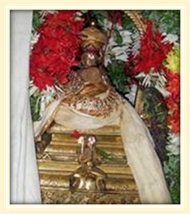
pinbhazhagiya perumAL jIyar at the lotus feet of nampiLLai, SrIrangam
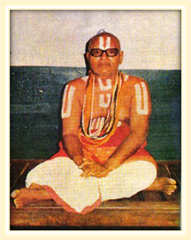
pinbazhagiyarAm perumAL jIyar is a sathSishya (a very devoted disciple) of nampiLLai. pinbhazhagiya perumAL jIyar was a sannyAsi; he served nampiLLai, a gruhastha. He performed many kainkaryams to nampiLLai, particularly involving taking care of his thirumEni (physical well-being of his divine body). When nampiLLai returned from his daily bath, he walked behind him every day, performing the thiruvAlavattam (fanning) kainkaryam. Once, when he fell ill (thirumEniyil nOvusAththiNda pOdhu) he went to a doctor for treatment, and took the prescribed medicines. During that time, questions were raised about why he acted against his true nature (svarUpa virOdham). He responded that he did so because he enjoyed the experience of the drop of sweat on the divine back of nampiLLai and did not want to lose this kainkaryam. For this reason, he did not even desire to go to paramapadham. He wonderfully stated his devotion as such, all of which can be enjoyed from his history.
He compiled the 6000 padi guruparamparA prabhAvam, capturing the life histories of AzhwArs and AchAryas from SrI nAthamuNigaL up to nampiLLai. The other grantham compiled by him is this grantham – vArthAmAlai, which captures the pUrvAchAryar’s upadhESams, aithihyam (their life histories), thathvArtham (philosophy) etc., revealing essential sampradhAya meanings. The mUla grantham (source text) is written in maNipravALam (a writing style in which thamizh and samskrutham are mixed). We are grateful to puththUr swAmy for having published this grantham and for also providing detailed explanation for these complex concepts.
The following article is a transcription from SrI u vE sArathy thOthAthri swAmy’s thamizh kAlakshEpam on this vArthAmAlai grantham. We are grateful to swAmy for giving us this opportunity and his continuous help in publishing these.
In this series, the explanation has covered up to the twentieth vArthai. Each vArthai speaks about a specific vishayam (subject/topic) from our SrIvaishNava sampradhAyam, along with examples given by various AchAryas. This article is discussing from the twenty-first vArthai.
Twenty-first vArthai
In this vArthAmAlai, each vArthai may have been spoken at a different point in time. For instance, mudhaliyANdAn could have uttered one vArthai, and nampiLLai might have spoken the next at a completely different time. Consequently, there may be no direct relationship between the consecutive vArthais. However, the essential concepts – such as thathva thrayam (three realities), artha panchakam (five essential concepts), AchArya abhimAnamE uththArakam (grace of the AchArya is the ultimate means for upliftment or salvation) etc., – come together. The twenty-first vArthai is now explored.
This was graced by thirunagarip piLLai. In our sampradhAyam, ‘thirunagari’ can refer to either AzhwAr thirunagari (nammAzhwAr’s avathAra sthalam – birthplace) or thiruvAlith thirunagari (near thirumangai AzhwAr’s avathAra sthalam).
This is given in multiple parts for ease of understanding. The first paththi (paragraph) is the introduction.
Part 1
bhagavath anuvarthanaththukku prathibandhakam – SarIram; AchArya anuvarthanaththukku prathibandhakam – puthra mithrAdhigaL; SrIvaishNavargaL anuvarthanaththukku prathibandhakam – ithara sahavAsam; upAya adhyavasAyaththukku prathibandhakam – artha prAvaNyam; upEya ruchikku prathibandhakam – vishaya prAvaNyam. ivaRRukku onRukku onRilE thAthparyam enRu thirunagarip piLLai vArthai.
bhagavath anuvarthanaththukku prathibandhakam – SarIram
prathibandhakam means an obstacle or restriction. And anuvarthanam means following or staying with one continuously to perform kainkaryam (service). Thus, bhagavath anuvarthanam is performing kainkaryam towards bhagavAn. The primary obstacle (prathibandhakam or thadai) to experiencing emperumAn and serving him is the physical body (SarIram or dhEham). For instance, visiting a temple (sannidhi) and performing kainkaryam is possible only if the body permits, and only as long as one’s physical capacity allows. Even for someone who has established a strong connection with an AchArya and has developed a deep desire (ruchi) to perform kainkaryam, this body acts as a hindrance. Beyond a certain limit, the body demands rest and must be purified (Sudhdhi). After 6, 8, or 10 hours pass, the body begins to emit a foul odour (dhurnARRam) due to sweat (vErvai), requiring one to clean oneself before returning to the sannidhi. In this way, the physical body restricts the ability to offer continuous service to emperumAn.
For those who do not engage in kainkaryam, this question does not even arise, because they are merely chasing the bodily comforts and worldly desires.
As kulasEkarAzhwAr stated in perumAL thirumozhi 3.4, “uNdiyE udaiyE ugandhodum im
maNdalaththodum kUduvadhillai yAn” (I do not mingle with the people of this world who are obsessed with food and clothes). If someone lacks true knowledge (gyAnam), SarIram is the biggest obstacle. They do not come near emperumAn or perform kainkaryam because they do not understand the AthmA and mistakenly identify the SarIram as the AthmA.
Ultimately, the SarIram is a major obstacle to reaching emperumAn. Because of attachment to and involvement with the SarIram, one is unable to perform kainkaryam. Even after gaining AchArya sambandham and actively serving, the SarIram remains a barrier for continuous service. For example, if illness or fatigue sets in, one may miss a temple visit, or even when we do attend, physical pain can distract us. Hence, the body is an obstacle for bhagavath anubhavam.
AchArya anuvarthanaththukku prathibandhakam – puthra mithrAdhigaL
Even for bhagavath kainkaryam, people may participate regardless of whether their body permits it or not. However, if we go to an AchArya and want to perform AchArya kainkaryam, the most significant obstacle will be puthra mithrAdhigaL – sons (piLLai), daughters (peN), wife (manaivi), relatives (uRRAr, uRavinar), friends (naNbargaL) etc. While the body (SarIram) itself can be an obstacle to AchArya kainkaryam, even when the body is hale and healthy, one’s family and friends (puthra mithrAdhigaL) will become the obstacle. They may question why one visits the thirumAligai or matam so often. They may reason that visiting a temple brings some offerings, an honorarium (sambhAvanai) or perumAL blessings (anugraham). However, they do not realise that the AchArya is superior to emperumAn and that one must perform kainkaryam to him. Because there are very few people who will support this, one’s own family and friends (puthra mithrAdhigaL) remain an obstacle to performing AchArya kainkaryam.
SrIvaishNavargaL anuvarthanaththukku prathibandhakam – ithara sahavAsam
An obstacle to performing kainkaryam to adiyArs (SrIvaishNavas), or to experiencing and helping them, is association with materialistic people (idhara sahavAsam), who question why one spends time in the gOshti (gathering of devotees) rather than pursuing own worldly affairs, earn some money (paNam) or buy some land and property (nilam, nIchchu).
People who are deeply attached to this material world (samsAra) will always try to drag the devotee onto the very same path (vazhi) that they are walking. If told about the engagement in bhagavath vishayam (matters of emperumAn), spending time with devotees, and always remaining in the gOshti, they question the utility of such pursuits, asking if it yields wealth or societal respect (gauravam), asserting that respect is earned solely through academic or worldly success.
Those around (itharargaL) – specifically those who have no involvement or devotion towards emperumAn, his devotees (bhAgavathas) and AchArya – will continuously say such things and confuse the mind. Therefore, he points out that associating with people who lack involvement towards bhagavAn, bhAgavathas or AchArya acts as an obstacle (prathibandhakam), ultimately pulling one away from SrIvaishNava anuvarthanam.
upAya adhyavasAyaththukku prathibandhakam – artha prAvaNyam
adhyavasAyam means a deep, firm resolve or conviction. emperumAn himself is the upAyam (means); his divine feet (thiruvadi) are the means. It is only through his divine feet that the soul attains him.
The obstacle to this is artha prAvaNyam, i.e attachment to wealth. artham means wealth or material objects. The desire to earn wealth and material things acts as a prathibandhakam (obstacle) to the conviction that emperumAn and his thiruvadi are the most important, and that soul will attain paramapadham. Whenever there is a desire for wealth, one’s faith (viSvAsam) in emperumAn and his thiruvadi diminishes.
ALavandhAr, says in his sthOthra rathnam SlOkam 30, “dhanam madhIyam thava pAdha pankajam” (Your divine lotus feet are my wealth). The AzhwArs and AchAryas considered the thiruvadi of emperumAn as their only wealth (dhanam). However, if a desire arises for the ordinary wealth of this material world, then the desire for that exalted wealth – emperumAn’s thiruvadi – fades away. Therefore, he points out that this attachment to material wealth (artha prAvaNyam) acts as an obstacle to that firm spiritual conviction (adhyavasAyam).
upEya ruchikku prathibandhakam – vishaya prAvaNyam
upEyam means that which is to be attained and experienced. kainkaryam is performed to emperumAn, to adiyArs and to AchAryas. All of these fall under the category of upEyam.
The obstacle to developing a taste for this goal (upEya ruchi) and longing to perform kainkaryam, is vishaya prAvaNyam (attachment to worldly objects). This refers to the desire for worldly things, such as attachment towards one’s wife, children and relatives. As attachment towards them increases, the desire for kainkaryam decreases.
pEyAzhwAr in mUnRAm thiruvandhAdhi pAsuram 14 states, “mARpAl manam suzhippa mangaiyar thOL kai vittu” (For the heart to be engaged towards emperumAn, one must let go of the worldly attachments, such as the desire to embrace the shoulders of women).
ivaRRukku onRukku onRilE thAthparyam enRu thirunagarip piLLai vArthai.
All the things mentioned above serve as general obstacles. Regarding the primary obstacle to bhagavath anuvarthanam, the physical body (SarIram) is pointed out first. However, for bhagavath anuvarthanam, puthra mithrAdhigaL, artha prAvaNyam, ithara sahavAsam, and vishaya prAvaNyam will all also act as obstacles. While each obstacle affects every dimension of devotion, there is a specific one-to-one correlation (onRukku onRilE thAthparyam) highlighted here. That is, for this specific spiritual aspect, this specific thing is the primary obstacle. The others will also hinder progress, but there is primarily a direct one-to-one mapping. This is the vArthai of thirunagarip piLLai.
This serves as the introduction to this vArthai, following which the virOdhis are explained in detail.
These experiences have been discussed in earlier contexts as well, and are repeated multiple times so that what is not grasped at one instance is comprehended in another. Because profound spiritual principles cannot be fully absorbed from a single explanation, pUrvAchAryas have reiterated them repeatedly. emperumAn has also likewise spoken about SaraNAgathi in several places in SrI bhagavath gIthA.
- SrI bhagavath gIthA 9.34 and SrI bhagavath gIthA 18.65 “manmanA bhava madhbhakthO madhyAjI mAm namaskuru |” (Have your heart focused on me constantly; (moreover) have deep love for me; (that too) become my worshipper).
- SrI bhagavath gIthA 18.62 “tham Eva SaraNam gachcha” (Follow me, the supreme lord).
- SrI bhagavath gIthA 18.66 “mAm Ekam SaraNam vraja” (Consider me as your only means).
Thus, emperumAn, AzhwArs and AchAryas have repeated these truths multiple times in diverse manners, so that absolute clarity is achieved.
Similarly, in this grantham viz., vArthAmAlai as well as artha panchakam, thathva thrayam etc., many vArthais present these insights in various perspectives. Listening to them repeatedly – say, 10 times – enables a far deeper understanding. For instance, it is taught that dhEhAthma abhimAnam must not exist; that is, the dhEham must not be mistaken as AthmA. Although this is a fundamental concept frequently heard in kAlakshEpams (discourses), truly internalizing and applying it in practice remains demanding.
Intellectually understanding that the soul is entirely dependent (parathanthran) on emperumAn and subservient to the supreme lord often still coincides with acting as though one were independent (svathanthran). Similarly, while the necessity of avoiding offences (apachArams) is well understood, abstaining from them in practice remains difficult despite frequent instruction. Recognising this challenge, AchAryas, out of their immense compassion and boundless grace (karuNai), expound these concepts in varied ways across different contexts to ensure enduring comprehension.
Part 2
svarUpa virOdhiyAvadhu – sva rakshaNam, sva svAthanthryam, anya SEshathvam, dhEhAthmA abhimAnam, mamathai engiRa ivai; avan rakshakan AgaiyAlE – sva rakshaNaththil prApthi illai; avan SEshi yAgaiyAlE – sva svAthanthryaththil prApthi illai; avan parAthparan AgaiyAlE – anya SEshathvaththil prApthi illai; ivan gyAnAnandhiyAgaiyAlE – dhEhAthmA abhimAnaththil prApthi illai; ISvara vibhUthiyAgaiyAlE – mamathaiyil prApthi illai. upAya virOdhi yAvadhu – sAdhanAntharam, sva yOgyathai, artham, adhikAri viSEshaNam, abhimatham.
svarUpavirOdhiyAvadhu – sva rakshaNam, sva svAthanthryam, anya SEshathvam, dhEhAthma abhimAnam, mamathai engiRa ivai
The obstacles to realising the true nature of the AthmA (svarUpa virOdhi) are these five aspects: sva rakshaNam, sva svAthanthryam, anya SEshathvam, dhEhAthma abhimAnam, mamathai.
sva rakshaNam is a mistaken belief that jIvAthma protects (rakshaNam) itself. This is an obstacle (virOdhi) to the true nature (svarUpam). One should not attempt self protection; emperumAn alone protects. One must emulate sIthAp pirAtti, who, while captive in lankA, said that only perumAL must come and save her.
sva svAthanthryam means saying, “I am my own master. I have no other leader or lord”. This is an obstacle (virOdhi). All of these are obstacles to the true nature of the AthmA (svarUpa virOdhi). The true nature (svarUpam) of the AthmA is servitude (SEshathvam), remaining as a servant exclusively to emperumAn. It requires absolute dependence (pArathanthryam), acting exactly as emperumAn dictates. Knowledge (gyAnam) and devotion (bhakthi) are aspects which are inherently present in the true nature (svarUpam). The jIvAthmA, endowed with this knowledge, must realise that it is entirely subservient (adimaip pattavan) to emperumAn. This is svarUpam. Anything that opposes this realisation is an obstacle (virOdhi).
The true nature is to be exclusively subservient to emperumAn. anya SEshathvam (subservience to others) means being subservient to other deities (dhEvathAs), other humans (manushyas), or anyone else, which is completely contrary to the nature. This is also an obstacle (virOdhi).
dhEhAthma abhimAnam is the illusion of identifying the physical body (dhEham) as the AthmA. It is to be realised that the AthmA is distinct from the body; identifying with the physical dhEham acts as a virOdhi to the true nature.
Beyond this is mamathai. mamathai is the sense of “mine.” Thinking “this AthmA is mine, the body belonging to this AthmA is mine, the wealth belonging to this body is mine”. This possessiveness (mamathai) is also an obstacle (virOdhi).
It is explained further on how these are obstacles.
avan rakshakan AgaiyAlE – sva rakshaNaththil prApthi illai
Since emperumAn is the ultimate protector (rakshakan), there is no justification (prApthi) for self-protection (sva rakshaNam). Because emperumAn alone protects, jIvAthmA lacks the qualification to protect itself. Therefore, self-protection becomes unnecessary and inappropriate.
avan SEshi yAgaiyAlE – sva svAthanthryaththil prApthi illai
Since he is the supreme master (SEshi), there is no justification (prApthi) for claiming complete independence (sva svAthanthryam). He is the SEshi, he is the master. Therefore, one cannot claim, “I am the master, I belong only to myself”. He shows that the soul is his subservient servant, and absolute dependence (pArathanthryam) is the soul’s true nature.
avan parAthparan AgaiyAlE – anya SEshathvaththil prApthi yillai
Since he is the supreme being (parAthparan), there is no eligibility or justification (prApthi) for servitude to others (anya SEshathvam). He exists as parAthparan, the master of everyone. Because of that, no one else can be the master. Only emperumAn is the master, and the soul is subservient to him alone.
ivan gyAnAnanthi yAgaiyAlE – dhEhAthma abhimAnaththil prApthi yillai
Furthermore, since the jIvAthmA is full of knowledge and bliss (gyAnAnandhi), there is no justification (prApthi) for the illusion of identifying the body as AthmA (dhEhAthma abhimAnam). This AthmA possesses knowledge (gyAnam) and bliss (Anandham). The AthmA exists purely as the embodiment of knowledge. Due to this, dhEhAthma abhimAnam cannot even touch it; such an illusion does not suit the AthmA at all.
ISvara vibhUthiyAgaiyAlE – mamathaiyil prApthi illai
Since everything is emperumAn’s wealth and realm (ISvara vibhUthi), there is no justification (prApthi) for possessiveness (mamathai). This entire universe is emperumAn’s wealth. When that is the case, nothing can be claimed by anyone as “mine”. Therefore, there is no basis for possessiveness.
Thus, the aspects that do not suit a jIvAthmA and its true nature are svarakshaNam, sva svAthanthryam, anya SEshathvam, dhEhAthma abhimAnam, and mamathai.
He demonstrated and explained why each of these does not suit the AthmA.
upAyavirOdhi yAvadhu – sAdhana antharam, sva yOgyathai, artham, adhikAri viSEshaNam, abhimatham
upAya virOdhi – The true nature (svarUpa) of the jIvAthmA is being endowed with knowledge, filled with bliss, and being subservient to emperumAn. First, it must be understood that emperumAn’s divine feet (thiruvadigaL) alone are the sole upAyam (means) by which he is attained. Other than that, there is no other upAyam. jIvAthmA can attain him only through those divine feet (thiruvadigaL). Everything that acts as an obstacle (virOdhi) to that is upAya virOdhi. Specifically, the five aspects: other means (sAdhana antharam), self-qualification (sva yOgyathai), wealth (artham), the specific qualification of the seeker (adhikAri viSEshaNam), and one’s own desire (abhimatham).
sAdhana antharam (other means) – emperumAn alone is the means (sAdhanam), and everything else is an external means (sAdhana antharam). He shows that apart from emperumAn, one cannot adopt any other means.
sva yOgyathai – Thinking that one possesses personal merits is an obstacle (virOdhi), for emperumAn accepts the soul despite its complete lack of qualification.
artham – wealth. Thinking that possessing vast wealth and riches will cause emperumAn to accept the soul, is an obstacle (virOdhi).
adhikAri viSEshaNam – An attribute of AthmA is to remain surrendered. Surrender (SaraNAgathi) is performed, accepting emperumAn as the sole means (upAyam). emperumAn does not accept the jIvAthmA because of the act of surrender (SaraNAgathi). emperumAn accepts jIvAthmA purely out of his divine grace (krupai).
abhimatham – This implies doing something because it appeals to personal preference. One cannot act merely out of personal preference (abhimatham); rather, one’s actions must be guided strictly by what aligns with one’s true nature (svarUpam). After outlining these five obstacles (virOdhi), further explanations are provided.
Part 3
adhAvadhu – SarIravath SEsham AgaiyAlE – SAdhana antharangaLil prApthi illai; badhdhAthmA AgaiyAlE sva yOgyathaikku prApthi illai; achEthanam AgaiyAlE artham, ishta anishtangaL aRigaikku yOgyathai illAmaiyAlE – sAdhanaththil prApthi illai; adhikAri viSEshaNam chaithanya kAryam AgaiyAlE – sAdhanaththil prApthi illai; sidhdha asAdhanam sahAyAntharaththai sahiyAmaiyAlE ivan abhimathaththukku sAdhanaththil prApthi illai.
adhAvadhu – SarIravath SEsham AgaiyAlE – SAdhana antharangaLil prApthi illai
This section explains clearly how jIvAthmAs are subservient (SEshappattavargaL) and servants to emperumAn.
Subservience like a body (SarIravath SEsham) means that just as the physical body (dhEham) exists solely for the AthmA and is subservient to it, the jIvAthmA exists solely for emperumAn, who is the inner ruler (antharAthmA) of all souls. Therefore, one cannot attain him by adopting any other means (sAdhana antharam). No other entity possesses authority over this physical body, as it exists solely for its AthmA. Similarly, the jIvAthmA exists solely for emperumAn, and the soul cannot attain him by holding onto anyone else.
The very existence (sthithi) of this physical body (dhEham) lasts only as long as the AthmA resides within it. When the AthmA leaves the body, it cannot request a neighbouring AthmA to maintain the body, nor can it ask another AthmA to sustain it while residing inside. Because emperumAn is the antharAthmA, the AthmA cannot look towards anyone else. Therefore, there is no eligibility (prApthi illai) in adopting other means (sAdhana antharangaL).
badhdhAthmA AgaiyAlE sva yOgyathaikku prApthi illai
As a bound soul (badhdhAthmA), one lacks the eligibility of self-qualification (sva yOgyathai). One may assert various qualifications, such as a birth as a brAhmana, wearing the sacred thread (yagyOpavItham), performing sandhyA vandhanam, conducting divine worship (thiruvArAdhanam), or possessing great devotion towards emperumAn.
However, bound souls (badhdhAthmAkkaL) bound to this samsAram (material world) cannot attain emperumAn by claiming such merits. It is purely emperumAn’s divine grace (karuNai) that one is presently engaged in these spiritual matters (sath vishayangaL). In reality, the badhdhAthmA possesses no intrinsic qualification, nor does it perform duties with complete perfection.
While faults in others are readily criticized, honest self-inquiry reveals numerous shortcomings (dhOshams) residing within oneself . Because badhdhAthmAs remain bound to this material realm, self-qualification (yOgyathai) cannot be claimed. Asserting such merit becomes an obstacle to the means (upAya virOdhi). One cannot present accomplishments, such as studying scriptures (SAsthrams), mastering sacred texts (granthams), learning the nAlAyira dhivya prabandham, reciting verses (pAsuram), or offering daily service (kainkaryam), as grounds to demand liberation (mOksham) from emperumAn.
Human efforts are imperfect and even if performed fully, they remain negligible in comparison to the reward to be attained. Just as someone who gives ten crore rupees upon receiving a simple lemon does so entirely out of generosity rather than the intrinsic value of the lemon, the limited actions performed following the guidance of the AchArya, emperumAn, or the scriptures (SAsthrams) carry no self-earned merit (yOgyathai). Therefore, as a badhdhAthmA, there is no eligibility or justification (prApthi illai) to claim self qualification (sva yOgyathai).
achEthanam AgaiyAlE artham, ishta anishtangaL aRigaikku yOgyathai illAmaiyAlE – sAdhanaththil prApthi illai
Since wealth (artham) is non-sentient (achEthanam), and lacks the capacity (yOgyathai) to know what is desirable and undesirable (ishta anishtangaL), it has no eligibility to serve as a means (sAdhanaththil prApthi illai).
Wealth acts as an obstacle (virOdhi) because it lacks knowledge or consciousness (gyAnam). Even if vast wealth of say ten crore rupees is possessed, money itself possesses no sentience to recognize distress, procure medicine or provide clothing on its own.
Being non-sentient (achEthanam), wealth cannot comprehend what is beneficial (ishtam) or harmful (anishtam), nor can it independently fulfill one’s needs. The ultimate goal cannot be attained through material wealth, as it possesses no independent discernment (gyAnam). Because it lacks awareness (gyAnam), wealth cannot serve as the means (upAyam) but is rather an obstacle (virOdhi).
adhikAri viSEshaNam chaithanya kAryam AgaiyAlE – sAdhanaththil prApthi illai
Since the specific qualification of the seeker (adhikAri viSEshaNam) is merely the act of a conscious entity (chaithanya kAryam), it cannot function as the actual means (sAdhanaththil prApthi illai). It is often thought that emperumAn grants liberation (mOksham) because one performed surrender (SaraNAgathi) to him. However, surrender is merely a conscious act of a sentient being (chaithanya kAryam).
A sentient soul acknowledges the divine feet (thiruvadigaL) of emperumAn as the sole refuge (upAyam) because of possessing knowledge (gyAnam), whereas an insentient object like a table, cannot make such an acknowledgement. This conscious acknowledgement (chaithanya kAryam) serves merely as a specific qualification defining an eligible seeker (adhikAri viSEshaNam).
For instance, an applicant (adhikAri) submits an application to a college. It merely fulfils the required entry eligibility, and yet mere filling in cannot compel the college to grant admission. Similarly, performing surrender (SaraNAgathi) defines the role of adhikAri, while the reward is bestowed solely by emperumAn purely out of his divine grace (karuNai).
Therefore, that specific qualification of the seeker (adhikAri viSEshaNam) does not constitute the means (sAdhanam). Treating it as the means turns it into an obstacle (upAya virOdhi). An obstacle (virOdhi) encompasses all hurdles that prevent the jIvAthmA from attaining emperumAn. Attributing the attainment of grace to one’s own act of surrender (SaraNAgathi) causes emperumAn to leave the soul to its own independent efforts. Relying on such personal actions instead of his divine grace (karuNai) is an obstacle (virOdhi).
sidhdha sAdhanam sahAyAntharaththai sahiyAmaiyAlE ivan abhimathaththukku sAdhanaththil prApthi illai
Since the eternally established means (sidhdha sAdhanam) does not tolerate any external assistance (sahAyAntharam), one’s own desire (abhimatham) is not eligible to serve as the means (sAdhanaththil prApthi illai). The term sidhdha sAdhanam refers to emperumAn himself, who is eternally existing as the sole upAyam. He does not tolerate supplementary means or external assistance (sahAyAntharam).
For instance, when an authoritative officer promises to grant a position upon the submission of a formal application, seeking extraneous recommendations from acquaintances in the office displeases the officer, who has already undertaken the responsibility.
Similarly, when emperumAn undertakes the protection of the soul, he expects no auxiliary assistance. There is no justification for one’s own personal desire (abhimatham) or independent initiative to be regarded as the means to attainment (sAdhanam). Claiming that one’s personal effort or desire induced emperumAn to protect the soul is unbefitting. In this manner, extraneous acts and reliance on self-efforts act as obstacles to the means (upAya virOdhi).
Part 4
prApthi virOdhi Avadhu – dhEhaththil bhOgya budhdhiyum, dhEhaththaip paRRi varum avaRRil purushArtha budhdhiyum svarga aiSvaryaththil purushArtha budhdhiyum, brahmalOka prApthiyil purushArtha budhdhiyum, kaivalyaththil purushArtha budhdhiyum
prApthi virOdhi Avadhu
Finally, the obstacles for attaining emperumAn (prApthi virOdhi) are detailed. These hurdles are: the intellect that considers the body as an object of enjoyment (dhEhaththil bhOgya budhdhi), considering body-related things as the ultimate goal (dhEhaththaip paRRi varumavaRRil purushArtha budhdhi), considering heavenly wealth as the ultimate goal (svarga aiSvaryaththil purushArtha budhdhi), considering the attainment of brahmA’s realm as the ultimate goal (brahmalOka prApthiyil purushArtha budhdhi), and considering self-realized isolation as the ultimate goal (kaivalyaththil purushArtha budhdhi).
Here too five aspects are shown.
dhEhaththil bhOgya budhdhiyum
The intellect considers the body as an object of enjoyment (dhEhaththil bhOgya budhdhi). Attaining emperumAn and doing service (kainkaryam) to him is the ultimate goal (prApthi). The factors that act as hurdles to this attainment are explained here.
The desire to attain emperumAn and serve him becomes an obstacle if desire is fixed purely on bodily comforts, seeking sensory pleasures such as delicious food for the tongue, melodious music for the ears, pleasing forms for the eyes etc., (bhOgya budhdhi). When the intellect is occupied solely with bodily indulgence, longing for emperumAn does not arise, turning this mindset into an obstacle (virOdhi).
dhEhaththaip paRRi varum avaRRil purushArtha budhdhiyum
dhEhaththaippaRRi varumavaRRil or “things related to the body” refers to family, wife, children, land; all these are matters connected to the physical body. An intellect that sees these worldly aspects as the ultimate goal is purushArtha budhdhi. purushArtham or ultimate goal, refers to that which is sought or desired by a person. The desire may include wanting a piece of land, a house, or a large vehicle. Continually desiring these material possessions as the primary objective acts as a hurdle to attaining emperumAn.
svarga aiSvaryaththil purushArtha budhdhiyum
Some people might not have an attachment to worldly matters, considering heavenly wealth (svargaiSvaryam) as the ultimate goal. They desire to go to heaven (svarga) to enjoy everything there, such as the apsaras (celestial dancers) like rambhA and thilOththamA, sOmapAnam (sOma juice), and to feel blissful (Anandham) there. However, developing such desires also becomes an obstacle (virOdhi) to attaining and experiencing emperumAn.
brahmalOka prApthiyil purushArtha budhdhiyum
brahmalOkam, also known as sathyalOkam, is located above heaven and serves as brahmA’s abode. An intellect that perceives brahmA’s realm to be superior considers it the ultimate goal (purushArtha budhdhi). Consequently, the desire to attain and experience it also becomes a hurdle to attaining and experiencing emperumAn.
kaivalyaththil purushArtha budhdhiyum
Above that is the consideration of self-realized isolation as the ultimate goal. Self-enjoyment (kaivalyam) is the state where the AthmA experiences only itself in absolute solitude, after renouncing everything and losing the desire to experience emperumAn.
It is said that self-enjoyment (kaivalyam) is also a kind of liberation (mOksham), as all attachments to this material cycle (samsAram) will disappear. The AthmA simply experiences itself. However, one must still pray to emperumAn to attain even this state. Therefore, if a desire for self-realization (kaivalyam) arises, it ultimately acts as a hurdle to attaining emperumAn.
He gives further explanations for these five aspects.
Part 5
adhAvadhu – dhEham svabhAva dhurgandham AgaiyAlE purusharthamAga mAttAdhu; dhEhaththaip paRRi varumavai thanakku allAmaiyAlE – purushArthamAga mAttAdhu; svarga aiSvaryam “kshINE puNyE marthyalOkam viSanthi” engaiyAlE – purushArthamAga mAttAdhu; brahmalOka prApthiyum kshuthpipAsaiyAlE ihalOkaththilE vandhu Sva(sva?)mAmsa bhakshaNam paNNip pOrumenRu sollugaiyAlE sukhamAga mAttAdhu; kaivalyamum vidhavA alankAram pOlE sva anubhavam AgaiyAlum, siRRinbam AgaiyAlum purushartham Aga mAttadhu; alpamanRiyilE, asthiramanRiyilE, abhOgyamanRiyilE aprApthamanRiyilE irukkumadhiRE – svarUpa prayukthamAna purushArtham Avadhu
adhAvadhu – dhEham svabhAva dhurgandham AgaiyAlE purusharthamAga mAttAdhu
The physical body (dhEham) by its very nature (svabhAvam) possesses foul odour (dhurgandham). While morning bathing temporarily conceals it, as a little time passes, perspiration inevitably causes bad odour to arise again. Such a foul-smelling body is incapable of providing a truly pleasant experience (anubhavam). People superficially superimpose value and consider bodily experiences enjoyable, yet objective enquiry reveals that bodily indulgence is inherently disagreeable. Whatever is indulged in solitude (EkAntham), would cause immense shame if brought out in public. Placing desire in such a physical body (SarIram) becomes a direct hurdle. Because that body naturally possesses bad odour, it is not fit to be desired as the ultimate goal.
dhEhaththaippaRRi varumavai thanakku allAmaiyAlE – purushArthamAga mAttAdhu
Next are things connected to the body (dhEham), such as spouse, children, land, house and property. The AthmA possesses no true, eternal relationship with any of these. Upon the demise of the physical body, the AthmA loses all connection to them and cannot claim them as its own. Everything related to the body remains bound only to that body, having no eternal connection (sambandham) with the AthmA. Because they lack connection with the AthmA, these worldly objects cannot be called the ultimate goal.
svarga aiSvaryam “kshINE puNyE marthyalOkam viSanthi” engaiyAlE – purushArthamAga mAttAdhu
Next is the experience attained by ascending to heaven (svargam). A soul resides in heaven strictly for the duration of accumulated merit (puNyam). Once that merit gets exhausted, the soul must return to the mortal realm (manushya lOkam).
Common doubts often arise regarding when a soul attains heaven, when it falls into the sorrow (dhukkam) of hell (narakam), or when it takes various births (piRavigaL) in this world. Those who accumulate vast merit, perform specific fire sacrifices (yAgams), and execute righteous deeds (dharmams) with the desire for heaven will attain that realm and remain as long as their merit lasts. Once exhausted, they will be pushed back down. Conversely, those committing grave sins (pApams), suffer in hell for the duration of that sin before taking birth in this world. A person possessing a middle state of mixed karma takes birth as a human.
As explained in the commentaries (vyAkhyAnams) and scriptures (SAsthrams), births strictly correspond to past actions (karma). For instance, an offence (apachAram) committed through speech (vAk), leads to rebirth as birds (pakshi) or animals (mruga) that lack the capacity for speech. An offence committed through the mind (manas), results in rebirth with an impaired intellect (budhdhi) and lower faculties. An offence committed with the hands results in rebirth as trees, plants, or vines where limbs cannot function.
Conversely, those who perform exceptionally noble deeds ascend to heavenly realms. From among the AthmAs accumulating the highest amount of merit (puNya), emperumAn appoints one as brahmA for each of the countless universes (aNdams). However, even this elevated heavenly experience is temporary. As stated in SrI bhagavath gIthA verse 9.21 “kshINE puNyE marthyalOkam viSanthi” (When the merit is exhausted, they return to the human world). Therefore, even the heavenly realm cannot be the ultimate goal.
brahmalOka prApthiyum kshuthpipAsaiyAlE ihalOkaththilE vandhu Sva(sva?)mAmsa bhakshaNam paNNip pOrumenRu sollugaiyAlE sukhamAga mAttAdhu
Next is the attainment of brahmA’s abode (brahma lOkapprApthi), which is far superior to the heavenly realm (svargalOkam). brahmA is the leader of this entire universe (aNdam). Even in that realm, only souls with immense merit (puNyam) can reside.
However, this attainment (prApthi) cannot bring true lasting happiness (sukham). The SAsthram states that due to intense hunger and thirst (kshuthpipAsai), an AthmA falling from that realm may return to this mortal world (ihalOkam) and resort to eating dog meat (SvamAmsa bhakshaNam). Once accumulated immense merit is exhausted, the subsequent downfall may lead to lowly births driven by sin. Because this cycle alternates between exalted pleasure and profound misery, it cannot be considered the ultimate goal (purushArtham), and desire for it acts as an obstacle to attaining bhagavAn and performing service.
kaivalyamum vidhavA alankAram pOlE sva anubhavam AgaiyAlum, siRRinbam AgaiyAlum purusharthamAga mAttadhu
Next, self-enjoyment (kaivalyam) is comparable to adorning a widow (vidhavA alankAram). Because it represents only self-experience (svAnubhavam) and a petty pleasure (siRRinbam), it cannot become the ultimate goal. In kaivalyam, the AthmA merely experiences itself in isolation, much like the minimum adornment is permitted to a widow. In SrIvaishNava sampradhAyam, to maintain some basic auspiciousness, a small tilak or modest ornament (AbharaNam) is worn, but elaborate decoration is absent. Similarly, kaivalyam is merely the AthmA experiencing itself in the absence of the emperumAn.
All AthmAs are fundamentally feminine in relationship to emperumAn, who alone is the supreme male (purushOththaman). Rejecting that supreme lord leaves the AthmA entirely alone. Furthermore, because the AthmA is atomic (aNu) in size, experiencing this atomic self is an insignificant pleasure (siRRinbam) compared to the boundless bliss of experiencing and serving (anubhavam / kainkaryam) emperumAn.
alpamanRiyilE, asthiramanRiyilE, abhOgyamanRiyilE aprApthamanRiyilE irukkumadhiRE – svarUpa prayukthamAna purushArthamAvadhu
The ultimate goal prescribed by the true nature of the AthmA (svarUpa prayukthamAna purushArtham) is that which is immense (alpamanRiyilE), eternal (asthiramanRiyilE), supremely enjoyable (abhOgyamanRiyilE), and inherently befitting (aprApthamanRiyilE).
The AthmA’s true nature (svarUpam) is rooted in servitude (SEshathvam) to emperumAn; hence, the ultimate goal and reward befitting this relationship is far from trivial (alpam), being the highest attainment of eternal service (kainkaryam) to emperumAn.
Similarly, it is not impermanent (asthiramanRiyilE). asthiram means being without stability (sthiram) or permanence (nirantharam). Material wealth (aiSvaryam) and worldly pleasures (inbam) lack permanence (asthiram). An experience (anubhavam) enjoyed today cannot be guaranteed tomorrow, and divine (bhagavath) experience in this world is constantly subject to obstacles. In contrast, upon reaching the supreme abode (paramapadham), the experience of emperumAn is uninterrupted, completely stable, and eternal.
Furthermore, it is not unenjoyable (abhOgyamanRiyilE). Enjoyable (bhOgyam) means it is highly suitable for experiencing. The experience of emperumAn is extremely sweet in the supreme abode (paramapadham). In contrast, the worldly experiences (anubhavangaL) are not enjoyable. In the material world, what appeals to a person at age ten loses its taste by age fifteen or twenty, and what appeals at twenty does not satisfy at age fifty. Similarly, a blanket desired during winter becomes irritating in the summer. Worldly objects eventually turn unenjoyable, whereas the attainment of service (kainkarya prApthi) in paramapadham remains permanently and eternally sweet and blissful (bhOgyam).
Furthermore, it is not unbefitting (aprApthamanRiyilE). While the worldly relationships, such as the union between husband and wife, are permitted by SAsthrams and experienced as worldly pleasure or even an immense pleasure (pErinbam), They do not represent the eternal intrinsic nature of the jIvAthmA. Eternal service (kainkaryam) rendered to emperumAn is the only truly befitting attainment (prAptham).
The divine service (bhagavath kainkaryam) performed in paramapadham is neither insignificant (alpam), unstable (asthiram), unenjoyable (abhOgyam), nor unbefitting (aprAptham). Instead, it is supreme, permanent, worthy (yOgyam), and perfectly suited to svarUpam. Therefore, liberation (mOksham) alone is the true ultimate goal (purushArtham).
Thus, the profound meanings of the twenty-first vArthai are concluded.
Twenty-second vArthai
This is a very small and beautiful vArthai. It is a matter concerning the three fundamental entities – thathvathrayam. Sentient beings (chith), non-sentient matter (achith), and Isvaran — these three entities. In this vArthai, their inherent nature is beautifully explained.
Part 1
SarIram jadamAy irukkum; AthmA gyAnamayamAy irukkum. dhukkhAthmakamAy irukkum; AnandhamayamAy irukkum. azhukkAy irukkum; nirmalamAy irukkum. azhiyumadhAy irukkum; nithyamAy irukkum. pariNAmiyAy irukkum; EkarUpamAy irukkum. vibhuvAy irukkum; aNuvAy irukkum. iruLAy irukkum; oLiyAy irukkum. nidhraiyAy irukkum; uNarchchiyAy irukkum. kOpamAy irukkum; kshamaiyAy irukkum. aSudhdhamAy irukkum; SudhdhamAy irukkum.
In the first part, the differences between AthmA and non-sentient matter (achEthanam) are explained.
SarIram jadamAy irukkum; AthmA gyAnamayamAy irukkum
The physical body (SarIram) is insentient (jadam). Insentient means it is an inert object (jadapporuL) that possesses absolutely no knowledge (gyAnam). In contrast, the AthmA is full of knowledge (gyAnamayam).
dhukkhAthmakamAy irukkum; AnandhamayamAy irukkum
The physical body (SarIram) inherently contains and is associated with sorrow (dhukkam).
But the AthmA is full of bliss (Anandhamayam).
azhukkAy irukkum; nirmalamAy irukkum
While the body (SarIram) is impure (azhukku), the AthmA is inherently pure and blemishless (nirmalam). Imperfection or dirt is associated with the AthmA only because of its connection with the physical body (SarIram). However, when viewed independently, the AthmA inherently possesses a perfectly pure (pariSudhdhamAna) nature.
azhiyumadhAy irukkum; nithyamAy irukkum
The physical body (SarIram) is self-evidently subject to perishing. The body (SarIram) is in a constant state of flux. From a small child in a tiny form (uruvam), it continuously changes and deteriorates over time until it finally dies. Thus, the body is always subject to perishing. In contrast, the AthmA is eternal (nithyam) and does not perish. That essential self (AthmA) remains unchanged from youth to old age. Therefore, the AthmA is eternal.
parinAmiyAy irukkum; EkarUpamAy irukkum
The body (SarIram) is subject to transformation (pariNAmam) and undergoes change. The AthmA remains unchanged in a single, uniform state (EkarUpam).
vibhuvAy irukkum; aNuvAy irukkum
The body (SarIram) is all-pervading/vast, widespread and very huge (vibhu). In this context, puththUr swAmy explains that vibhu refers to primordial matter (mUla prakruthi). This physical body is small because it is merely the effect (kAryam), whereas mUla prakruthi is the underlying cause (kAraNam). It has an upper boundary up to the virajA river but no lower limit, extending infinitely downwards. In contrast, the AthmA is atomic (aNu) in nature (svarUpam), existing only in a tiny form.
iruLAy irukkum; oLiyAy irukkum
The body (SarIram) is darkness (iruL), while the AthmA is light (oLi). This physical body acts as a source of ignorance (agyAnam); it completely hides the true nature of the soul. By looking at a person’s SarIram, no one can discern their inner state because the body acts as a veil (thirai). In contrast, the divine body in the paramapadham clearly reveals exactly what is inside. There, the AthmA can take on countless divine bodies filled with light. Just by looking at the divine body, the thoughts of that AthmA are revealed. Just as the sun’s brilliance can be obscured, this material SarIram hides the radiant light of the AthmA.
nidhraiyAy irukkum; uNarchchiyAy irukkum
The body (SarIram) is synonymous with sleep (nidhrai), whereas the AthmA is consciousness (uNarchchi). While the body aids in sleep and is inherently associated with fatigue (sOrvu), the AthmA provides continuous awareness (uNarvu). Even when the body sleeps, the AthmA remains awake. This is the reason (kAraNam) why, upon waking, one instinctively recognizes one’s identity without external prompting; the AthmA is always conscious and aware.
kOpamAy irukkum; kshamaiyAy irukkum
Furthermore, the physical body is full of anger (kOpam), while the AthmA is full of patience and forgiveness (kshamai). It is through this physical SarIram that the qualities of passion (rajO guNam) and ignorance (thamO guNam) arise, leading to anger. In contrast, the AthmA is the very abode of patience, existing inherently as forgiveness.
aSudhdhamAy irukkum; SudhdhamAy irukkum
Furthermore, the body is impure (aSudhdham), while the AthmA is pure (Sudhdham). The physical body (SarIram) is characterized by impurity whereas the AthmA has no such blemishes; it exists as a completely pure entity (thathvam).
Up to this point, he has shown the nature of the sentient AthmA (chith / AthmA) and the non-sentient matter (achith / achEthanap poruL, SarIram). Further, he explains about the ISvaran.
Part 2
ISvaran, rakshakanAy irukkum; SEshiyAy irukkum; kAraNamAy irukkum; SarIriyAy irukkum; dhArakanAy irukkum; vyApakanAy irukkum; niyanthAvAy irukkum; svathanthranAy irukkum; SaraNyanAy irukkum; sEvyanAy irukkum; pala solli yen? nAyakanAy irukkum. AthmA rakshyamAy irukkum; SEshamAy irukkum; kAryamAy irukkum; SarIramAy irukkum; dhAryamAy irukkum; vyApyanAy irukkum; niyAmyanAy irukkum; parathanthranAy irukkum; SaraNagathanAy irukkum; sEvakanAy irukkum; pala solli yen? adiyanAy irukkum.
He continues further to explain ISvaran, incorporating definitions of the non-sentient (achEthana) and the sentient (chEthana).
ISvaran, rakshakanAy irukkum
ISvaran is the protector (rakshakan). emperumAn is the one who protects the jIvAthmA, while all jIvAthmAs exist as entities (vasthu) to be protected.
SEshiyAy irukkum
He is the supreme master (SEshi), meaning the absolute leader. All souls are subservient beings (SEsha bhUthargaL), devotees (adiyArgaL), and servants (thoNdargaL).
kAraNamAy irukkum
He is the cause (kAraNam). All souls are the effects (kAryam), beings who are existing by his divine will.
SarIriyAy irukkum
He is the indwelling AthmA (SarIri). This physical body (SarIram) has come to the AthmA only because emperumAn gave it. Whether it is individual AthmAs, or this physical body or the entire universe (jagath), everything exists merely as his body.
dhArakanAy irukkum
He is the supporter (dhArakan) who sustains all. Just as the AthmA sustains the physical body – which would fall if the AthmA departed – emperumAn sustains all entities.
vyApakanAy irukkum
He is all-pervading (vyApakan), present in every place. This is not just an extension of knowledge. For example, if there is an injury to the thumb, the AthmA feels it because its knowledge has spread there; this is gyAna vyApthi. However, emperumAn pervades every single place through his essential nature (svarUpEna vyApthi). He is directly and essentially present everywhere.
niyanthAvAy irukkum;
He is the controller (niyanthA), who commands and controls. While space (AkASam) exists everywhere, it cannot command; but emperumAn is both all-pervading (vyApakan) and the controller.
svathanthranAy irukkum;
He is fully Independent (svathanthran). He alone is capable of ruling everyone; all beings exist solely according to his desire and are dependent on him.
SaraNyanAy irukkum
He is the ultimate refuge (SaraNyan). He is the refuge to whom souls surrender, acting as a safe haven for everyone. AthmAs, in turn, are those who surrender (SaraNAgathargaL).
sEvyanAy irukkum
He is the one to be served (sEvyan), meaning the recipient of all worship and service. When AthmA performs kainkaryam, emperumAn and his consort (pirAtti) accept that service as the ultimate receivers, and they are referred to as the kainkarya prathisambandhi.
pala solli yen? nAyakanAy irukkum
What is the use of saying many things? He alone is the supreme leader (nAyakan) capable of ruling everywhere and acting as master of everyone.
AthmA rakshyamAy irukkum
After speaking about ISvaran, he speaks about AthmA, which is that which is to be protected (rakshyam). Since ISvaran is the protector (rakshakan), the AthmA is the recipient of that protection.
SEshamAy irukkum;
It is subservient (SEsham), existing as a servant, while he is the supreme master (SEshi). All souls are subservient beings (SEsha bhUthargaL).
kAryamAy irukkum
The AthmA is the effect (kAryam). This does not mean the AthmA is “created,” as it exists eternally. Rather, the cause-effect relationship (kAraNa kArya bhAvam) applies because the very existence of AthmA is dependent on him. Just as an effect cannot exist without its cause, AthmA cannot exist separately from emperumAn, who constantly sustains the soul. In this sense of existential dependence, the AthmA is the kAryam.
SarIramAy irukkum
He is the indweller (SarIri) and all AthmAs constitute his body (SarIram).
dhAryamAy irukkum
It is that which is supported (dhAryam). He supports, and AthmAs are the ones being supported.
vyApyanAy irukkum
It is that which is pervaded (vyApyan). Since he is the all-pervading one (vyApakan), all AthmAs are pervaded.
niyAmyanAy irukkum
He commands, and AthmAs exist as those commanded by him.
parathanthranAy irukkum
While he is independent (svathanthran), AthmAs are fully dependent (parathanthran) and subject to being his eternal servants.
SaraNagathanAy irukkum
The AthmA exists as the surrenderer (SaraNAgathan), looking to him as the refuge (SaraNyan).
sEvakanAy irukkum
He is the one to be served (sEvyan), and AthmA is the one who performs service – servant /sEvakan.
pala solli yen? adiyanAy irukkum
What is the use of saying many things (pala solli en)? The AthmA exists as the servant (adiyan). While he is the supreme leader (nAyagan), AthmA is his eternal servant (adimai).
This is the twenty-second vArthai, which beautifully explains the three fundamental entities (thathva thrayam).
AzhwAr emperumAnAr jIyar thiruvadigaLE SaraNam
jIyar thiruvadigaLE SaraNam
pinbhazhagiya perumAL jIyar thiruvadigaLE SaraNam
puththUr swAmi thiruvadigaLE SaraNam
Source
Audio – https://1drv.ms/u/s!AnOSadexHn4jhXVB27MPEVuuJbM9?e=Y16e3s
Video – https://youtu.be/NJxBrygALFI
adiyEn govindharAja rAmAnuja dhAsan
archived in https://granthams.koyil.org
pramEyam (goal) – https://koyil.org
pramANam (scriptures) – https://granthams.koyil.org
pramAthA (preceptors) – http://acharyas.koyil.org
SrIvaishNava education/kids portal – http://pillai.koyil.org
1 thought on “vArthAmAlai – Part 8 – vArthai 21 – 22”