SrI: SrImathE SatakOpAya nama: SrImathE rAmAnujaya nama: Srimath varavaramunayE nama:
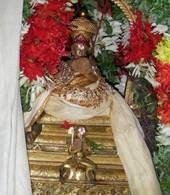
pinbhazhagiya perumAL jIyar at the lotus feet of nampiLLai, SrIrangam
pinbhazhagiya perumAL jIyar was the sathSishya (noble disciple) of nampiLLai. He had profound devotion (prathibhakthi) towards nampiLLai and performed many kainkaryams to him. He compiled the 6000 padi guruparamapara prabhAvam, which chronicles the lives of AzhwArs and AchAryas (upto nampiLLai) life history. His other significant grantham is the present grantham – vArthAmAlai, a compilation of the pUrvAchAryar’s upadhESams (teachings) and aithihyams (historical anecdotes) etc., that show important sampradhAya meanings. The source text (mUla grantham) and a simple commentary of vArthAmAlai were published by puththUr SrI. U. Ve. krishNaswAmy aiyangAr.
We have enjoyed till the seventeenth vArthai in the previous article. Each vArthai will speak about a specific vishayam (subject/topic) from our SrIvaishNava sampradhAyam along with examples given by various AchAryas. Let us now start with the eighteenth vArthai.
Eighteenth vArthai
This vArthai beautifully explains the artha panchakam (five essential concepts): sva svarUpam, para svarUpam, upAya svarUpam, virOdhi svarUpam and pala svarUpam. It is very essential to gain knowledge of the above and put them in to practice for living a virtuous life. This is presented in 5 parts for easy understanding.
para svarUpam irukkumpadiyen?, para svarUpa yAthAthmyam irukkumpadiyen?, sva svarUpam irukkumpadiyen?, sva svarUpa yAthAthmyamirukkumpadiyen?, svarUpAnurUpamAna pala svarUpam irukkumpadiyen?, pala svarUpa yAthAthmyam irukkumpadiyen?, thadhvirOdhi svarUpam irukkumpadiyen?, virOdhi svarUpa yAthAthmyam irukkumpadiyen?, thannivruththikkum palasidhdhikkum upAya svarUpam irukkumpadiyen?, upAya svarUpa yAthAthmyam irukkumpadiyen? ennil ;-
This is the first enquiry into the ten subjects (paththu vishayam) specifically, the artha panchakam. Each of the five subject (sva svarUpam, para svarUpam, upAya svarUpam, virOdhi svarUpam and pala svarUpam) is explored through its broad meaning (svarUpam irukkumpadi – membOkkAna arththam) and its comprehensive meaning (yAthAthmyam irukkumpadi – AzhamAna arththam or vadikattina nilai). In short, it shows the questions regarding both the general as well as detailed understandings for each of the five essential concepts (artha panchakam). Answers for each of these questions are beautifully explained below.
para svarUpam – chethanAchEthanAthmakamAna ubhAya vibhUthikkum niyanthAvAyirukkum niyanthruthvam; para svarUpa yAthAthmyam “adhu namadhu vidhivagai” engiRapadiyE archAvathAra paryanthamAna ASritha pArathanthryam; ini, para svarUpa prathi sambandhiyAna sva svarUpamAvadhu – prakruthE:param, gyAnAnandha lakshaNam, nithyam, EkarUpam, gyAna guNakam, svayam prakASam, ISvara SEsham, ananyArham, svarakshaNaththil prApthiyillAtha pArathanthryam;
para svarUpam – chethanAchEthanAthmakamAna ubhAya vibhUthikkum niyanthAvAy irukkum niyanthruthvam
para svarUpam refers to the true nature of emperumAn (i.e., paramAthma svarUpam), as illustrated here. emperumAn’s svarUpam is defined by his absolute control over all (niyanthruthvam); he is the controller (niyanthA) of both the spiritual realm (nithya vibhUthi) and material realm (leelA vibhUthi). Together, these are called as ubhAya vibhUthi, which encompasses all sentient entities (chEthana) and insentient entities (achEthana). Being the ubhaya vibhUthi nAthan (lord of ubhaya vibhUthi) is an important identity of the emperumAn, and that is his para svarUpam.
para svarUpa yAthAthmyam “adhu namadhu vidhivagai” engiRapadiyE archAvathAra paryanthamAna ASritha pArathanthryam
We saw that the first state of emperumAn is that he appoints and controls both nithya vibhUthi and leelA vibhUthi.
As nammAzhwAr stated in thiruvAimozhi 10.6.1 pAsuram, “aruL peRuvAr adiyAr tham adiyanERku AzhiyAn aruL tharuvAn amaiginRAn adhu namadhu vidhi vagaiyE”, he prays to emperumAn to take him to paramapadham. In response, emperumAn makes himself readily available to do it as per AzhwAr’s thiruvuLLam (divine heart). Thus, emperumAn acts as if ordained by AzhwAr. This pAsuram is cited as reference in this vArthai to showcase how emperumAn remains adhinam (as subordinate) of his adiyArs.
In archAvathAra, emperumAn acts according to the wishes of adiyArs, as shown in mudhal thiruvandhAdhi pAsuram 44 “thamar ugandhadhu evvuruvam avvuruvam thAnE thamar ugandhadhu eppEr maRRu appEr”.
Thus, the ultimate state (yAthAthmyam) of his supreme nature (parasvarUpa) is being subservient to his adiyArs (ASritha pArathanthryam).
ini, para svarUpa prathi sambandhiyAna sva svarUpamAvadhu – prakruthE:param, gyAnAnandha lakshaNam, nithyam, EkarUpam, gyAna guNakam, svayam prakASam, ISvara SEsham, ananyArham, sva rakshaNathil prApthiyillAdha pArathanthryam; idhinudaiya yAthAthmyamAvadhu – “aruLpeRuvAradiyArthammadiyanERku” enRum, “adigaLadiyE ninaiyum adiyavargaL tham adiyAn” enRum, “meymaiyai migavuNarndhu” enRum sollugiRapadiyE thadhIya SEshathva paryanthamAy irukkai;
ini, parasvarUpa prathi sambandhiyAna sva svarUpamAvadhu – prakruthE:param, gyAnAnandha lakshaNam, nithyam, EkarUpam, gyAna guNakam, svayam prakASam, ISvara SEsham, ananyArham, sva rakshaNathil prApthiyillAtha pArathanthryam
Now, we will look at the nature of jIvAthmA who has a relationship (prathi sambandhi) with paramAthmA. The nature of jIvAthmA is nicely illustrated as follows:
- prakruthE:param – jIvAthmA is different from the body (prakruthi)
- gyAnAnandha lakshaNam – He is identified with the virtues (guNa) like knowledge (gyAna), bliss (Anandha) etc.,
- nithyam – AthmA is eternal.
- EkarUpam – AthmA’s nature (svarUpam) will always be the same and will not change.
- gyAna guNakam – He has knowledge (gyAna) as a virtue (guNa).
- svayam prakAsam – He is self-illuminating.
- ISvara SEsham – He is a servitor to ISvaran.
- ananyArham – He is exclusively subservient to emperumAn.
- sva rakshaNathil prApthiyillAdha pArathanthryam – Absolute dependence on emperumAn, where the AthmA realises that he has no right to protect himself. (pArathanthryam refers to living only for emperumAn. sva rakshaNathil prApthiyillAdha refers to having no right to protect themselves)
idhinudaiya yAthAthmyamAvadhu – “aruLpeRuvAradiyArthammadiyanERku” enRum, “adigaLadiyE ninaiyum adiyavargaL tham adiyAn” enRum, “meymmaiyai migavuNarndhu” enRum sollugiRapadiyE thadhiyaSEshathva paryanthamAyirukkai
He is referring to the ultimate state of jIvAthmA here and has taken the same pAsuram from thiruvAimozhi, “aruL peRuvAr adiyAr tham adiyanERku ”, where AzhwAr refers to himself as the servitor of the adiyArs.
In periya thirumozhi pAsuram 2.6.1, thirumangai AzhwAr, “adigaL adiyE ninaiyum adiyavargaL tham adiyAn”, where he states that emperumAn is swAmy – adigaL and the devotees – adiyavargaL who are thinking about the lotus feet of emperumAn (thiruvadi); and he is the servitor (adiyAn) of those devotees (adiyavargaL).
In thirumAlai pAsuram 38, “mEmporuL pOgavittu meymmaiyai migavuNarndhu”, the exact same meaning is explained.
Thus, the ultimate state (yAthAthmyam) of sva svarUpam is to be the servitor (SEshathva) of the devotees of emperumAn (thadhIya).
Part 4
ini, svarUpAnurUpamAna pala svarUpamAvadhu – bhagavath svarUparUpaguNAnubhava janitha prIthi kAritha kainkaryam; idhinudaiya yAthAthmyam irukkumpadi – “praharshayishyAmi” engiRapadiyE indhak kainkarya prathi sambandhiyAna SEshiyinudaiya harsham; thadhvirOdhi svarUpamAvadhu – dhEhaththil Athma budhdhiyum, dhEhAnubandhiyAna padhArthangaLil mamathA budhdhiyum, dhEhAthparanAna AthmAvin pakkalilE svathanthra budhdhi paNNugaiyum;
ini, svarUpAnurUpamAna pala svarUpamAvadhu – bhagavath svarUparUpaguNAnubhava janitha prIthi kAritha kainkaryam
Next is about pala svarUpam (benefit or goal). What is stated here is that the result or fruit (palan) which perfectly matches the true nature of the AthmA (sva svarUpa) is not a shared benefit (podhu palan). The true inherent nature (svarUpam) of the AthmA is absolute subservience (SEshathvam) to emperumAn. The natural outcome of this (pala svarUpam) is being so completely overwhelmed by the performance of kainkaryam that is impelled by the overflowing love (prIthi) born from experiencing (anubhava) emperumAn’s essential nature (svarUpa), divine form (rUpa), and auspicious qualities (guNa).
idhinudaiya yAthAthmyam irukkumpadi – “praharshayishyAmi” engiRapadiyE indhak kainkarya prathi sambandhiyAna SEshiyinudaiya harsham
The absolute true nature of this fruit (pala svarUpa yAthAthmyam) is not the service itself (kainkaryam), but rather the supreme joy (harsham) of emperumAn (SEshi) who is the receiver of this service. This ultimate state of existence is perfectly captured in SlOkam 46 of sthOthra rathnam, where the AthmA yearns: ‘When will I become your exclusive eternal servant (SEshi) and bring immense joy (harsham) to you (prathi sambandhi) (praharshayishyAmi)?’.
thadhvirOdhi svarUpamAvadhu – dhEhaththil Athma budhdhiyum, dhEhAnubandhiyAna padhArthangaLil mamathA budhdhiyum, dhEhAthparanAna AthmAvin pakkalilE svathanthra budhdhi paNNugaiyum
The obstacles (virOdhi) to the ultimate goal (palan) consists of three delusions: mistaking the physical body for the self (dhEhAthmAbhimAnam), claiming ownership over external things like house, property, wife, children etc. (mamathAbuddhi), and erroneously believing the self to be completely independent (svathanthran) even after understanding it is different from the body.
idhinudaiya yAthAthmyamAvadhu – svarUpAnurUpamAna kainkaryAnthargathamAna ahankAra mamakArangaL; thannivruththikkum purushArtha sidhdhikkum upAyamAvadhu – sidhdha svarUpanAy, saulabhyAdhi guNa viSishtanAy irundhuLLa ISvaran thiruvadigaL; idhinudaiya yAthAthmyamAvadhu – adhikAri viSEshaNaththaiyum sahiyAdha padiyAna sahakAri nairapEkshyam.
idhinudaiya yAthAthmyamAvadhu – svarUpAnurUpamAna kainkaryAnthargathamAna ahankAra mamakArangaL
The absolute true nature (yAthAthmyam) of the obstacle (virOdhi) is the misconception of believing something that is not the AthmA as AthmA (ahankAram) and the sense of possessiveness (mamakAram), even within service (kainkaryam) that perfectly matches the AthmA’s true nature. It is important to eliminate this obstacle (virOdhi).
ANdAL nAchchiyAr has graciously expressed this in thiruppAvai pAsruam 29 “maRRai nam kAmangaL mARRu”, meaning “to prevent interest in self enjoyment while doing kainkaryam for emperumAn”.
In nAchchiyAr thirumozhi pAsuram 1.5, ANdAL nAchchiyAr declares “mAnidavarkkenRu pEchchuppadil vAzhagillEn kaNdAy manmadhanE”. She tells emperumAn that with both emperumAn and she being unaware of it, if there is a talk in the town that she will be offered in marriage to an ordinary person, even if those words do not reach her ears, she will not live beyond that moment”.
Thus ANdAL nAchchiyAr prays to emperumAn to remove any thought that we do kainkaryam for our own enjoyment. If she herself prayed in this manner, where do we all stand?
That specific state of ahankAram and mamakAram which sneaks in and arises precisely at the time of performing the service itself (anthargathamAna) — this alone is the ultimate, absolute (yAthAthmyam) true nature (svarUpam) of the obstacle (virOdhi).
thannivruththikkum purushArtha sidhdhikkum upAyamAvadhu – sidhdha svarUpanAy, saulabyayAdhi guNa viSishtanAy irundhuLLa ISvaran thiruvadigaL
Next is upAya svarUpam. upAyam is the means to remove obstacles (virOdhi) and to attain (siddhi) the ultimate goal (purushArtham – palam). The purushArtham is the divine lotus feet of emperumAn SrIman nArAyaNan. He is always ready* (siddha svarUpanAy) and is adorned (viSishtan) with auspicious qualities (guNa) like easy accessibility (saulabhyam)#.
emperumAn is understood as “siddhOpAyam”- one who is always present in a ready state waiting to accept our surrender (SaraNAgathi). Other means are referred as sAdhyOpAyam. Normally, when we perform an action, a result is given for that. The one who grants this result is emperumAn. The action by itself does not have the power to yield the fruit. This is the nature of emperumAn. He is ever-ready (sidhdha svarUpan). He alone possesses the supreme power to directly grant us the ultimate goal of kainkaryam.
# emperumAn has many qualities like saulabhyam (easy accessibility), sauSeelyam (simplicity), saundharyam (supreme beauty), mAdhuryam (supreme intimate sweetness).
idhinudayia yAthAthmyamAvadhu – adhikAri viSEshaNaththaiyum sahiyAdhapadiyAna sahakAri nairapEkshyam.
Next is the ultimate nature (yAthAthmyam) of the means (upAyam). This is defined as emperumAn’s complete non-reliance on any assisting factors (sahakAri nairapEkshyam), to the extent that he does not even tolerate identifying the SaraNAgathi performed by us which is mere attribute of the AthmA due to being a servitor as upAyam (adhikAriviSEshaNaththaiyum sahiyAdhapadiyAna).
In this context, sahakAri refers to ‘help’ or ‘assisting factors’, and nairapEkshyam refers to ‘without expectation’ or ‘independent’. Thus, emperumAn expects absolutely no help from us to bless and save us; protecting us is entirely his inherent responsibility. We cannot even conceive of doing anything to assist him in performing his divine action.
While we perform the act of surrender (SaraNAgathi) to emperumAn, a natural question arises: Is the act of doing SaraNAgathi itself a upAyam? The true attribute of surrender (SaraNAgathi lakshaNam) dictates that emperumAn alone is the upAyam, not our act of surrendering.
Furthermore, adhikAri viSEshaNam refers to attribute of a seeker, being surrendered to bhagavAn. Our such attribute can never be the reason for his grace (krupai). He showers his grace purely because of his eternal bond with us and because he is the supreme, independent (svathanthran).”
To better understand this, let us look at an example. To join a college, we need to fill out an application form. But we cannot claim that we got admitted simply because we filled out the form, relying on our own effort. Submitting the form is the initial step (since admission is not given to anyone who hasn’t applied) but the actual power to grant admission is with the college authorities. Similarly, when we perform SaraNAgathi to emperumAn, he does not grant mOksha (liberation) merely because of our act of surrender. He has the absolute authority to grant mOksha to anyone (svAthanthryam), just as a college principal can choose to admit anyone. Therefore, emperumAn’s grace (krupai) and supreme independence (svAthanthryam) are the true upAyam and not our act of SaraNAgathi.
In this eighteenth vArthai, we saw both the basic state and the ultimate state of artha panchakam (para svarUpam, sva svarUpam, pala svarUpam, virOdhi svarUpam and upAya svarUpam).
Next is nineteenth vArthai.
Nineteenth vArthai
Next is nineteenth vArthai where virOdhi is explained in detail.
bhOga virOdhi – vishaya prAvaNyam; prApya virOdhi – mamathai; sAdhana virOdhi – agyAna karthruthvam; thrividha virOdhikkum kAraNam – ahankAram; kainkarya virOdhi – svAthanthryam; ruchi virOdhi – SabdhAdhigaL; samASrayaNa virOdhi – dhEvathAntharam; gyAna virOdhi – agyAnam; SEshathva virOdhi – dhEvathAntharam; SaraNAgathi virOdhi – upAyAntharam; svarUpa virOdhi – bhAgavathApachAram; purushArtha virOdhi – vishaya prAvaNyam enRu piLLai aruLichcheyvar.
These are the words of nampiLLai (AchArya of pinbhazhagarAm perumAL jIyar), also known as lOkAchAryar, and mahAchAryar. He has gracefully blessed us with the eedu mahA vyAkhyAnam. He has expounded various aspects of obstacles (virOdhi) and has shown it here.
bhOga virOdhi – vishaya prAvaNyam – The obstacle to enjoying the emperumAn (bhOgam) is the deep attachment or craving for worldly, materialistic pleasures (vishaya prAvaNyam). To the extent that we have deep attachment and involvement in worldly matters, neither can we experience emperumAn, nor can emperumAn experience us. When we are experiencing emperumAn, our deep attachments to other worldly matters (vishayAntharangaL) will suddenly come to our memory and become an obstacle (virOdhi or thadai) to that divine experience. Similarly, when emperumAn is eagerly trying to experience us, if we are distracted and looking hither and thither, how can emperumAn possibly enjoy us? When he comes, we must perform loving kainkaryam (thoNdu) to him and give him joy (inbam). When that is the case, if our thoughts are wandering somewhere else, then it becomes a direct obstacle (virOdhi) to emperumAn’s own experience and enjoyment as well.
prApya virOdhi – mamathai: The obstacle to attaining the ultimate goal (prApyam) of attaining paramapadham and doing nithya kainkaryam, is possessiveness or the feeling of mamathai. Experiencing emperumAn and performing kainkaryam to him — what obstacle (virOdhi) could possibly exist in that? If one thinks, ‘I am doing this service for my own sake’ or ‘I am doing this because it gives me happiness, that thought itself is the obstacle (virOdhi).
sAdhana virOdhi – agyAna karthruthvam – The obstacle to the means/method (sAdhanam) is the ignorant illusion that “I am the independent doer” of an action (karthruthvam). We just saw that emperumAn himself is in the ready state (SidhdhOpAyam). What is the obstacle (virOdhi) to the firm conviction that emperumAn is the SidhdhOpAyam? It is agyAna karthruthvam (the ignorant illusion of being the independent doer). Without realizing it, by looking at the transactional nature of this materialistic world, we mistakenly think, ‘it seems emperumAn will shower his grace (krupai) upon us only if we do something to earn it. Thinking like this, even while performing SaraNAgathi to emperumAn, we end up placing our hands in other self-efforts or methods (vERu sAdhanangaL). He points out that these are actions driven purely by that ignorance (agyAnam).
thrividha virOdhikkum kAraNam – ahankAram – The root cause (kAraNam) for all these three types of obstacles (thrividha virOdhi) is ahankAram. ahankAram refers to illusion that something as self even when it is not i.e., thinking of the body (dhEham) as the soul (AthmA) (dhEhAthmAbhimAnam).
Why does worldly attachment (vishaya prAvaNyam) occur? It is because one’s understanding of self is fundamentally wrong. It is due to the mistaken identification of AthmA as the physical body (dhEhAthmAbimAnam), this deep involvement in worldly matters arises.
Even while performing divine service (kainkaryam), because this bodily attachment (dhEhAthmAbhimAnam) lingers, certain wrong thoughts can emerge.
Similarly, regarding the obstacle to the means (sAdhana virOdhi), because we are accustomed to achieving things in the material world using our physical body and self-effort, we wrongly think that we can apply the same logic here, leading to those flawed thoughts.
kainkarya virOdhi – svAthanthryam – Thinking that we are performing kainkaryam through our own independent capability is a huge mistake. It is only with his immense compassion (karuNai) that emperumAn accepts the kainkaryam we perform. Our mindset must always be that we are doing this service solely for his joy (inbam). Instead, the thought of ‘doing this service is my own wish, I am doing it’ (svAthanthryam) should never arise. If that thought comes, then that itself is the obstacle (virOdhi).
ruchi virOdhi – SabdhAdhigaL – The obstacle (virOdhi) to developing a taste or desire (ruchi) for emperumAn is the distraction of the five sensory pleasures starting with Sabdha (Sabdha (sound – for ear), sparSa (touch – for skin), rUpa (form – for eyes), rasa (taste – for tongue) and gandha (smell – for nose)).
samASrayaNa virOdhi – dhEvathAntharam – The obstacle (virOdhi) to seeking proper refuge/shelter (samASrayaNam) is pursuing other, lesser deities (dhEvathAntharam). When we go to other dhEvathAs, then the opportunity to pray to emperumAn during that time is lost.
gyAna virOdhi – agyAnam: The obstacle (virOdhi) to true spiritual knowledge (gyAnam) is ignorance (agyAnam).
SEshathva virOdhi – dhEvathAntharam: The obstacle (virOdhi) to realizing our inherent nature of being absolutely subservient to emperumAn alone (SEshathvam) is worshipping other deities (dhEvathAntharam).
SarNAgathi virOdhi – upAyAntharam: The obstacle (virOdhi) to absolute surrender (SaraNAgathi) is relying on other means or self-efforts for salvation (upAyAntharam). After doing SaraNAgathi, if we rely on other upAyams, then it will also be virOdhi for SaraNAgathi.
svarUpa virOdhi – bhAgavathApachAram – The ultimate obstacle (virOdhi) to the true inherent nature of the AthmA (svarUpam) is committing offences against emperumAn’s devotees (bhAgavathApachAram). Since the AthmA’s highest nature (yAthAthmyam) is to be the servant of emperumAn’s servants, offending them destroys the essence of that nature which is an obstacle (virOdham). This is shown beautifully in SrIvachana bhushaNam. In contrast to how the AchArya sambandham will secure mOksha to the Sishya, bhAgavathApachAram is the ultimate roadblock to mOksha as it is svarUpa virOdhi.
purushArtha virOdhi – vishaya prAvaNyam – The obstacle (virOdhi) to the ultimate purpose of life (purushArttham) is becoming thoroughly entangled in worldly matters (vishayaprAvaNyam).
We might wonder as to why the AchAryas repeatedly explain these exact same subjects over and over again. It is very easy to understand it because even after being told so many times, we fail to truly absorb it. Our deep attachment to worldly matters and the ahankAra mamakArangaL are constantly persisting within us. As long as these flaws remain in us, AchAryas will keep repeating these truths. And we, in turn, must keep reading and listening to them. Because these truths are so incredibly rare and profound, they are very hard to firmly imprint in our minds, no matter how many times we hear them. Knowing this, the AchAryas relentlessly seize every single opportunity they get to explain it to us, without ever giving up.
Next is twentieth vArthai.
Twentieth vArthai
This vArthai was mercifully bestowed by thirukkOshtiyUr nambi to udayavar (emperumAnAr). thirukkOshtiyUr nambi is one of the important AchAryas of emperumAnAr.
It is said that emperumAnAr had many AchAryas, and he is celebrated as panchAchArya pAdhAshritha (one who took refuge at the divine feet of five AchAryas). These five primary AchAryas, who were all disciples of ALavandhAr, acted as the guiding lights for emperumAnAr.
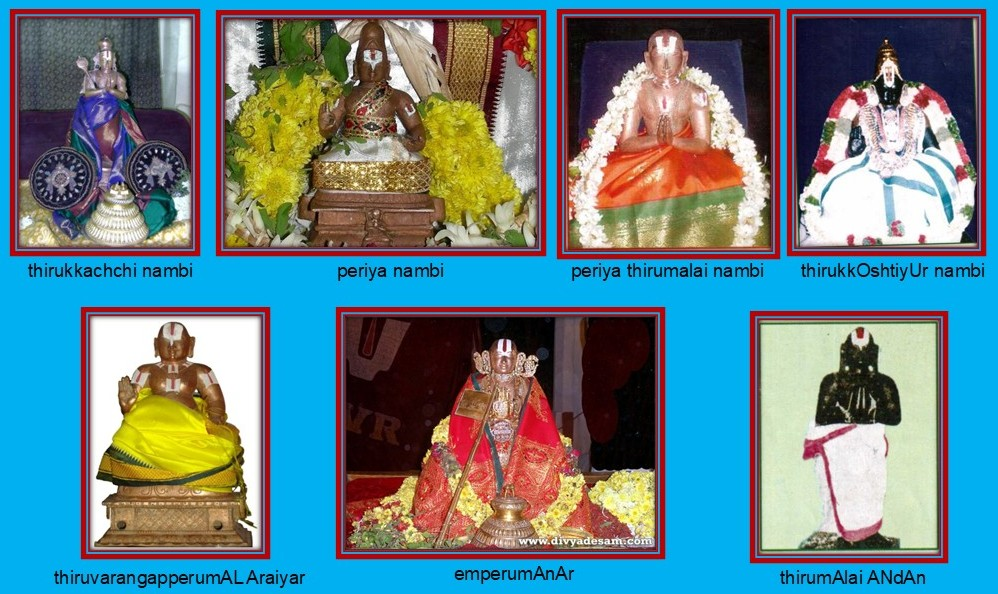
Initially, during his time in thirukkachchi (kanchIpuram), it was thirukkachchi nambi who guided him. Later, after he reached SrIrangam, five main disciples of ALavandhAr (viz., thiruvarangap perumAL araiyar, periya nambi, thirukkOshtiyUr nambi, periya thirumalai nambi, and thirumAlai ANdAn) supported emperumAnAr with immense affection and graciously expounded all the esoteric meanings to him.
Among them:
- periya nambi is the AchArya who performed the pancha samskAram for him.
- periya thirumalai nambi is the AchArya who beautifully expounded the meanings of SrI rAmAyaNam.
- thirukkOshtiyUr nambi is the AchArya who clearly explained the profound meanings of the thirumanthiram and the charama SlOkam.
- thirumAlai ANdAn is the AchArya who mercifully bestowed the bhagavath vishaya kAlakshEpam (the meanings of thiruvAimozhi).
- thiruvaranga pperumAL araiyar is the AchArya who thoroughly explained the greatness of AchArya abhimAnam (relying solely on AchArya’s grace).
In this way, these five AchAryas instructed emperumAnAr on many good/ beneficial meanings (hithangaL) and prepared him to lead our sampradhAyam. Among them, thirukkOshtiyUr nambi had an immense, compassionate affection for emperumAnAr. The 20th vArthai shown here are the divine words mercifully spoken by thirukkOshtiyUr nambi to udaiyavar (emperumAnAr). Let us now experience and enjoy it.
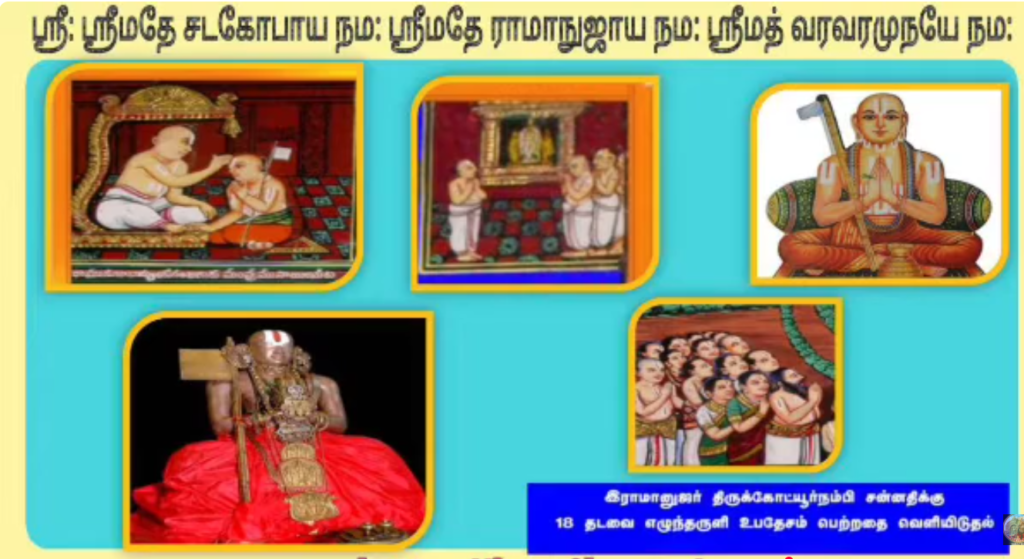
We all know the vaibhavam of thirukkOshtiyUr nambi. udaiyavar, knowing the glories of nambi, walked 18 times from SrIrangam to thirukkOshtiyUr to learn the most confidential meaning of charama SlOkam. Finally, on the 18th time nambi decides to instruct him in the most confidential meaning of charama SlOkam. nambi asks udaiyavar to promise that he won’t share this knowledge with anyone who is not qualified and who does not strive very hard to know the same. thirukkOshtiyUr nambi instructed udaiyavar that he (udaiyavar) must analyse and test in the exact same way that nambi had tested and examined him. Just as he had fasted for one month period and walked there eighteen times, he must similarly examine and test his disciples before giving this confidential meaning to them.
All the local SrIvaishNavas of that town had been observing udaiyavar as he walked there eighteen times. Looking at thirukkOshtiyUr nambi, they were greatly astonished. They thought, ‘thirukkOshtiyUr nambi does not speak even a single word to anyone. He is always immersed in meditation, constantly thinking only of ALavandhAr. Yet, to receive this profound meaning from such an astonishing thirukkOshtiyUr nambi, udaiyavar keeps coming again and again, making so much effort’. Seeing this, the people had previously approached udaiyavar and requested, ‘Whatever meaning dhEvarIr obtain, please mercifully bless us with it.’ At that time, udaiyavar had replied to them, ‘I will definitely do so’.
When the profound meaning of this charama SlOkam was thoroughly and beautifully explained, udaiyavar intently listened to and absorbed it. After learning this meaning from thirukkOshtiyUr nambi, he went to theRkAzhwAn sannidhi (on the way to vimAnam) in the thirukOshtiyUr temple. There, he immediately gathered the SrIvaishNavas who were very eager to learn this secret meaning of charama SlOkam and explained it to them in detail. Contrary to popular but false claims, he neither uttered these from the vimAnam/gOpuram (temple tower) nor shouted it so that entire town could hear, nor did he tell them any other manthram. As the one who incarnated to establish the vEdha SAsthrams and who gave them utmost respect, there was absolutely no chance for him to commit such an act of breaking the SAsthrams. This was shown in detail in the 6000 padi guruparamparA prabhAvam by pinbhazhagarAm perumAL jIyar, confirming that the secret meaning was shared in theRkAzhwAn sannidhi.
nambi hears about udaiyavar’s revelation and summons him at once. udaiyavar arrives at nambi’s thirumALigai (residence). nambi enquires about udaiyavar’s act and udaiyavar accepts that he disobeyed his orders. When nambi asks why he did that, udaiyavar says, “I may go to hell by disobeying your orders but many others (who learnt the meaning of charama SlOkam) will get mOksham and be uplifted”. nambi becomes totally overwhelmed by udaiyavar’s huge heart in providing true spiritual help to others and gives him a special name – “emperumAnAr”. emperumAn means my lord (bhagavAn) and emperumAnAr means one who is more merciful than bhagavAn. Such is the sambandham (association) between thirukkOshtiyUr nambi and udaiyavar.
Similar to that, we saw that when emperumAnAr was once poisoned by some miscreants in SrIrangam, nambi arrives from thirukkOshtiyUr and instructs kidAmbi AchchAn to prepare the prasAdham for emperumAnAr.
We also saw that, when thirumAlai ANdAn stops the kAlakshEpam due to some misunderstandings with emperumAnAr, nambi arrives in SrIrangam, reconciles the issue, and explains to thirumAlai ANdAn that emperumAnAr is an avathAra purusha (AdhiSEsha avathAra) who is fully knowledgeable. Even though he had not listened to the kAlakshEpam directly from ALavandhAr, there is an unspoken, profound spiritual communion between them. Whatever esoteric meanings we have heard and learned from ALavandhAr, it is ALavandhAr himself who has directly bestowed them upon him out of his boundless compassion and insisted that the kAlakshEpam should continue and ensures that it happens.
Thus, we can see, nambi was very fond of emperumAnAr and was always looking out for the well-being of emperumAnAr. His upadhESams to emperumAnAr is given in this twentieth vArthai.
thirukkOttiyUr nambi udaiyavarukku aruLichcheydha vArthai – prapannanukkup parihAryam ARu; avaiyAvana – ASrayaNa virOdhi, SravaNa virOdhi, anubhava virOdhi, svarUpa virOdhi, parathva virOdhi, prApthi virOdhi enRu. ivaRRil ASrayaNa virOdhiyAvathu – ahankAra mamakArangaLum, palAbhisandhiyum, purushakAraththai igazhgaiyum, pERRil samSayamum; SravaNa virOdhiyAvadhu – dhEvathAntharak kathA vishayangaLilE avaSamAgach sevithazhkkai; anubhava virOdhiyAvadhu – bhOga dhravyangoNdu pukku snAna dhravyangoNdu puRappadugiRa vishayAnubhavEchchai; svarUpa virOdhiyAvadhu – parathanthranAga isaiyAdhE svathanthranAyk kaivinjugai. parathva virOdhiyAvadhu – muRRal kshEthragnarAna brahma rudhrAdhigaLai ISvararAga bhramikkai; prApthi virOdhiyAvadhu – kEvalarOttaich chErththi
parihAryam refers to those things that are to be avoided or rejected. It comprises the obstacles that must be remedied, strictly pushed away, and completely eliminated. One who has performed prapaththi (prapanna or an AthmA who has unconditionally surrendered) must completely reject and avoid six obstacles (virOdhi). They are ASrayaNa virOdhi, SravaNa virOdhi, anubhavavirOdhi, svarUpavirOdhi, parathvavirOdhi, prApthivirOdhi. Each of these virOdhi are explained below.
- ASrayaNa virOdhi includes ahankAram, mamakAram, thinking about rewards, disrespecting pirAtti or AchArya
ahankAram and mamakAram — these must absolutely not exist. As long as this ahankAram and mamakAram exist, surrendering to emperumAn is indeed very difficult (dhurlabham) for us. If true surrender (SaraNAgathi) has actually been established in our minds, these feelings of ahankAram and mamakAram cannot exist, as they will act as an obstacle (virOdhi).
palAbhisandhi – Thoughts concerning the fruit/result, thoughts like, ‘How will we obtain the great fortune of performing nithya kainkaryam? Will we get it or will we not get it?’. These are wrong thoughts which are the obstacles (virOdhi).
purushakArathai igazhgaiyum – Disrespecting/disregarding the mediation of pirAtti or AchArya. We attain emperumAn only through the mediation of pirAtti. Here, AchAryas exist exactly as representatives of pirAtti. We must approach emperumAn only through an AchArya. If it is said that we disrespect or disregard such AchArya or pirAtti, that itself will be an obstacle (virOdhi) to taking refuge in emperumAn and performing kainkaryam.
- SravaNa virOdhi – Involuntarily or carelessly (avaSamAga) lending one’s ears to listen (sevithAzhkkai) to matters and glories of other deities (dhEvathAntharam).
We know the story of kUraththAzhwAn. One day, kuraththAzhwAn at his young age in kAnchIpuram – where boudhdha, jaina etc., were present – he was walking through the streets. Accidentally, the sounds of a discourse (pravachanam) fell into his ears. He went back to his thirumALigai (home), and his father, kUraththu AzhwAr, enquired about the reason for his delay. kUraththAzhwAn responded that he was listening to the pravachanam and hence got late. His father warned that a SrIvaishNava must never listen to such things and commanded him to have purifying bath and consume SrIpAdha thIrtham before entering the thirumALigai. Listening to such discourses makes our mind impure and acts as an obstacle (virOdhi); this applies even to listening to stories of dhEvathAntharam.
- anubhava virOdhi: The desire for worldly/material enjoyments becomes an obstacle.
bhOga dhravyangaL (objects of enjoyment) refers to indulging in sensory pleasures – such as using flowers and sandalwood paste or engaging in the union of a man and woman – which act as objects that hinder purification (snAna dhravyam). If the desire exists to experience such worldly matters, it becomes an obstacle to the divine experience of the emperumAn. Therefore, indulging in worldly matters for the sake of this physical body act as a barrier (virOdhi) to experiencing emperumAn.
- svarUpa virOdhi:
Being a servant of bhagavAn is indeed our true nature (svarUpam). Without agreeing to be subservient/dependent (parathanthran) in that way, acting independently (svathanthran) by claiming ‘I am the king’, and transgressing the commands of emperumAn — that will end up becoming an obstacle (virOdhi) to our true nature (svarUpa).
- parathva virOdhi:
The delusion (bhramikkai) to confuse the bound AthmA (kshEthragna) or even the exalted ones like brahmA and rudhra (they are badhdhAthmAs, bound souls), as ISvaran.
- prApthi virOdhi:
prApthi (the ultimate goal) means reaching emperumAn in paramapadham and performing nithya kainkaryam to him. What acts as an obstacle (virOdhi) to that? The kaivalya nishtars (those focused only on self-realization and eternally enjoying the self).
They think, ‘Let us just keep experiencing our own soul. We have developed a disgust for the material things of this world, but the desire to perform kainkaryam to emperumAn has not come’. Associating with such people is itself an obstacle (virOdhi) to our ultimate goal. Associating with them will infect a prapannan with the same mindset, becoming a fatal barrier to experiencing emperumAn.
This is 20th vArthai.
AzhwAr emperumAnAr jIyar thiruvadigaLE SaraNam
jIyar thiruvadigaLE SaraNam
pinbhazhagiya perumAL jIyar thiruvadigaLE SaraNam
Source : https://www.youtube.com/watch?v=wy5rLpq9p4A&list=PLcJLpGJlP9moqO1XaFrFTgVAqKoRM_Dff&index=7
adiyEn govindarAja rAmAnuja dAsan
archived in https://granthams.koyil.org
pramEyam (goal) – https://koyil.org
pramANam (scriptures) – https://granthams.koyil.org
pramAthA (preceptors) – http://acharyas.koyil.org
SrIvaishNava education/kids portal – http://pillai.koyil.org
1 thought on “vArthAmAlai – Part 7 – vArthai 18 – 20”