SrI: SrImathE SatakOpAya nama: SrImathE rAmAnujaya nama: Srimath varavaramunayE nama:
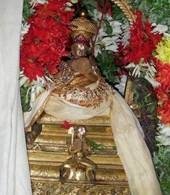
pinbhazhagiya perumAL jIyar at the lotus feet of nampiLLai, SrIrangam
We are enjoying this grantham – vArthAmAlai that has been mercifully compiled by pinbhazhagiya perumAL jIyar. This is a compilation of pUrvAchAryar’s upadhESams, their life history (aithihyam). We have enjoyed till the eighth vArthai in the previous article. Each vArthai will speak about a specific vishayam (subject/topic) from our SrIvaishNava sampradhAyam along with examples given by various AchAryas. We saw in detail about AthmA, dharmabhUtha gyAnam, dharmi gyAnam in the eight vArthai. Let us now start with the ninth vArthai.
Ninth vArthai
chEthanan onRai ninaikkumpOdhu ISvaran thiruvuLLaththilE ARu prakAramAna ninaivu kUdina pOdhAyththu ninaikkalAvadhu. avaiyevaiyennil – karthruthvam, kArayithruthvam, udhAsInathvam, anumanthruthvam, sahakArithvam, palapradhathvam AgiRa ivai. karthruthvamAvadhu – thAn mudhal ninaikkai; kArayithruthvamAvadhu – anninaivu ivanai ninaippikkai; udhAsInathvamAvadhu – ninaippikkumidaththil ivan karmamadiyAga ninaippikkai; anumanthruthvamAvadhu – ivan ninaikkumidaththil vilakka vallanAyirukkach cheythE vilakkAthozhigai, sahakArithvamAvadhu – chEthanan ISvaranaiyozhiya oru pravruththi nivruththi kshmananRikkE irukkai; palapradhathvamAvadhu – ivai iththanaiyum ivan paNNina karmaththinudaiya palamAyirukkai.
Explanation
This is a very beautiful vArthai that explains an in-depth sidhdhAntha vishayam (philosophy/doctrine). This vishayam is also found in many places in the SAsthram.
Let us look at an important aspect in our vEdhAntham, especially, that is said in the significant brahma sUthram. In this vyAsAchArya states as follows, “vaiSamya nairghruNyE na sApekṣhathvAth thathA hi dharSayathi” (brahma sUthra 2.1.34) meaning, there is no partiality (vaiSamya) or cruelty (nairghruNya) in emperumAn. This aspect had been taken up by our AchAryas and explained well. In this world, we see srushti (creation), sthithi (sustenance) and samhAram (annihilation) happening regularly. emperumAn shows neither partiality to anyone (by creating them as good and easily grants mOksha) nor prejudice (by creating them as evil and keep them in this samsAram) to anyone; and hence he is impartial as mentioned by vyAsAchArya. Also, it is the AthmA and not emperumAn who is responsible for their own actions. emperumAn merely provides the fruits (the results) based on their actions, not based on his own whims; hence he is also not cruel. If these blemishes (dhOsham) exist in him, then they fall short of the quality of emperumAn, as he is full of kindness (karuNai) and is impartial to everyone. He himself states as “samO’ham sarva bhUthEshu” (SrI bhagavath gIthA 9.29) meaning being equal for all beings of different species, “suhrudham sarvabhUthAnAm” (SrI bhagavath gIthA 5.29) meaning being the friend of all creatures. Generally, emperumAn thinks of good to everyone by being an antharyAmi within them to show the good path. However, due to karma, AthmAs are in this samsAram eternally (anAdhi kAlam) and whoever accepts emperumAn’s path gets mOksham. This is the general sampradhAya meaning.
Now, let us look at the meaning of vArthai.
chEthanan onRai ninaikkumpOdhu ISvaran thiruvuLLaththilE ARu prakAramAna ninaivu kUdina pOdhAyththu ninaikkalAvadhu.
When a sentient person (chEthana) thinks of something, six types of thoughts occur in emperumAn’s divine mind (thiruvuLLam). Without this, AthmA does not have the capacity to think of anything.
avai evai ennil – karthruthvam, kArayithruthvam, udhAsInathvam, anumanthruthvam, sahakArithvam, palapradhathvam AgiRa ivai.
These six thoughts are karthruthvam, kArayithruthvam, udhAsInathvam, anumanthruthvam, sahakArithvam and palapradhathvam. Each of these are explained as below.
karthruthvamAvadhu – thAn mudhal ninaikkai
karthruthvam means that emperumAn being the antharyAmi knows everything; the mind is the gateway through which knowledge emerges, and AthmA cannot think without emperumAn knowing it. thoNdaradippodi AzhwAr shows this nicely in thirumAlai pAsuram 34 – “uLLuvAr uLLiRRU ellAm udan irundhu aRithiyenRu veLgippOy ennuLLE nAn vilavaRach chiriththittEnE” meaning, AzhwAr thinks something about emperumAn assuming that he (emperumAn) is unaware about it but later realised that emperumAn is present in his heart (hrudhayam) from where the thought emerges, so we cannot think anything without emperumAn knowing it; AzhwAr laughed at himself seeing this state. In short, emperumAn is the karthA and all actions happen because of emperumAn’s thoughts and AthmA is doing based on the Sakthi given by emperumAn
kArayithruthvamAvadhu – anninaivu ivanai ninaippikkai
kArayithruthvam – emperumAn makes AthmA to think of something that was first thought by emperumAn. AthmA has all gyAnam (knowledge) and keeps thinking of something. But first, emperumAn sees those thoughts and makes it easier for AthmA to think.
udhAsInathvamAvadhu – ninaippikkumidaththil ivan karmamadiyAga ninaippikkai
AthmA thinks of something based on his karma. These thoughts emerge as words or actions. Since those thoughts are based on karma, emperumAn remains indifferent (udAsInan) and does not get directly involved or attached.
anumanthruthvamAvadhu – ivan ninaikkumidaththil vilakka vallanAiyirukkach cheydhE vilakkAdhozhigai
emperumAn is the person who gives permission. If emperumAn wants to stop either the good or evil deeds, he can do that but he allows AthmA to perform actions based on AthmA’s thoughts and to get the result of those actions (good or evil). If emperumAn does everything, then there is no need for AthmA to have the qualities of consciousness (chaithanyam) or knowledge (gyAnam). Hence, emperumAn just gives permission for AthmA to proceed based on AthmA’s own thoughts.
sahakArithvamAvadhu – chEthanan ISvaranaiyozhiya oru pravruththi nivruththi kshmananRikkE yirukkai
sahakArithvam means to be helpful. AthmA can neither perform (pravrutthi) nor avoid performing (nivruththi) any act without the help of emperumAn because everything was created by emperumAn. For example: even when we do something using any object, that object too is created by emperumAn. So, we need help from emperumAn to do anything with that object. This applies to everything (irrespective of being sentient (chith) or insentient (achith)), including AthmA.
palapradhathvamAvadhu – ivai iththanaiyum ivan paNNina karmaththinudaiya palamAyirukkai
The benefit or result (palam) is also due to the karma of the AthmA, in other words it is action-born fruit. Further, the result for his action is also given by emperumAn.
Thus, emperumAn is present during all these 6 stages to ensure that an action is happening or not happening properly. However, we are thinking that something is happening or not, due to our own thoughts. This in-depth meaning is shown in this vArthai. This has been explained nicely in thathvathrayam by piLLai lokAchAryar in sUthram 35 “karthruthvam IShvarAdhInam” and also explained in detail by maNavALa mAmunigaL. There seem to be some differences in opinion among our pUrvAcharyas. nadAthUr ammAL explains the aspect of anumanthruthvam. We saw that emperumAn doesn’t stop anyone from doing good or evil deeds; he allows the AthmA to commit the deed, see the impact and then realise to ensure that this world functions orderly. If emperumAn stops the AthmA, then he will be partial (vaiSamyam). maNavALa mAmunigaL shows another important aspect in his vyAkhyAnam to this sUthram – that if someone has in-depth bhakti and completely surrenders to emperumAn, then emperumAn takes on the decision of whether the AthmA should perform or not perform an act (pravruththi and nivruththi) in his own hand. In case of AzhwArs, there is no karma in the days of their life as emperumAn blessed them with blemishless knowledge and devotion (mayarvaRa madhinaLam) and they also wanted to go to paramapadham immediately. They are called as “Artha prapannar” (one who wants to be relieved from the sorrows of material world at once) but stayed in this world as emperumAn wanted them to stay in this world to complete his own matters through them. For such special people, emperumAn will perform or not perform acts by himself. They are in this world just for the desire of emperumAn as stated by piLLai lokAcharyar in SrIvachana bhUShaNam – sUthram 169 “kEvala bhagavath ichchaiyiRE” (emperumAn’s exclusive desire) to sing pAsurams and to correct this world, as their karma was crushed immediately and emperumAn had already held their hands. Similarly, if someone has done bhagavath apachAram (offences towards emperumAn) and bhAgavatha apachAram (offences towards emperumAn’s adiyArs), then emperumAn pushes them into lowly births (kshipAmi – SrI bhagavath gIthA 16.19) since he does not tolerate those who offend his devotees (na kshamAmi vasundharE – varAha purANam) (SrIvachana bhUshaNam – sUthram 15). These are all exceptions, the general rule is that everything will be based on one’s own karma to ensure that there is no partiality (vaiSamyam) in emperumAn as explained by mAmunigaL in his vyAkhyAnam to sUthram “karthruthvamathAna IshvarAdhInam”.
Next is tenth vArthai.
The tenth, eleventh, and twelfth vArthais are related to one another and they are very beautiful.
Tenth vArthai
thirumalaiyil jIyar aruLichcheyyum vArthai; ahankAramAgiRadhu – oru chaNdALan; mamathaiyAgiradhu- achchaNdALanukku bhAryai; rAga dhvEshangaLAgirana ivargaLudaiya prajaigaL; ivvahankAram onRaiyum kolla, ivaiyiththanaiyum naSikkum; enganEyennil – pathivrathaiyAgaiyAlE bhAryai anumaraNam paNNum; mulai koduppArillAmaiyAlE SiSukkaL nAkkuvaRRi naSikkum.
Usually, in our sampradhAyam, if the word jIyar is used alone, it refers to nanjIyar, till the period of nampiLLai or periyavAchAn piLLai. In this sUthram, it is not specified directly, and it is mentioned as thirumalaiyil jIyar.
There are two things – ahankAram and mamakAram, and further, rAga and dhvEsham are explained here.
ahankAram refers to believing that something to be self even if it is not i.e., thinking of the body (dEham) as the soul (AthmA). In general parlance, ahankAram is considered as ego (garvam). But as per SAsthram the important direct meaning for this word is “anAthmani Athma buddhi:”, meaning – believing something that is not the AthmA as AthmA. “asvE svabuddhi:” is mamakAram, meaning – some property (svam) not belonging to us as ours, which shows the svAthanthryam (we are svathanthran). Instead, we should be as parathanthran (we, AthmA are servants of emperumAn).
ahankAramAgiRadhu oru chaNdALan.
This ahankAram is a chaNdALan, who is the lowliest of low, like a low vasthu – inferior object (objects like dog’s flesh), without any faith (viSvAsam) in vEdhAs / vEdha SAsthrams and acting in contradiction to vEdha SAsthrams.
mamathaiyAgiRadhu achchaNdALanukku bhAryai
mamakAram is the servitor to ahankAram. It can be seen as – ahankAram like husband (pathi) and mamakAram like wife (pathni). mamakAram is the bhAryai (wife) of that chaNdALan.
rAga dhvEshangaL avargaLukku prajaigaL.
rAga (desire) and dhvEsha (hatred) are their prajaigaL (children). rAga and dhvEsha are the children of ahankAra and mamakAra. If we have ahankAram, we do not understand that we are AthmA. In such a situation, how do we understand the meanings shown in SAsthrams? – that there is someone as “bhagavAn” and we are the servants of that emperumAn. Fundamentals of sampradhAyam is that body and AthmA are different and if that is not known, then there will be a deficiency in everything. If someone has ahankAram, then mamakAram will automatically come. We will get the thought of svathanthran (i.e., thinking that body is the king and we are everything and that nothing happens without our supervision within our short circle). The thought of svathanthran is mamakAram (the bhAryai) is being shown here. If we have ahankAram and mamakAram, there will automatically be rAga (desire) and dhvEsha (hatred). If we think that we are body, then we will like whatever is good for our body and hate whatever is not good for our body. Similarly, we will like what is good for our svAthanthrya and hate if it is not good. Thus, rAga and dhvEsha are based on ahankAra and mamakAra.
We need to remove all the four and how do we remove that?
ivvahankAram onRaiyum kolla, ivaiyiththanaiyum naSikkum
We are under the illusion that we are body and not AthmA. If we understand the true nature of AthmA that we are servants of emperumAn, then we can remove ahankAram. If we remove the ahankAram, we can destroy everything.
enganE ennil ; – pathivrathai AgaiyAlE bhAryai anumaraNam paNNum
pathivrathai (a chaste wife) exists solely for her husband and always thinks about him. She will not think about anyone other man and fulfil all the needs of husband as per the SAsthram. mamakAram is like pathivrathai to ahankAram; if ahankAram is destroyed, then mamakAram will also be destroyed.
mulai koduppAr illAmaiyAlE SiSukkaL nAkkuvaRRi naSikkum.
If a mother has two children, then those children depend on milk from the mother. If that mother abandons, then there will be no one to take care of the children. In a short while, even the children will be destroyed due to hunger.
He has taken an example to explain this meaning.
Since the word pathivrathai is used, let us look at an example of piLLai uRangA villi dhAsar. His wife was ponnAchiyAr and they were so attached to worldly lives. Later, they became great bhakthas due to the mercy of emperumAnAr. ponnAchiyAr was also greatly knowledgeable. Like how piLLai uRangA villi dhAsar learnt everything from emperumAnAr, ponnAchiyAr also enjoyed the kAlakshEpams of emperumAr and became a vidhushI (learned woman) in all SAsthrams. Later, after the time of emperumAr, dhAsar also ascends to thirunAdu (paramapadham). ponnAchiyAr, understanding the great benediction that is awaiting dhAsar in paramapadham, without shedding even a single tear, happily decorates the place and takes care of the SrIvaishNavas during the whole time. Finally, after dhAsar’s thirumEni (sacred body) is carried on a palanquin and reaches the end of the street, she starts crying loudly, unable to bear the separation from dhAsar and at once gives up her life as well. All SrIvaishNavas become astonished at her and at once arrange for her to be placed along with dhAsar as well. This shows the extreme level of pathi – pathni attachment that they cannot bear the separation of the other person even for a small moment.
Thus, if ahankAram is destroyed, mamakAram (being pathivrathai) will also be destroyed and rAga and dhvEsha will also be eventually destroyed.
Now let us look at Eleventh vArthai.
Eleventh vArthai
This vArthai has the same meaning from the previous one but uses a different metaphor.
ahankAramAgiRadhu – oru sarppam; mamathaiyAgiRadhu – adhinudaiya udal; rAga dhvEshangaL – adhinudaiya paRkal; ippaRkaLai muRikkath thIrum.
In the last vArthai, he came from top to bottom and in this vArthai, he is going from bottom to top. Irrespective of that, he is showing an example of how to remove it.
ahankAram AgiRadhu – oru sarppam
ahankAram is like a snake (sarppam). Here, we should consider it as the AthmA of a snake .
mamathaiy AgiRadhu – adhinudaiya udal
mamakAram as the body of a snake.
rAga dhvEshangaL – adhinudaiya paRkal
rAga and dhvEsha as the fangs (teeth) of a snake.
ippaRkaLai muRikkath thIrum
If we remove the fangs / teeth (rAga and dhvEsha), then automatically ahankAram and mamakAram will be destroyed. i.e., if desire and hatred go away, then we will get sathva guNam (goodness) to accept anything and thus mamakAram will go away. Then, ahankAram will also go away.
Twelfth vArthai
The Twelfth vArthai is long; hence we will see it in parts (given in 5 parts for ease).
Part 1
samsAri chEthanar avidhyaiyOdE kUdiyiruppargaL; avidhyaiyAvadhu – ahankAra mamakArangaL; iththAlE – rAgadhvEshangaLundAm. iththAlE – nAluvagaippatta sarIramuNdAm; sarIramadiyAga anju vishayangaLilum ruchi yundAm. avvishayangaLai bhujikkaikkAga vazhikeda varththippargaL.
Through this, it is shown as to how an AthmA can attain a higher position gradually.
samsAri chEthanar avidhyaiyOdE kUdiyiruppargaL
avidhyai is ignorance. The sentient beings (baddha or samsAris) bound in this material world are filled with ignorance.
avidhyaiyAvadhu – ahankAra mamakArangaL
ahankAram and mamakAram are the avidhyai.
iththAlE – rAgadhvEshangaLundAm
Because of ahankAram and mamakAram, we have rAga (desire) and dhvEsham (hatred).
iththAlE – nAluvagaippatta SarIramuNdAm
Because of rAga and dhvEsham, we get four types of SarIra (body), i.e, dhEva (celestials), manushya (human), thiryak (animals/beasts) and sthAvara (immovable like plants). An AthmA takes rebirth in these 4 types of sarIra. This rebirth happens because of the existence of rAga and dhvEsham making us perform actions which result in the consequences of karma.
SarIramadiyAga anju vishayangaLilum ruchi undAm.
We saw 4 types of SarIra, viz., dhEva, manushya, thiryak and sthAvara. Depending upon these four types, there will be five types of taste / desire (ruchi), viz., five indhriyangaL (sensory organs) – Sabdha (sound – for ear), sparSa (touch – for skin), rUpa (form – for eyes), rasa (taste – for tongue) and gandha (smell – for nose).
avvishayangaLai bhujikkaikkAga vazhikeda varththippargaL
They are totally immersed (consumed by) in things which are not ordained or prohibited by SAsthram.
adhAvadhu – poy solliyum, kaLavu kaNdum, parahimsai paNNiym, nIcharai sEviththum pOrugai.
poy means lies and we should never tell them. Those who are following dharma will be true to what is stated in the SAsthram – sathyam vadha, dharmam chara (thaiththirIya upanishad, SikshAvallee, eleventh anuvAka, Verse 1). kaLavu is stealing someone else’s object without their knowledge, parahimsai is giving sorrow to others by vAk (word), manas (heart) and sarIra (body), nIcharai seviththum is ‘to pay obeisances to someone who are lowly instead of emperumAn, pirAtti, AzhwAr, AchAryas, adiyArs and bhAgavathas’ (if we do that it will result in a dhOsham). These are the ways in which someone could go down on a wrong path. Now, if asked whether someone in this state would ever get ujjIvanam (salvation) or always be reborn, he continues by stating how that person would get ujjIvanam. These are explained nicely in granthams like SrIvachana bhushaNam and are compiled here.
Part 2
ippadi pOrugiRa chEthananukku emperumAnudaiya sauhardha guNaththAle, ninaivinRikkEyirukka oru sukrutham viLaiyum; andha sukruthamadiyAga – ivanilum ivan anarthaththukku nondhu pOrugiRa emperumAn kuLirak kadAkshiththaruLum; Aga, iththalE – avanpakkal dhvEsham paNNaththavirum; atthAlE – avan thiruvuLLam ugakkum; andha ugappAle – ivanukku sathvam thalaiyedukkum; atthAle – ‘namakku nanmaiveNum’ enRu ninaiththirukkum; aththAle – sAthvikarOdE sangathiyuNdAm; aththAle – sadhAchAryanaik kittum; avan, thanjamAna arthangaLai upadhESikkkum.
In this samsAram, chEthana (AthmA) including us are wandering, i.e., we were all struggling to find the right path and emperumAn has corrected us and brought us here somehow. The steps in which emperumAn corrected us are shown in this.
ippadip pOrugiRa chEthananukku emperumAnudaiya sauhardha guNaththAle, ninaivinRikkEyirukka oru sukrutham viLaiyum
For a chEthana (sentient) who is struggling in this samsAra, emperumAn with his quality of sauhArdha (kind-heart which makes him doing good to others) to take everyone to paramapadham, sukrutham (noble deed) will happen even if we do not think of it. emperumAn creates a way for that and it is explained in detail in many granthams. For example in SrIvachana bhushaNam it is explained nicely, “ennUraich chonnAy, en pEraich chonnAy, en adiyArai nOkkinAy” (you recited the name of my abode, you recited my name, you provided shade for my devotees to rest etc.,) – mAmunigaL’s vyAkhyAnam to sUthram 381. piLLai lokAchAryar shows that emperumAn places such good acts on an AthmA.
ennUraich chonnAy – For example, if someone asks a ‘parama nAsthika’ (Atheist) about emperumAn’s place and he mentions that he belongs to thirumAlirunchOlai. To him it didn’t matter whether it is thirumAlirunchOlai or virAlimalai or any other hill, but he said thirumAlirunchOlai as his place. Even when he said the name by accident, it is enough for emperumAn; he takes into account that some devotee uttered the name of his abode as a sukrutham.
en pEraich chonnAy – For example if someone calls a person named “nArAyaNa”, “krishNa”, then emperumAn “claims” that utterance as chanting of his name (thirunAma sankIrthanam).
Whatever we do, it is known to emperumAn. For example, if we beat someone or help someone, the act of beating or helping is over. But emperumAn, as an antharyAmi, remembers the act that we did; if it is a good deed, he will give rewards but if it is a bad deed, he will punish. He is sarvagya (omniscient) and to keep account of everyone – he appoints adhikAris (the presiding dhEvas) like yama in each lOkA and punishes using yama. This is agyAtha sukrutham (unknown/unintentional merits). There is also another classic example of agyAtha sukrutham – A cow enters into the fields of someone and the one who owns the fields starts to chase the cow. The cow starts to run around the temple, but the cow runs in apradhakshiNam (reverse circumambulation), so he also runs in apradakshiNam. emperumAn will consider even this as circumambulation of the temple. This shows that the power is not in the act; the power is in emperumAn’s desire to save.
andha sukruthamadiyAga – ivanilum ivan anarthaththukku nondhupOrugiRa emperumAn kuLirak katAkshiththaruLum
ivan means some near, often referred to as AthmA and avan is normally referred to as emperumAn. emperumAn’s feeling for AthmA’s misery is more than what AthmA himself feels. Feeling sad for someone else’s sorrow is not a dhOsham (fault), rather a guNa (virtue). emperumAn showers the cool merciful glance on him, it is said as jAyamAna-katAksham (glance at birth). “jAyamAnam hi purusham yam paSyEnmadhusUdhana: sAthvika: sa thu vigyEya: sa vai mOkshArthachinthaka:”(mahAbhAratha, SAnthi parva, mOkshadharma parva, Chapter 348, Verse 73) (If madhusUdhanan emperumAn showers his cool, merciful glance upon a person at the moment of his birth, that person becomes endowed with sathva guNa; he alone becomes the one who seeks and contemplates the path to mOksham)
Aga, iththalE – avanpakkal dhvEsham paNNaththavirum
After getting this emperumAn’s katAksham (glance), AthmA is enabled with adhvEsham (that is he will not stop when emperumAn comes to help him). Since an AthmA has been doing this from time immemorial (that is stopping emperumAn when he is trying to help), he is not able to go near emperumAn. Now when this is stopped, that too because of the efforts / grace of emperumAn (like what we saw earlier), he will not show dhvEsham (hatred) to emperumAn.
aththAlE – avan thiruvuLLam ugakkum; andha ugappalE – ivanukku sathvam thalaiyedukkum; aththAlE – ‘namakku nanmai vENum’ enRu ninaiththirukkum; aththAlE – sAthvikarOdE sangathiyuNdAm; aththAlE – sadhAchAryanaik kittum; avan, thanjamAna arthangaLai upadhESikkkum.
emperumAn feels very happy when we stop showing dhvEsham towards him. AthmA will get sathva guNa due to this happiness of emperumAn. When sathva guNa develops, we will think about what is good for us and what we can do to get ujjIvanam. Till the time we get sathva guNa, we will be going in the wrong path. Because of this sathva guNa, we will get the sangathi (association or connection) of sAthvikars (who have sathva guNa, emperumAn’s devotee, who acts according to SAsthrams). When we approach adiyArs, they normally ask about – whether AchArya sambandham is there, about AchAryan, whether you have got samASrayNam or not, encourage to get it done if not done. Because of hearing these things from adiyArs, one will get a good AchArya (sadhAchArya). Such an AchArya will give upadhESams – which are of highest importance.
We have to understand how this happens gradually in a step-by-step manner. This has been made easy for us by emperumAnAr. When we get pancha samskaram, whether we are knowledgeable or not, we believe that we will get mOksha because of emperumAnAr’s association. However, these granthams show how an AthmA grows from one state to another higher state. We will have to try to conduct ourselves as shown in the granthams; this is an important state[1]. The changes to be brought about are explained below.
Part 3
avaiyAvana – ‘kANginRa udambozhiya vERE oruvan nAn engiRavan’ enRum, ‘nAndhAn svathanthrananRu, parathanthran’ enRum, ‘parathanthranAmidaththu dhEvathAntharangaLukkup parathanthrananRu, emperumAnukkE parathanthran’ enRum, ‘adhukku ellai – SrIvaishNavargaLukkup parathanthranAgai’ enRum, ‘idhukkup palam – emperumAn thiruvadigaLiLE kainkaryam paNNugai’ enRum, ‘adhukku virOdhi – ahankAra mamakArangaLum, SarIrasambandhamum’ enRum, ‘avai kazhigaikku upAyam – avan thiruvadigaLE’ enRum, ‘idhellAm aRigaikku pramANam – rahasya thrayam’ enRum ivai.
Here, AchArya lakshaNam is explained; Sishya lakshaNam was explained earlier. Even if AchArya cannot give upadhESam to everyone directly, he can create ten Sishyas and ask those ten Sishyas to spread the message (like how emperumAnAr did). The goal of AchArya is Sishya’s Athmarakshanam.
kANginRa udambozhiya vERE oruvan nAn engiRavan
AthmA is not the body that we see with the eyes, it is different. ‘I’ am ‘AthmA’ and ‘the body’ is my property.
nAndhAn svathanthrananRu, parathanthran
AthmA is not svathanthran (independent), is parathanthran (dependent of emperumAn).
parathanthranAmidaththu dhEvathAntharangaLukkup parathanthrananRu, emperumAnukkE parathanthran
As a parathanthran (a dependent), he is not the parathantran (dependent) of dEvathAnthras (other dEvathAs); he is parathanthran to emperumAn only.
adhukku ellai – SrIvaishNavargaLukkup parathanthranAgai
Athma svarUpam (true nature of AthmA) is being parathanthran of emperumAn, this is the first stage. Higher than this stage is to become parathanthran of SrIvaishNavas (adiyArs).
idhukkup palam – emperumAn thiruvadigaliLE kainkaryam paNNugai
The purushArtham (benefit or goal) is to perform kainkaryam (service) at the lotus feet of emperumAn.
adhukku virOdhi – ahankAra mamakArangaLum, SarIra sambandhamum
ahankAra, mamakAram and SarIrasambandham are the virOdhi (hurdles). We are not able to perform nithya kainkaryam because we have ahankAram and mamakAram. No matter how much we listen to kAlakshEpam or upadhESam, it is very difficult to see that the body and AthmA are different (this is true for both for the speaker as well as the listener). We always identify ourselves with the body and do things for the body. Along with bodily identification (dhEhAthma abhimAnam), we also think of ourselves as independent (svathanthran). These are virOdhi (main hurdles). All our AchAryas have always stressed the importance of getting rid of the dhEhAthma abhimAnam and svasvAthanthryam. Next is SarIrasambandham, we are unable to perform nithya kainkaryam because of this. As stated in thiruvAimozhi 9.10.5 in thirukkaNNapuram’s “mAlai naNNi” padhigam by nammAzhwAr as emperumAn’s words, “saraNamAgum thanadhAL adaindhArkku ellAm maraNamAnAl vaigundham kodukkum pirAn” (emperumAn grants vaikuNtam when death occurs to everyone who has reached and surrendered to his divine feet as their sole refuge). This is shown in many places like varAha charama SlOkam, “sthithE manasi susvasthE SarIrE sathi yo nara: dhAthusAmyE sthithE smarthA viSvarUpam cha mAmajam thathastham mriyamANanthu kAshtApAshANa sannibham aham smarAmi mathbhaktham nayAmi paramAm gathim” (If you surrender to me while you are healthy, then at the time of death, I will remember you even if you do not remember me and lead you to vaikuNtam). AzhwAr is doing anuvAdham (repeat or saying again) of emperumAn’s words in this pAsuram. As stated in that pAsuram, sometimes we may not have nithya kainkaryam, or we might do kainkaryam for a little while but it may not be continuous. Thus we can understand that virOdhi (hurdles) for nithya kainkaryam are ahankAram, mamakAram and SarIrasambandham.
‘avai kazhigaikku upAyam – avan thiruvadigaLE’
upAyam is the means to attain emperumAn and his thiruvadigaL (lotus feet) are the only way. There are many upAyams shown in SAsthrams but adhering to them is against our true nature – svarUpa virOdham. If we try to attain empurumAn through our own efforts like gyAna yOga, bhakthi yOga, thirunAma sankIrthanam, dhivyadhESa vAsam (living) etc., it will become svarUpa virOdham, these cannot be considered as upAyam. We saw that jIvAthmAs are parathanthrans (not independent, and are to be following the orders of emperumAn), hence, if we do something by our own efforts, it will not fall under pArathanthiyam. Hence, thiruvadigaL is shown as upAyam.
idhellAm aRigaikku pramANam – rahasya thrayam’ enRum ivai
All these are learnt from rahasyathrayam i.e, thirumanthram, dhvaya mahA manthram and charama slOkam.
AchArya should give upadhESam / teach all the above as shown.
Part 4
anantharam, ivvarththangaLai upadhESitha AchAryanpakkalilE kruthangyanAi, sAthvikarOdE sangathi paNNum; anantharam, AchArya kainkaryamE yAthraiyAyp pOrum. AchArya kainkaryamAvadhu – anishtam thavirkkaiyum, ishtam seygaiyum. avaiyiraNdilum vaiththukkoNdu anishtam thavirkaiyE pradhAnam. adhuvennennil; ishtam seyyAdhapOdhu upEkshikkum aLavEyuLLadhu; anishtam thavirAdhapOdhu, nErAga nigrahiththuk kaividum; avan kaivittavARE ISvaran kaividum; pinnaith thuNaiyAvadhu – pazhaiya karmangaLum, yamabhatarum; ivaiyiraNdum aRivadhu – SAsthramukhaththAlum AchAryan ninaivAlum.
How we should live our life as per AchArya upadhESam is shown here.
ivvarththangaLai upadhESitha AchAryan pakkalilE kruthagyanAy, sAthvikarOdE sangathi paNNum
AchArya does many great things to us by giving upadhESams and we should always be grateful (kruthagyan) and always be in the association (sangathi) of sAthvikas (sathsangam of emperumAn’s devotees, AchArya’s devotees).
anantharam, AchArya kainkaryamE yAthraiyAyp pOrum
The goal for the entire lifetime is to perform kainkaryam to AchArya and that should be one’s yAthrai (the best way to spend time wisely).
AchArya kainkaryamAvadhu – anishtam thavirkkaiyum, ishtam seygayum. avaiyiraNdilum vaiththukkoNdu anishtam thavirkkaiyE pradhAnam. athuvennennil;
Two things are shown as important here. If AchArya doesn’t like something (anishtam), we should not do that (thavirkkai) and do (seygai) what is to the liking (ishtam) of AchArya. This is AchArya kainkaryam. For example, there is sweet pongal but we have stomach pain as well, by avoiding them – anishtam thavirkkai (then, stomach pain should go away); ishtam seygai is eating the sweet pongal. Out of the two, anishtam thavirkkai (leaving what he doesn’t like) is more important (pradhAnam) as compared to ishtam seygai (doing what he likes). The explanation for this is given below.
ishtam seyyAdhapOdhu upEkshikkumaLavE uLLadhu; anishtam thavirAdhapOdhu, nErAga nigrahiththuk kaividum
If an AchArya has 500 Sishyas, not all 500 Sishyas will do things to the liking of the AchArya. Each one may be in a different state, some may be engaged in AchArya kainkaryam, some may be engaged in bhagavath kainkaryam, some may be engaged in laukika – worldly matters and might not be able to perform kainkaryam. An AchArya will not expect everyone to perform all the kainkaryams. If a Sishya doesn’t come for a kainkaryam then, AchArya will think that the Sishya may come for some other kainkaryam. However, if a Sishya does things which are not to the liking of an Acharya, then AchArya will show nigraha (anger) and give up on that Sishya. For example, telling something wrong about another person is not something that an AchArya likes (that i, anishtam). But if a Sishya continues to talk about others, AchArya may restrain the Sishya. Hence, anishtam thavirkkai (stop doing things which AchArya doesn’t like) is important.
avan kaivittavARE ISvaran kaividum
If AchArya gives up on a person, then ISvaran will also give up. This is because, even when Isvaran has given up on a person, AzhwArs and AchAryas extend their hands to us. When emperumAn gives up on one, a person’s AchArya bhakthi will support him, but if AchArya also gives up on a person, then there will be no other refuge.
pinnaith thuNaiyAvadhu – pazhaiya karmangaLum, yamabhatarum
Due to AchArya bhakthi, emperumAn removes all the old karma for a person. But if the AchArya does nigraha to him, then emperumAn will give back the old karma and let the servants of yama come and take him. emperumAn will have him face the yama bhatar and he does not attain emperumAn. If someone is a true adiyAr to emperumAn, then even if yama bhatar comes, vishNu dhUthas will come and protect, as seen in many chariththiram (stories) like ajAmiLa.
ivaiyiraNdum aRivadhu – SAsthra mukhaththAlum AchAryan ninaivAlum.
We can know about anishtam thavirkkai and ishtam seygai as shown in SAsthram and from the thoughts of AchArya.
Part 5
idhudhAn pERRukku sAdhanamumAy, kainkaryamumAy, svarUpamumAyirukkum. ivai sAdhanamEnRu ninaikkak kadavanallan; AchAryanukku priyamAga – bhagavath kainkaryam, bhAgavatha kainkaryam paNNikkoNdu pOrakkadavan; ippadiyirukkiRa adhikArikku prApyasidhdhiyuNdAm. svasvarUpaththukku sImA thadhIyaSEshathvam; parasvarUpaththukku sImA archAvathAram; virOdhi svarUpaththukku sImA – ahankAra mamakArangaL; upAya svarUpaththukku sImA bhagavath krupai; upEya svarUpaththukku sImA – bhagavan mukhOllAsam – enRu nampiLLai aruLichcheyvar
idhudhAn pERRukku sAdhanamumAy, kainkaryamumAy, svarUpamumAyirukkum. ivai sAdhanamEnRu ninaikkak kadavanallan
This AchArya kainkaryam will result in sAdhanam (path towards mOksha for doing nithya kainkaryam), kainkaryam and also svarUpam. However, we should not think of these kainkaryams as sAdhanam since emperumAn’s thiruvadi (lotus foot) is the only upAyam. If we consider these as sAdhanam, then it will create a deficiency for the state of emperumAn being upAyam. Even if emperumAn feels happy by seeing these kainkaryams and thinks that he should not give up, we should not think of it as sAdhanam.
emperumAn likes SathrugnAzhwAn more than iLaiyAzhwAn and bharathAzhwAn as SathrugnAzhwAn did service to his devotee, bharathAzhwAn. Similarly, empurmAn likes madhurakavi AzhwAr as he was a servitor to nammAzhwAr.
AchAryanukku priyamAga – bhagavath kainkaryam, bhAgavatha kainkaryam paNNikkoNdu pOrak kadavan; ippadiyirukkiRa adhikArikku prApya sidhdhiyuNdAm
As stated in SrIvachana bhUshaNam, which is also taken in upadhEsa raththina mAlai pAsuram 65, “AchAriyan sichchan Aruyiraip pEnumavan thEsArum sichchan avan sIr vadivai – Asaiyudan nOkkumavan ennum nuNNaRivaik kEttu vaiththum Arkkum annEr niRkai aridhAm” (AchArya protects the Sishya’s soul by imparting divine knowledge, while the Sishya serves and protects the AchArya’s physical form with love and devotion). Doing something which AchArya likes is Supreme. For eg., if the AchArya wants some kainkaryam to be done in sannidhi, we should immediately go and perform that rather than stating that we will be near the AchArya to take care of his physical form. In essence, whether we do kainkaryam to bhagavAn or bhAgavathas, it should be as per the liking of AchArya. If we perform kainkaryam in this manner, we will attain the ultimate goal of going to paramapadham and perform nithya kainkaryam to emperumAn.
svasvarUpaththukku sImA thadhIya SEshathvam; parasvarUpaththukku sImA archAvathAram; virOdhi svarUpaththukku sImA – ahankAra mamakArangaL; upAya svarUpaththukku sImA bhagavath krupai; upEya svarUpaththukku sImA – bhagavath mukhOllAsam – enRu nampiLLai arulichcheyvar
Here the ultimate state is being shown for artha panchakam as told by nampiLLai. It is given in the table below for easy understanding.
| artha (truth) | The Ultimate Limit (ellai nilai) |
| 1. SvarUpa (AthmA) | bhAgavatha sEshathvam (Being a servant to the emperumAn’s adiyArs) |
| 2. parasvarUpa (emperumAn’s state) | archAvathAram (in temple or home) |
| 3. virOdhi (Hurdle) | ahankAra and mamakAra |
| 4. upAya (Means) | bhagavath krupai |
| 5. upEya (Goal) | To see happiness in the thirumugam (face) of bhagavAn |
This is a lengthy vArthai with a lot of wonderful words, gathered in a single place and presented with many deep meanings that exist in our sampradhAyam.
AzhwAr emperumAnAr jIyar thiruvadigaLE SaraNam
jIyar thiruvadigaLE SaraNam
pinbhazhagiya perumAL jIyar thiruvadigaLE SaraNam
Source: https://www.youtube.com/watch?v=90KIokzsLcU&list=PLcJLpGJlP9moqO1XaFrFTgVAqKoRM_Dff&index=4
adiyEn gOvindarAja rAmAnuja dhAsan (rAgEsh)
[1] Even before 80 to 100 years, SishyAchArya kramam was there to some extent as AchAryas/vidhwAns/gyAni and bhakthas used to stay closer and after getting pancha samskAram, each person will understand some pAsurams and their meanings. Even if they cannot go outside to learn, the male in the house will teach his wife and children about sampradhAya meanings and how to perform kainkaryam (as kainkaryam was the only way for many people, irrespective of being brAhmaNa or others, and they normally resided near the temple and performed kainkaryams around the temple, based on their state. Someone performed thiruvArAdhanam, some madappaLLi thaLigai (cooking), some others cleaned temples, parichArakam, washed clothes, made pottery, played nAdhaswaram etc.,). They learnt sathvishayams through kAlakshEpams while performing kainkaryams as there was no other entertainment unlike today. It was more suitable in the earlier days but a lot has changed nowadays. We need to try and find ways to get back to that way with the blessings of emperumAn and AchArya. If we have the karunNai (blessings) of AchArya, we will listen, understand and act according to what AchArya preaches.
archived in https://granthams.koyil.org
pramEyam (goal) – https://koyil.org
pramANam (scriptures) – https://granthams.koyil.org
pramAthA (preceptors) – http://acharyas.koyil.org
SrIvaishNava education/kids portal – http://pillai.koyil.org