SrI: SrImathE SatakOpAya nama: SrImathE rAmAnujaya nama: Srimath varavaramunayE nama:
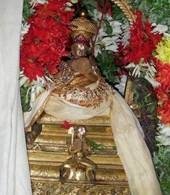
pinbhazhagiya perumAL jIyar at the lotus feet of nampiLLai, SrIrangam
nampiLLai is an exalted AchArya in our sampradhAyam; he is celebrated as lOkAchAryAr. He expounded many kAlakshEpams during his lifetime, such that his period is famously known as ‘nalladik kAlam’ (golden era). His discourses were attended by such large crowds that many marveled whether it was namperumAL’s gOshti.
pinbazhagarAm perumAL jIyar is nampiLLai’s very dear Sishya. In upadhESa raththina mAlai, while describing the essential traits of a Sishya, maNavALa mAmunigaL celebrates pinbazhagiya perumAL jIyar’s Sishya lakshaNam, and his AchArya abhimAnam towards nampiLLai. pinbazhagiya perumAL jIyar is the author of 6000 padi gurumparA prabhAvam and this grantham – vArthAmAlai.
vArthAmAlai contains significant concepts from our philosophy, sampradhAyam, as passed down by our pUrvAchAryas. These upadhESams, along with their important life events, were summarised by pinbazhagiya perumAL jIyar. While the historical events (aithihyams) can be comprehended through reading, the in-depth analysis of our sidhdhAntham – specifically chith, achith, ISvaran which have been analysed in many vArthais and explained can be a bit difficult to grasp. A good amount of knowledge in SAsthram and fundamentals of vEdhAntham is required to understand these sections.
We are grateful to puththUr swAmy for having published this grantham and for also providing detailed explanation for these complex concepts.
The following article is a translation from SrI u vE sArathy thOthAthri swAmy’s thamizh kAlakshEpam on this vArthAmAlai grantham. We are grateful to swAmy for giving us this opportunity and his continuous help in publishing these.
vArthai refers to the upadhESam (teachings) given by AchAryas passed down through disciplic succession which have been later summarised.
There are a few important points to keep in mind. Occasionally, the same concept may be repeated across different vArthais with slightly different interpretations. This occurs because the focus of explanation may be different by different AchAryas in order to emphasise specific aspects.
vArthai 23
In this vArthai AthmA’s thanmai (qualities) are explained in detail.
The source of this vArthai is unknown. pinbazhagarAm perumAL jIyar has extracted this vArthai from pUrvAchAryas’ upadhESams and shown the meaning here.
Summary of vArthai 23:
- AthmA is different from indhriyams, manas, prANan, prakruthi, gyAnam.
- ArhmA is not vibhu.
- AthmA is not anithyam.
- AthmA is not EkAthmA.
- AthmA is not subservient to anyone other than Sriman nArAyaNa.
- thadhIyaSEshathvam is the charama parva (ultimate state) of SEshathvam
Twenty-third vArthai
karaNangaLai AthmA enbAr; indhriyangaLai AthmA enbAr; manassai AthmA enbAr; prANanai AthmA enbAr; ivai thaniththaniyE AthmA enbAr; idhinudaiya samudhAyam AthmA enbAr; prakruthiyai AthmA enbAr; idhukku vERupattu irukkum AthmA enRu kOLLachcheydhEyum jadam AthmA enbAr; kshaNikam AthmA enbAr; gyAnam AthmA enbAr; vibhu AthmA enbAr; AthmA anithyam enbAr; EkAthmA enbAr; pariNAmi AthmA enbAr; svathanthram AthmA enbAr;
pArathanthryam koLLA niRkach cheydhEyum, karmaththukkup parathanthran enbAr; mAthA pithAkkaLukkup parathanthran enbAr; pithrukkaLukkup parathanthran enbAr; gruhangaLukkup parathanthran enbAr; agnikkup parathanthran enbAr; indhranukkup parathanthran enbAr; brahmAvukkup parathanthran enbAr; rudhranukkup parathanthran enbAr; EkAyana empErumAnukkup parathanthran enbAr; ippadi bahUpkArangaLinAlE viprathipaththi paNNuvargaL.
ivai viprathipaththiyAgiRapadi enganE ennil kAlum kaiyum pOnAlum irukkak kAngaiyAlE karaNangaL AthmAvAga mAttAdhu; kaNNum seviyum kettAlum irrukkak kAngaiyAlE indhriyangaL AthmAvAga mAttAdhu; manassu jadamAgaiyAlE AthmAvAga mAttAdhu; prANan vAyu viSEshamAgaiyAlE AthmAvAga mAttAdhu; orukaraNaththukku vandha klESaththAlE, maRRaik karaNangaLum klESikkak kaNgaiyAlE- thaniththaniyE AthmAvAga mAttAdhu; ivaRRinudaiya samudhAyamAna SarIram AthmAvAga mAttAdhu;
enganE ennil; ‘unnudaiya kAl’ ‘ennudaiya kai’ ‘enakku SarIram vidhEyamAyththu’ engaiyAlum, mAthA pithAkkaL seththa anantharam kANgira SarIraththil onRum mugam mARip pOgAmE kidakka, ‘appA! enguppOnAy?’ ‘ammA enguppOnAy?’ enRu, munnAL Adhariththup pOndha SarIranthannai, arai nAzhigai agaththil kidakkavum pORAdhE “Savam” enRu pErIttu, dharSiththa dhOshaththukku neyyum neruppum koNdu kuLikkaiyAlum, agyarum kUda Sava SarIraththil Athmabudhdhi paNNAmaiyAlE – SarIram AthmAvAga mAttAdhu; ivan irundhapOdhu gyAnam nadaiyAdugaiyAlE – jadam AthmAvAga mAttAdhu; munbu seydha kAryam sollugaiyAlE – kshaNikam AthmAvAga mAttAdhu;
‘nAn iththaich cheyyA ninREn’ engaiyAlE-gyAnam AthmAvAga mAttAdhu; AthmA SarIraththil ninRum puRappattup pOmbOdhu suRRilirundhArkkuth theriyAmaiyAlE – vibhu AthmAvAga mAttAdhu; ‘pOna janmam sila dharmangaLaich cheygayAlE ijjanmam sukhamAy irundhOm; ijjanmamum sila sukruthangaLaich cheydhAl, varugiRa janmamum sukhamAy irukkalAm’ enRu seyyakkANgaiyAlum, SarIraththaivittup pOy svargAdhyanubhavam paNNuvadhAga jyOthishtOmAdhi sAdhanaththilE izhigaiyAlum, AthmA anithyamAga mAttAdhu; oru chEthanan sukhikka oru chEthanan dhukkhikka, oru chEthanan naliya, oru chEthanan nalivupadak kaNgaiyAlum EkAthmAvAga mAttAdhu;
piRandhavanRu sAgiRa prajaiyinudaiya AthmAvOdu, nURu vayassup pukku sAgiRavanudaiya AthmAvOdu vAsiyaRak kaNNukkuth theriyAmaiyalE, pariNAmi AthmAvAga mAttAdhu; thanakku anishtamAna dhukkaththai pOkkikkOLLa mAttAmaiyAlum, ishtamAna sukhaththai azhaiththuk koLLa mAttAmaiyAlum, thAn seygiREn enRa kAryaththaich cheydhu thalaikkatta mAttAmaiyAlum, svathanthram AthmAvAga mAttAdhu
karmaththukkup parathanthranAgamAttAn – adhu achEthanamAgaiyAlE; ivanudaiya ApannivAraNam paNNa mAttAmaiyAlE – mAthA pithAkkaLukkup parathanthranAga mAttAn; rakshakathvam illAmaiyAlE – pithrukkaLukkup parathanthranAga mAttAn; ippadi AgaiyAlE – gru(ra?)hangaLukkup parathanthranAga mAttAn; achiththAgaiyAlum, thannaip piRar rakshikka vENdugaiyAlum, ASrayASiyAgaiyAlum, agnikkup parathanthranAga mAttAn; SApOpahathanAgaiyAlum, thannudaiya rAjyaththaip piRar kaiyilE paRikOduththu klESikkaiyAlum – indhranukkup parathanthranAga mAttAn;
madhukaitabhar kaiyilE vEdhaththaip paRikodukkaiyAlum, rudhranAlE naliyappadugaiyAlum – brahmAvukkup parathanthranAga mAttAn; thAn abhimAniththa bANanaikkAttik kOduththuth thannaik koNdu negizha niRkaiyAlum, brahmaSirassu than kaiyilE ottik kidakka, sarvESvaran pakkalilE chenRu “en Apaththaip pOkki aruLavENum” enRu nOkkik koLLugaiyAlum – rudhranukkup parathanthranAga mAttAn;
“thirumAlE! nAnum unakkup pazhavadiyEn” engaiyAlE- EkAyana emperumAnukkup parathanthranAga mAttAn; ini ivvAthmAvukku nilaininRa SEshathvam – “nin thiruvettezhuththum kaRRu nAn uRRadhum un adiyArukku adimai” engaiyAlE thadhIya SEshathvamEyAgak kadavadhu.
Explanation:
There are various sidhdhAnthams (schools of thought) existing in bhAratha dhESam. Throughout eternity, various philosophies and doctrines have existed. In each of these sidhdhAnthams, its sidhdhAnthi (philosopher) explains the nature of AthmA, nature of prakruthi and, if the philosophy accepts the ISvara thathvam (the supreme lord), the nature of ISvaran.
Examining these various viewpoints, jIyar shows how the AthmA has been depicted by different proponents, and what the shortcomings are in those depictions. Further, jIyar explains how our pUrvAchAryas in our sidhdhAntham have explained this AthmA thathvam.
puththUr swAmy explains how each philosophy describes AthmA. Each of the above vArthai refers to how a particular philosophy describes AthmA. For example: “karaNangaLai AthmA enbAr” talks about how a particular sidhdhAntham describes AthmA. Similarly, another sidhdhAnthi (philosopher) says indhriyams (senses) are AthmA, while another sidhdhAnthi states that manas (mind) is AthmA. Thus, each sidhdhAntham explains the thathvams based on its own perspective.
For instance, the naiyAyikans usually refer to the achEthanas (insentient entities) as AthmA.
karaNangaLai AthmA enbAr
karaNangaL refers to gross forms like hands and legs. Generally, karaNakalEbaram refers to the senses/indhriyams (karaNa) and body (kalEbaram). It is said that in this samsAram, ISvaran endows the AthmA with karaNakalEbaram, providing the means to attain emperumAn. However, since the indhriyams are mentioned separately here, karaNam refers to the body parts. Some sidhdhAnthis interpret karaNangaL as AthmA itself.
indhriyangaLai AthmA enbAr
indhriyam refers to the inner organs like eyes, ears, nose etc. Some sidhdhAnthis refer to these indhriyams as AthmA.
manassai AthmA enbAr
There are five karmEndhriyams and five gyAnEndhriyams (total ten indhriyams). The manas (mind) thathvam is considered as the leader of these ten indhriyams. It controls the 10 indhriyams. This manas is called as AthmA by some sidhdhAnthis.
prANanai AthmA enbAr
Some say that prANan (vital air) is AthmA.
ivai thaniththaniyE AthmA enbAr
Some refer to these individually as AthmA.
idhinudaiya samudhAyam AthmA enbAr
Some say that the whole form – the physical body with the indhriyams, prANan, karaNangaL and manas within it – is AthmA.
prakruthiyai AthmA enbAr
Some say that prakruthi is AthmA. They say that there is no separate concept of AthmA, whatever is perceptible to the eyes is AthmA.
idhukku vERuppattu irukkum AthmA enRu koLLachcheydhEyum jadam AthmA enbAr
jadam refers to entities that lack knowledge. Even though these entities are distinct from AthmA, some philosophers claim that these insentient entities (jadap poruL) are AthmA. It is said that according to the naiyAyika school of thought, an AthmA becomes jadam upon attaining mOksham.
kshaNikam AthmA enbAr
This description of AthmA is given by baudhdha matham (philosophy). As per baudhdha matham, gyAnam (knowledge) keeps changing. The knowledge we have at this moment is not the same as gyAnam we have in the next moment. The knowledge we have today is different from what we will have tomorrow. There are four schools of thought in baudhdha matham, each having a different doctrine. Out of the four, the last one says that everything is SUnyam (void), including gyAnam. baudhdha philosophy is said to be a SUnya vAdha philosophy. So, as per them, gyAnam is kshaNikam (changing every moment). For example, we think of something at the current moment, but the next moment we think of something else. There is a change in the thought we have now in comparison to what we had before. Based on this interpretation of the change in gyAnam every moment, they say that AthmA is kshaNikam (fleeting/temporary).
gyAnam AthmA enbAr
This description of AthmA is given by adhvaitha philosophy. They say that the AthmA does not possess gyAnam, but rather the AthmA itself is gyAnam. As per this philosophy, AthmA does not have a form or qualities, it exists as gyAnam.
vibhu AthmA enbAr
‘vibhu‘ means all-pervasive. Some say that a single AthmA is spread everywhere. Only emperumAn is generally said to be vibhu, whereas AthmA is considered an aNu thathvam. However, some people say that the AthmA itself is vibhu.
AthmA anithyam enbAr
Some say that AthmA is anithyam (impermanent), Further, they say AthmA is not nithyam, is subject to change and can be destroyed. nithyam means premanent and anithyam means impermanent.
EkAthmA enbAr
Some say that there is only one AthmA. This is also adhvaitha paksham (perspective). According to adhvaitha philosophy, there is only one AthmA and that AthmA is brahmam. When the AthmA attains gyAnam, it gains knowledge about itself and understands that everything else is false.
pariNAmi AthmA enbAr
According to jainism, AthmA is subject to continuous change. Their philosophy (matham) is that the AthmA inside an elephant is the size of the elephant, and the AthmA inside an ant is the size of the ant. When the elephant dies and takes the next birth as an ant, the AthmA will change its size accordingly.
svathanthram AthmA enbAr
While some accept that AthmA is aNu, they also believe it is entirely svathanthran (independent) and not subservient to any entity.
pArathanthryam koLLA niRkkach cheydhEyum
pArathanthryam means being subservient. Some say that they accept AthmA as adimai (subservient) and that he is parathanthran and not svathanthran (independent). However, instead of accepting AthmA as parathanthran to bhagavAn, they present a separate philosophy.
karmaththukkup parathanthran enbAr
Some say that he is under the control of karma. Therefore, he lives according to how the karma drives him.
mAthA pithAkkaLukkup parathanthran enbAr
Some say that AthmA is subservient to those who gave birth to them – their parents.
pithrukkaLukku parathanthran enbAr;
pithru refers to ancestors who lived in the family lineage. Some say that AthmA is parathathran to them.
gruhangaLukkup parathanthran enbAr
gruham means house, and some say AthmA is parathanthran to the house. Here, gruhaththukkup parathanthran means that they are parathanthran to the women living in the house. For example, when we say, “I’ll inform home and return”, it means that we will inform the wife and return. That is illustrated here. Therefore, gruhangaLukkup parathanthran means gruhiNikkup parathanthran (subservient to wife). Thus, some say that he is subservient to his wife.
agnikkup parathanthran enbAr
From here on, dependence on dhEvathAs is shown. agni is one of the important dhEvathA. In yAgam and yagyam, we perform an important AvAhanam for this dhEvathA. It is through this dhEvathA that we offer the havis. Some say that AthmA is parathanthran to agni dhEvathA.
There are several philosophies in this world. nammAzhwAr says in thiruviruththam 96 ‘vaNangum thuRaigaL palapalavAkki madhivigaRpAl piNangum samayam palapalavAkki’ (You have created many different paths for people to attain their goals; you created many different philosophies due to differences in the levels of intellect and deities). All these varied philosophies spread across the world are gathered here in one place.
indhranukkup parathanthran enbAr
indhra is an important dhEvathA. He is the leader for all lOkas upto svarga lOkam. All the other dhEvathAs are subordinate to indhra. Some say that AthmA is parathanthran to indhra.
brahmAvukkup parathanthran enbAr
brahmA is the dhEvathA for creation. He was born from the divine navel of emperumAn, who taught vEdham to brahmA first and through him ensured the vEdham was spread across the world. brahmA is considered as lOka guru. However, some say that AthmA is subservient (adimai) to brahmA.
rudhranukkup parathanthran enbAr
rudhran is a dhEvathA who is the son of brahmA. He is famous in the world and has many devotees. Because of this, some people claim that AthmA is subservient (adimai) to rudhran.
Some of these claims are based on misinterpretations of certain portions of vEdham. There are also Saiva Agamams, and based on the contents of those Agamam, some say that AthmA is parathathran to rudhran.
Similarly, each person holds their own philosophy.
EkAyana emperumAnukkup parathanthran enbAr
Some say that AthmA is parathathran to EkAyana emperumAn – that is only nArAyaNa, and not SrImannArAyaNa (emperumAn who is with pirAtti). EkAyana matham is a separate matham. Generally, dhvaithis are called EkAyana.
ippadi bahUpkArangaLinAlE viprathipaththi paNNuvargaL
Thus, many in this world have misunderstood in various ways.
As a result, the true nature of AthmA is interpreted differently – whether AthmA and SarIram (body) are same, or if the AthmA and SarIram are different, whether the AthmA is svathanthran (independent) or parathanthran (dependent). Furthermore, if AthmA is parathanthran, then to whom is he sunservient? Thus, there is confusion regarding so many aspects in this world, giving rise to numerous philosophies and doctrines.
Next , we will understand – what is the true thathvam? What are the flaws in these differing philosophies, and what is the true thathvam?
ivai viprathipaththiyAgiRapadi enganE ennil
Further it is explained how these are misunderstood.
kAlum kaiyum pOnAlum irukkak kANgaiyAlE karaNangaL AthmAvAga mAttAdhu
We have previously seen the explanation of how some say that the karaNams are AthmA. Here, karaNams refer to the physical body parts, such as hands, legs etc. However, we see that AthmA continues to exist even if the hands and legs are lost; life persists even for those without limbs. AthmA means that which possesses knowledge and prompts to perform action. Since AthmA is the one with the knowledge, and because it endures even in their absence, these hands and legs cannot be AthmA.
kaNNum seviyum kettAlum irukkak kAngaiyAlE indhriyangaL AthmAvAga mAttAdhu
Some say that the indhriyams are AthmA. indhriyams refer to the gyAnEndhriyams, which are the eyes, ears, nose, tongue and skin. The external body parts themselves are not the indhriyams, rather the inner sensory powers of these body parts are called as indhriyams. For example, some people despite having eyes, cannot see. Similarly, some people cannot hear even though they have ears, and some are unable to speak despite having a mouth. Since AthmA exists even when the eyes or ears are absent, it cannot be said that the indhriyams are AthmA.
manassu jadamAgayAlE AthmAvAga mAttAdhu
AthmA has knowledge. manassu (mind) does not have knowledge and is a jadam (insentient). We gain knowledge through the manasusu, but the manasusu itself does not possess knowledge. Therefore, manassu (the mind) is not AthmA.
prANan vAyu viSEshamAgaiyAlE AthmAvAga mAttAdhu
prANan is a vAyu viSEsham (special type of air). There are various vAyus that flow inside our body, such as prANa vAyu, apAna vAyu. These are vAyus , therefore they cannot be AthmA.
orukaraNaththukku vandha klESaththAlE, maRRaik karaNangaLum klESikkak kaNgaiyAlE- thaniththaniyE AthmAvAga mAttAdhu
If one karaNam is defective, the other karaNams are also affected. For example, when we get hurt on our hand, our eyes water or we feel discomfort in our mind. Since all these are interconnected, they cannot be said as individual AthmAs.
ivaRRinudaiya samudhAyamAna SarIram AthmAvAga mAttAdhu
Some say that the whole body is AthmA, but that cannot be said. During conversations, we refer to it as “your body”, “your hand”, “your leg”. This means “you” is different from your hand, your leg, and you body. Since we say that this body is subservient to me, it can be seen that “I” am different from the body.
enganE ennil; ‘unnudaiya kAl’ ‘ennudaiya kai’ ‘enakku SarIram vidhEyamAyththu’ engaiyAlum
Even in everyday conversation, we say ‘my body’, ‘my hand’, ‘my leg’. This clearly shows that you are different from the hand and body itself. This is evident from our daily language. Furthermore, because we say that this body is subservient to me, it proves that body is separate from ‘I’.
mAthA pithAkkaL seththa anantharam kANgiRa SarIraththil onRum mugam mARip pOgAmE kidakka, ‘appA! enguppOnAy?’ ‘ammA enguppOnAy?’ enRu
When a mother or father dies, the AthmA leaves the body. Although the body does not undergo any immediate physical changes – the face remains the same, and they still look like our father or mother – we find ourselves asking ‘Mother, where did you go’? ‘Father, where did you go’?
The physical body is still present there in front of us, but our instinct to ask where they went proves that AthmA is missing. The AthmA we referred to as ‘father’ is no longer inside the body, only the body remains. Because of this, the whole body too cannot be called as AthmA. Since the entire body remains perfectly intact and yet we still ask, ‘Where did you go?’, it indicates that AthmA is no longer in the body. This shows that AthmA and body are different.
munnAL Adhariththup pOndha SarIranthannai, arai nAzhigai agaththil kidakkavum pORAdhE “Savam” enRu pErIttu
While relatives, whether a father, mother or any other, are alive we cherish them, speak with them and lovingly share information with them . But once the AthmA leaves the body, we say that we must finish the final rites by the stipulated time. Furthermore, if it takes an additional half -hour, we begin to enquire about the delay. We spend our lives living happily and sharing everything with the person, yet as soon as the AthmA leaves the body, we ask “Why are we keeping the body so long?” Almost immediately after the AthmA leaves, the body is reduced to being called a corpse.
dharSiththa dhOshaththukku neyyum neruppum koNdu kuLikkaiyAlum
Whenever a corpse is sighted, a bath must be taken to cleanse the theettu (ritual impurity) that accumulates . A ghee lamp is held, and then we have to come inside only after taking a bath. These are general protocols, however not explicitly stated as such for SrIvaishNava thirumEni because a SrIvaishNava thriumEni is considered as a divine and immortal body.
agyarum kUda Sava SarIraththil Athmabudhdhi paNNAmaiyAlE – SarIram AthmAvAga mAttAdhu
Even an ignorant person, upon seeing a lifeless body, if told ‘He is inside this’, would say, ‘No, he is not in here; this is just a corpse now’. Even an ignorant person would understand this. Thus, the SarIram cannot be AthmA. SarIram and AthmA cannot be said as one, because no one would agree that they are the same.
ivan irundhapOdhu gyAnam nadaiyAdugaiyAlE – jadam AthmAvAga mAttAdhu
When AthmA is inside the body, there is gyAnam (knowledge). AthmA desires all actions and performs accordingly. jada vasthus, which lack knowledge cannot be AthmA. Because the knowledge is exhibited when AthmA is in the body, inanimate objects (jadap porUL) cannot be AthmA.
munbu seydha kAryam sollugaiyAlE – kshaNikam AthmAvAga mAttAdhu
According to (baudhdha) buddhist philosophy, kshaNikam is AthmA. However, this is refuted by the fact that we can remember what happened the previous day. Since memory has not been destroyed, we can retain past knowledge. If our previous knowledge were entirely destroyed when acquiring new knowledge, we would have completely forgotten the past.
If we forgot previously acquired knowledge every time we learned something new, then we can say that kshaNikam is AthmA. However, this is not the case, we can remember things from ten years ago or even from childhood. Therefore, AthmA cannot be called as kshaNikam (momentary). AthmA’s knowledge can change, that is, the level of knowledge we had previously may differ from our current stage, and it continues to evolve as we age. While AthmA’s knowledge may increase or decrease, AthmA remains unchanged.
‘nAn iththaich cheyyA ninREn’ engaiyAlE-gyAnam AthmAvAga mAttAdhu
‘gyAnam is AthmA‘ is an adhvaitha philosophy. It states that gyAnam (knowledge) is AthmA and that nothing exists other than that. However, it cannot be said so because we commonly say, “I have knowledge” or “I desire to perform these tasks”. These statements indicate that ‘I’ am distinct from knowledge itself. Therefore, knowledge cannot be AthmA.
AthmA SarIraththil ninRum puRappattup pOmbOdhu suRRilirundhArkkuth theriyAmaiyAlE – vibhu AthmAvAga mAttAdhu
One philosophy states that AthmA is vibhu. vibhu means spread everywhere and immensely vast. While this is usually attributed to brahmam, some have attributed this to AthmA. However, this is incorrect because when AthmA leaves the body it is not visible to the eyes. We know that AthmA has left the body, but cannot see how it deparated. Due to this, AthmA cannot be called as vibhu. If AthmA was big (vibhu), it would be visible to eyes when it leaves the body. Since it cannot be seen, it cannot be called as vibhu.
‘pOna janmam sila dharmangaLaich cheygayAlE ijjanmam sukhamAy irundhOm; ijjanmamum sila sukruthangaLaich chaidhAl, varugiRa janmamum sukhamAy irukkalAm’ enRu seyyakkANgaiyAlum, SarIraththaivittup pOy svargAdhyanubhavam paNNuvadhAga jyOthishtOmAdhi sAdhanaththilE izhigaiyAlum, AthmA anithyamAga mAttAdhu
One philosophy says that AthmA is anithyam (impermanent). However, according to sanAthana dharmam, AthmA is indestructible. While the physical body keeps changing, AthmA remains the same. This can be understood through an example. Because certain rituals were performed in the previous births, we are living happily in this birth. It is usually said that if we experience happiness in our current life it is due to the puNyam earned in past lives. This understanding comes from the knowledge acquired from the SAsthram. Furthermore, everyone knows that if they perform good actions, their next birth will be a good one. SAsthram states that if one performs jyOthishta hOmam they will attain svargam. This does not mean the performer will go to svargam with their current body. Once the current body falls, the performer of the hOmam will attain svargam in the next birth. Believing in this process implies that AthmA is nithyam (eternal). Only if AthmA is nithyam can it inhabit another body to enjoy svargam after the current body falls. Since we see that people performing these rituals to attain svargam, and they must take another body to experience it, it can be said that AthmA is nithyam. Thus, AthmA is not anithyam.
oru chEthanan sukhikka oru chEthanan dhukkhikka, oru chEthanan naliya, oru chEthanan nalivupadak kaNgaiyAlum EkAthmAvAga mAttAdhu
Another philosophy states that there is only one AthmA. The proponents of this philosophy say that a this singular AthmA experiences all the happiness and sorrow. However, it can be clearly seen that that is not the case in reality. We observe that different people experience different things. One person experiences happiness while another is sad. Some suffer from disease, while and another acquires wealth. It is evident that what happens to one person does not happen to another. We also observe that one person causes suffering while another experiences it. From this, it can be concluded that different AthmAs perform different actions. Thus, the philosophy of singular AthmA is incorrect.
piRandhavanRu sAgiRa prajaiyinudaiya AthmAvOdu, nURu vayassup pukku sAgiRavanudaiya AthmAvOdu vAsiyaRak kaNNukkuth theriyAmaiyalE, pariNAmi AthmAvAga mAttAdhu
According to jain philosophy, AthmA changes size based on the body it occupies. For example, AthmA in an elephant’s body will be the size of an elephant, while AthmA in an ant’s body will be the size of an ant. However, this concept is not plausible. When a child is born and dies immediately, we are unable to see the AthmA. Even when someone lives for 100 years and dies, we cannot see the AthmA leaving the body. Since we cannot witness the AthmA leaving, we cannot conclude the size of the AthmA. In reality, all AthmAs are aNu (atomic). Therefore, this concept of AthmA changing size is incorrect.
thanakku anishtamAna dhukkaththaip pOkkikkOLLa mAttAmaiyAlum, ishtamAna sukhaththai azhaiththuk koLLa mAttAmaiyAlum, thAn seygiREn enRa kAryaththaich cheydhu thalaikkatta mAttAmaiyAlum, svathanthram AthmAvAga mAttAdhu
Some philosophies state that AthmA is svathanthran (independent). This is the idea that “I am my own king, and no one can control me”. This is preached by some people. However, this is not possible in reality. When a person experiences suffering, he simply cannot wish away his suffering and get rid of it because suffering happens due to several circumstances and reasons; it only disappears when the underlying causes are eliminated. If we were independent, we would be able to do whatever we desire including instantly removing our own sufferings. While we may be able to resolve minor sufferings, we are unable to resolve mojor ones. Some might overcome significant hardships, but no one can escape the suffering caused by death. Similary, a person may be very healthy and exercise regularly, but still they might not be able to prevent the sufferings caused by some diseases. Therefore, we can conclude that AthmA is not independent.
Further, we are often unable to attain happiness that we desire because certain external conditions have to be fulfilled. We can enjoy only certain things that fall within our control but there are many things that are outside of our control. If we were truly independent, we would be able to do control everything. Thus AthmA is not independent.
Another example that proves that AthmA is not independent: Suppose a person decides to join a sathsangam and listen to sath vishayam for 3 hours. After just one hour, the person may grow sleepy or his hands and legs may begin to ache. Even though the person decided to engage for 3 hours, they may be able to participate only for one hour. The same is conveyed here – “thAn seygiREn enRa kAryaththaich cheydhu thalaikkatta mAttAmaiyAlum” – meaning, we resolved to complete a task but fail to finish it. We may decide to perform a good deed but may not be able to continue the task due to obstacles. Because of these limitations, AthmA is not svathanthran; AthmA is parathanthran (dependent).
While there are philosophies that state that AthmA is parathanthran to entities other than bahagvAn, those have been refuted here by these facts.
karmaththukkup parathanthranAgamAttAn – adhu achEthanamAgaiyAlE
karma is an action, an achEthana object. When we perform an action, for example, jyOthishtOma; as a result of that yAgam there are some benefits the performer receives. However, the yAgam itself possess no knowledge; it only happens because it is performed . A yAgam cannot by itself manifest or perform actions on its own. Similarly, the fruit of the yAgam is not granted by the yAgam itself. Instead, bhagavAn provides the results of the yAgam. Thus, because karma is achEthana, AthmA cannot be parathanthran to karmas.
ivanudaiya ApannivAraNam paNNa mAttAmaiyAlE – mAthA pithAkkaLukkup parathanthranAga mAttAn
Some philosophies state that AthmA is parathanthran to the mother and father. However, when AthmA encounters trouble, then parents cannot resolve all the problems; they can only help within their limited capacity. Therefore, AthmA cannot be paranthanthran to the mother and father.
rakshakathvam illAmaiyAlE – pithrukkaLukkup parathanthranAga mAttAn
A question arises as to whether pithrus (ancestors) can protect us and if they have the strength to provide us what we need and remove our obstacles. pithrus do not possess such strength. They possess the ability to bless us and wish us well, but they cannot protect us in all situations; therefore, AthmA cannot be parathanthran to pithrus.
ippadi AgaiyAlE – gru(ra?)hangaLukkup parathanthranAga mAttAn
Here, it is refuted that AthmA cannot be parathanthran to wife. The wife is not able to protect us at all times and so AthmA cannot be parathanthran to gruhiNi (wife).
achiththAgaiyAlum, thannai piRar rakshikka vENdugaiyAlum, ASrayASiyAgaiyAlum, agnikkup parathanthranAga mAttAn
Some philosophies state that AthmA is parathanthran to agNi (fire). However, fire is achith. Even though there is a dhEvathA for agni, the fire itself is achith, and therefore cannot protect us. Also, a person must start a fire and also ensure it keeps burning. Since fire requires someone protect it, it cannot protect us. Fire is ASraya-ASi – which means whatever enters it is consumed and destroyed. Hence, AthmA cannot be parathanthran to fire.
SApOpahathanAgaiyAlum, thannudaiya rAjyaththaip piRar kaiyilE paRikOduththu klESikkaiyAlum – indhranukkup parathanthranAga mAttAn
Some philosophies state that AthmA is parathanthran to indhran. However, indhran himself was cursed by rishi dhurvAsA and had to suffer. He also lost his kingdom, wondered and suffered. He had to pray to bhagavAn to recover his lost kingdom. Therefore, AthmA cannot be parathanthran to indhran.
madhukaitabhar kaiyilE vEdhaththaip paRikodukkaiyAlum, rudhranAlE naliyappadugaiyAlum – brahmAvukkup parathanthranAga mAttAn
There were two asuras, madhu and kaitabha, who stole the vEdham from brahmA. Since brahmA himself suffered from losing the vEdham, he cannot be the leader of the AthmAs.
Furthermore, brahmA was troubled by rudhran. rudhran plucked off one of brahmA’s head. Because of this incident, brahmA was distressed. Hence, a question arises as to how AthmA can be subservient to brahmA.
thAn abhimAniththa bANanaikkAttik kOduththuth thannaik koNdu negizha niRkaiyAlum, brahmaSirassu than kaiyilE ottik kidakka, sarvESvaran pakkalilE senRu “en Apaththaip pOkki aruLavENum” enRu nOkkik koLLugaiyAlum – rudhranukkup parathanthranAga mAttAn
In the incident involving bANAsura, his daughter ushA was in love with krishNa’s grandson anirudhan. They began to live together. When bANAsuran found out about this, he imprisoned them. Upon hearing this, krishNa waged a war against bANAsuran. Previously, rudhran had granted a boon to bANAsura, promising to protect him whenever he was in danger. During the war, rudhran stood against krishNa and fought with him. But he lost the war and fled. As he fled, he abandoned bANAsuran, stating that he cannot protect him and that bANAsuran was now responsible for his own safety. Due to this incident, it can be said that AthmA cannot be subservient to rudhran, as he is bound by his own limitation.
Another incident also supports this conclusion. When rudhran plucked one of brahmA’s head, rudhran went to badharikASramam, and prayed to emperumAn saying “This skull has stuck to my hand; please help me to get rid of it”. emperumAn, splashes the divine sweat from his divine chest on the skull, causing it to break, and thus rudhran was freed from the skull (kapAla mOksham). Because rudhran went to emperumAn to seek the supreme lord’s help, it further proves that AthmA cannot be subservient to rudhran.
“thirumAlE! nAnum unakkup pazhavadiyEn” engaiyAlE – EkAyana emperumAnukkup parathanthranAga mAttAn
One philosophy states that AthmA is subservient only to perumAL alone, who he without his consort. ‘EkAyana’ refers to a state where perumAL is entirely alone.
In pAsuram (thirupallANdu 11) , AzhwAr says “thirumAlE nAnum unakku pazhavadiyEn” which means “I am subservient to you for a very long time”. Since AzhwAr addresses emperuman as “thirumAlE”, it indicates SrImannArAyaNa, sarvESavaran who is always accompanied with pirAtti. Through this statement AzhwAr has clearly described that AthmA is not subservient to EkAyana emperumAn.
ini ivvAthmAvukku nilaininRa SEshathvam – “nin thiruvettezhuththum kaRRu nAn uRRadhum un adiyArukku adimai” engaiyAlE thadhIya SEshathvamEyAgak kadavadhu
To whom is the AthmA is subservient? This is mentioned in the concluding section.
AthmA possesses a guNam called SEshathvam, which means being subservient. AthmA is subservient to SrImannArAyaNa, this has already been established in earlier statements. However, a higher level of subservience is revealed in thirumangai AzhwAr’s pAsuram dedicated to thirukkaNNapuram emperumAn. In this pAsuram (periya thirumozhi 8-10-3) AzhwAr says, “nin thiruvettezhuththum kaRRu nAn uRRadhum un adiyArkku adimai” (After learning SrI ashtAksharam, I realised that I am a servitor of your devotees). This tells us that AthmA is ultimately subservient to the supreme lord’s devotees. This can be seen from the words of thirumangai AzhwAr. He says to thirukkaNNapuram emperumAn, “You taught me the SrI ashtAkshara manthram, and I learnt it very well. What I realised from it is that I am ultimately subservient not just to you, but to your devotees”.
There are two levels of SEshathvam. They are known as prathama (first) parvam and charama (last) parvam. prathama parvam refers to being subservient to emperumAn. charama parvam represents being subservient to his devotees. This final stage is the highest level of realisation. While the first level is the beginning, charma parvam is the ultimate cumlination.
Being subservient to bhAgavathas is the essence of thirumanthram. Thus, thadhIya SEshathvam (subservient to bhAgavathas) constitutes the svarUpam (true nature) of AthmA.
Thus, AthmA is parathanthran to SrImannArAyaNa at the first level, and subsequently being parathanthran to his adiyArs (devotees). Being parathathran to bhAgavathas means following them, understanding their hearts, and practicing accordingly.
vArthai 24
Summary of vArthai 24:
- thathva thrayam comprises of achith, achith and ISvaran
- AthmAs are of three types- nithyars, mukthars and bhadhars
- bhadhAthmAs are of three types- arthakAmaparar, dharmaparar and mOkshaparar
- Those who have accepted their subservience to bhagwan are of three types- aiSvaryArthigaL, kaivalyArthigaL and emperumAnayEadaiya virumbavargaL (those interested only in attaining bhagavAn).
- AthmaprApthi seekers are of three types
- prapannas are of three types- agyAnAthAlE (lack of knowledge), gyAnathAlE (with knowledge) and bhakthipAravaSyathnAlE(deep in bhakthi).
Twenty-fourth vArthai
thathva thrayam; adhil Athmathathvathrayam; adhil badhdhAthmAkkaL thrayam; adhil SEshathva gyAnamudaiyAr thrayam; adhil bhagavaSSEshathva gyAnamudaiyAr thrayam; AthmaprApthi kAmar thrayam; adhil prapannAdhikArigaL thrayam.
Explanation:
In this vArthai, several “thrayams” are explained. puthur swAmy has provided an explanation that allows us to understand this vArthai properly. There are several intrinsic meanings available in this vArthai.
thathva thrayam
thathva thrayam means chith, achith and ISvaran thathvams. These three thathvams constitute thathva thrayam. thathvam means true, real and permanent objects. chith is AthmA, and there are many AthmAs. This is the first thathvam. achith is second thathvam, which is prakruthi, representing insentient matter that lacks knowledge. Third thathvam is ISvara thathvam, who has chith and achith as his SarIram – he is SrImannArAyana, the supreme lord.
adhil Athmathathvathrayam
In the thathva thrayam, Athma thathvam is divided into three types. They are nithyAthmAs, mukthAthmAs and badhdhAthmAs. nithyAthmAs refers to the nithyasUris who are always with emperumAn in paramapadham without ever being separated from him. They are known as ‘asprushta samsAra gandha’, meaning they have never been disturbed by samsAram. Second is mukthAthmAs, those who once suffered in this samsAram and eventually attained liberation and reached paramapadham. Third is badhdhAthmA, those who are currently living and suffering in this samsAram. This is Athma thathva thrayam (types of AthmAs).
adhil badhdhAthmAkkaL thrayam
The badhdhAthmAs are divided into three. The term badhdhAthmA refers to those bound in this samsAram, as badhanam means ‘being bound’. The three types are arthakAmaparar, dharmaparar and mOkshaparar. There are four types of purushArthams – dharma, artha, kAmam and mOksham. Those who are interested in accumulating wealth (artha) and pursuing other desires (kAma) are arthakAmaparars, aiSvaryArthi. Those who are interested in pursuing dharmam are dharmaparars. Those who strive for mOksham are mOkshaparars, mumukshu.
adhil SEshathva gyAnamudaiyAr thrayam
Those who accept subservience are divided into three types. Some think that they are subservient to those visible authorities, such as kings and ministers, and feel that they have to act according to their dictates. Some think that they are subservient to dhEvathAs who cannot be seen, like brahmA, rudhran, indhran etc. Although the dhEvathAs cannot currently be seen, some think that they are subservient to them. While both these groups agree that they are subservient to a higher power, they do not agree that they are subservient to bhagavAn.
Those who have accepted that they are subservient to emperumAn are mumukshus. They accept that they are subservient to bhagavAn alone. They live as shown by AzhwAr (thirupallANdu 11) – “thiumAlE nAnum unakkup pazhavadiyEn” (I am subservient to you for a very long time), accepting emperumAn as the sole leader and refuse to be subservient to anyone else.
adhil bhagavaSSEshathva gyAnamudaiyAr thrayam
Those who accept that they are subservient only to bhagavAn are divided into three types. They are aiSvaryArthigaL, kaivalyArthigaL and bhagavath kainkaryArthigaL (those interested only in attaining bhagavAn). While all these three types of AthmAs accept their subservience to bhagavAn and acknowledge their dependence on him, they seek different palans (rewards).
The first category consists of those who seek material wealth and wish to enjoy pleasure in svargalOkam. Even though their goals are material, they still approach bhagavAn to fulfill them.
In SrI bhagavath gIthA (7-16), krishNa says, “chathurvidhA bhajanthE mAm janA: sukruthinO’rjuna | ArthO jigyAsur arthArthI gyAnI cha bharatharshabha II”. (Oh, arjuna, who is best among the descendants of bharatha! Four types of virtuous people namely, Artha – one who is in grief (due to loss of wealth), arthArthI – one who desires for (new) wealth, jigyAsu: – one who desires to enjoy the AthmA, and gyAni – the one who has true knowledge, worship me). These four types of people, they align with the three categories mentioned here:
aiSvaryArthi includes both the arthArthi (one who seekis new wealth) and the Arthan (one who seeks to recover the lost wealth). jigyAsu means kaivalyArthi. kaivalyArthis are those who wish to realise and enjoy AthmA. gyAni corresponds to bhagavath kainkaryArthi – those whose sole interest is attaining emperumAn, performing kainkaryam (loving service) to him, and enjoying him.
Thus, all three categories accept bhagavAn as their leader/SEshi, yet they seek different rewards (palan). poigai AzhwAr (mudhal thiruvandhAdhi – 26) says “ezhuvAr vidai koLvAr InthuzhAyAnai vazhuvA vagai ninaindhu vaigal thozhuvAr”. ezhuvAr – the aiSvaryArthis (those who go after wealth) who leave after obtaining the wealth that they wanted. Ex:ample – seek property and then leave him after obtaining it. vidai koLvAr – the kaivalyArthis (those who enjoy their own AthmA instead of emperumAn) who leave (emperumAn permanently). vazhuvA vagai ninaindhu vaigal thozhuvAr, are those who want to be with emperumAn without separation and want to enjoy him and perform kainkaryam to him. This final category consists of those who seek bhagavath kainkarya prApthi.
AthmaprApthi kAmar thrayam
Those who seek AthmaprApthi are divided into three categories. The first consists of those who want to enjoy AthmA along with achith, that means, they want to remain in this world, practice yOga and enjoy the AthmA. The second category comprises those who want the AthmA to be liberated from the achith and then enjoy the AthmA. The third category includes those who accept that bhagavAn is the antharyAmi of AthmA and want to enjoy the AthmA along with antharyAmi bhagavAn.
adhil prapannAdhikArigaL thrayam
Lastly, among prapannas there are three types. In SrIvachana bhUSaNam, piLLai lOkAchAryar has shown this concept very nicely. sUthram 43 – “agyAnaththAlE prapannar asamathAdhigaL; gyAnAdhikyaththAlE prapannar pUrvAchAryargaL; bhakthi pAravaSyaththAlE prapannar AzhwArgaL” (All of us are prapannas (surrendered persons) due to ignorance; pUrvAchAryas (our earlier preceptors) are prappannas due to great knowledge; AzhwArs are prapannas due to overwhelming bhakthi).
agyAnaththAlE prapannar asamathAdhigaL – We all are prapannas due lack of knowledge. We do not know anything and have no other means, so we surrendered to bhagavAn. We have neither analysed AthmA nor gained complete knowledge of the artha panchakam.
gyAnAdhikyaththAlE prapannar pUrvAchAryargaL – pUrvAchAryas possess complete knowledge of the nature of AthmA, artha panchakam, and have clear knowledge of thathva thrayam. Due to their deep realisation of these concepts, they accepted bhagavAn as supreme and performed SaraNAgathi.
bhakthi pAravaSyaththAlE prapannar AzhwArgaL- Driven by overwhelming devotion (bhakthi pAravaSyaththAlE), AzhwArs became prapannas. Due to their deep desire to enjoy bhagavAn, perform kainkaryam, and constantly contemplate him, they performed SaraNAgathi.
Thus, prapanna adhikAris are also classified into three categories.
In the next article, we shall continue with the twenty-fifth vArthai.
AzhwAr emperumAnAr jIyar thiruvadigaLE SaraNam
jIyar thiruvadigaLE SaraNam
pinbazhagiya perumAL jIyar thiruvadigaLE SaraNam
Source:
- Audio – https://1drv.ms/u/s!AhgMF0lZb6nngy8H_dg7jMDXVQvK?e=pRQUcN
- Video – https://youtu.be/28Bt_uzD-04
adiyEn vidhyA rAmAnuja dhAsi
archived in https://granthams.koyil.org
pramEyam (goal) – https://koyil.org
pramANam (scriptures) – https://granthams.koyil.org
pramAthA (preceptors) – http://acharyas.koyil.org
SrIvaishNava education/kids portal – http://pillai.koyil.org
1 thought on “vArthAmAlai – Part 9 – vArthai 23 – 24”