SrI: SrImathE SatakOpAya nama: SrImathE rAmAnujaya nama: Srimath varavaramunayE nama:
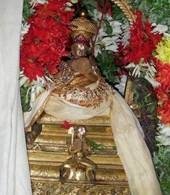
pinbhazhagiya perumAL jIyar at the lotus feet of nampiLLai, SrIrangam
vArthAmAlai contains significant concepts from our philosophy, sampradhAyam, as passed down by our pUrvAchAryas. Their upadhESams, along with their important life events, were summarised by pinbazhagarAm perumAL jIyar (nampiLLai’s very dear Sishya and the author of 6000 padi gurumparA prabhAvam). While the historical events (aithihyams) can be comprehended through reading, the in-depth analysis of our sidhdhAntham – specifically chith, achith, ISvaran which have been analysed in many vArthais and explained can be a bit difficult to grasp. A good amount of knowledge in SAsthram and fundamentals of vEdhAntham is required to understand these sections.
We are grateful to puththUr swAmy for having published this grantham and for also providing detailed explanation for these complex concepts.
The following article is a translation from SrI u vE sArathy thOthAthri swAmy’s thamizh kAlakshEpam on this vArthAmAlai grantham. We are grateful to swAmy for giving us this opportunity and his continuous help in publishing these.
vArthai refers to the upadhESam (teachings) given by AchAryas passed down through disciplic succession which have been later summarised.
There are a few important points to keep in mind. Occasionally, the same concept may be repeated across different vArthais with slightly different interpretations. This occurs because the focus of explanation may be different by different AchAryas in order to emphasise specific aspects.
vArthai 13
Summary of vArthai 13:
- ubhayavibhUthi (samsAram and paramapadham) are subservient to SrIman nArAyaNa.
- Those who reside in these vibhUthis are categorised into three groups – bhadhdhas, mukhthas and nithyas.
- bhadhdhas are further divided into two categories- mumukshus and samsAris.
- nithyas are those who have never possessed ahankAram and mamakAram
- mukthas used to possess ahankAram and mamakAram while they were in samsAram, but they no longer have them after reaching paramapadham.
- emperumAn utilises nithyas and mukthas for his sweet enjoyment.
- Among those living in samsAram, those who regret living here, emperumAn makes them subject to his mercy and those who enjoy living with ahankAram and mamakAram, he makes them subject to his leelA (divine play).
Thirteenth vArthai
ubhayavibhUthiyum ISvaranukku SEshamAy irukkum; idhil irukkumavargaL badhdharum, nithyarum, muktharum. badhdhar iraNdupadi – mumukshukkaLum, samsArigaLum. ivargaLthAn – ahankAra mamakAram kazhindhiruppArum, ‘ahankAra mamakArangaLilE agappattOm’ enRu iruppArum, ahankAra mamakArangaLodu udanpattiruppArumAy irukkum. idhil kazhindhiruppAr – nithyarum, muktharum; agappattOm enRu irruppAr – mumukshukkaL; udanpattiruppAr – nithyasamsArigaL. idhil kazhindhiruppArai emperumAn than inimaikku vishayamAkkum; ‘agappattOm’ enRu iruppAraith than irakkaththukku vishyamAkkum; udanpattiruppAraith than leelaikku vishayamAkkum – enRu mudhaliyANdAn.
Explanation:
ubhayavibhUthiyum ISvaranukku SEshamAy irukkum
ISvaran refers to emperumAn SrIman nArAyaNa. ISvaran means one who controls everyone, which is a natural attribute of controlling others. We can see many ISvarans in this world. For example, the word ‘kOtISvaran’ means one who has a crore of rupees. The person who has that money keeps it under his control and can spend it as he pleases. In this world, rudhran is usually called ISvaran. However, bhagavAn is not ISvaran like these personalities; bhagavAn is a natural controller. rudhran is called ISvaran because he has the ability to control certain things, an ability he received because emperumAn gave it to him.
For example, if someone has a crore of money, it means that due to his karma, emperumAn has shown grace, and hence he has received that wealth. Unlike this, bhagavAn SrIman nArAyaNa alone intrinsically has this quality. To such an ISvaran, ubhaya vibhUthi is SEsham. ubhaya vibhUthi means two types of wealth. nithya vibhUthi and leelA vibhUthi are the two vibhUthis. nithya vibhUthi refers to paramapadham, which never perishes. leelA vibhUthi refers to samsAram, the world where we live, which is continuously destroyed and created. Both paramapadham and samsAram are subservient to ISvaran and both exists for his happiness. SEsham means something that exists for the benefit of another person, as a servant. Similarly, everything is servant to bhagavAn and exists for his benefit. Thus, the entire ubhaya vibhUthi (paramapadham and samsAram) is subservient to bhagavAn.
idhil irukkumavargaL badhdharum, nithyarum, muktharum
ubhaya vibhUthi refers to a realm. Those who reside in these vibhUthis are categorised into three groups.
- bhadhdhas – those who are bound.
- nithyas – those who have never been bound.
- mukthas – those who were previously bound and have been liberated.
badhdhar iraNdupadi – mumukshukkaLum, samsArigaLum
Out of these, bhadhas are divided into two categories – mumukshus and samsAris. samsAris are those who live in this material world and desire to enjoy it. mumukshus are those who, while currently in samsAram, desire liberation (mOksham).
ivargaLthAn – ahankAra mamakAram kazhindhiruppArum, ‘ahankAra mamakArangaLilE agappattOm’ enRu iruppArum, ahankAra mamakArangaLodu udanpattiruppArumAy irukkumkkum.
ivargaLthAn – This refers to all the AthmAs and categorises them differently.
ahankAram – Generally, this term refers to the ego. However, its direct meaning is considering what is not oneself as the self. This means that the AthmA, instead of knowing it as AthmA, mistakenly identifies the body as the AthmA (due to its association with it).
mamakAram – This means thinking that something belongs to oneself. If the AthmA thinks that all the objects belong to him and considers himself as svathanthran (independent), this is called mamakAram. Conversely, if the AthmA realises that everything belongs to bhagavAn, then it achieves a state free from mamakAram.
ahankAra mamakAram kazhindhiruppArum – This first group includes those without ahankAram and mamakAram.
ahankAra mamakArangaLilE ‘agappattOm’ enRu iruppArum – The second group includes those who live in this samsAram, deeply regretting that they are trapped in ahankAram and mamakAram.
ahankAra mamakArangaLOdu udanpattiruppArumAy irukkumkkum – The third group consists of those who acknowledge their ahankAram and mamakAram, believe this to be their natural state, and enjoy living that way.
idhil kazhindhiruppAr – nithyarum, muktharum
Those who are entirely free from ahankAram and mamakAram are the nithyas and mukthas. nithyas are nithyasUris like ananthan (Adhi SEshan), garudan, vishvaksEnar (commander-in-chief) etc. They have never been separated from emperumAn, always living with him and performing kainkaryam. mukthas, on the other hand, previously possessed ahankAram and mamakAram while they were in samsAram. However, upon reaching paramapadham, they completely shed these traits.
agappattOm enRu irruppAr – mumukshukkaL
mumukshus are those who live in deep regret of being trapped by ahankAram and mamakAram. They recognise that they still mistakenly equate body with the AthmA. They also realise that they sometimes think that AthmA and all the things belong to themselves rather than to bhagavAn. Consequently, they live thinking with the constant yearning to be liberated from these and ultimately attain mOksham.
udanpattiruppAr – nithya samsArigaL
udanpattiruppAr refers to those who are happy possessing ahankAram and mamakAram.
nithya samsAris are those who are content believing that the body and AthmA are the same, and that all the material objects belong to the self.
The term nithya samsAri is relative. It does not mean they will reside in this material realm permanently. emperumAn gives an opportunity to everyone and continuously tries to reform them.
Since they are still in samsAram and do not yet possess the desire to leave the samsAram and achieve liberation, they are called as nithya samsAris.
Next, it is explained how emperumAn utilises these different categories of AthmAs for his divine enjoyment.
idhil kazhindhiruppArai emperumAn than inimaikku vishayamAkkum
emperumAn utilises nithyas and mukthas – who are entirely free from ahankAram and mamakAram – for his divine, sweet enjoyment. They continuously experience and enjoy emperumAn while residing in paramapadham. The experience of emperumAn itself is sweet, and they perpetually relish that sweetness. To facilitate this, emperumAn ensures they are eternally able to experience that bliss.
‘agappattOm’ enRu iruppAraith than irakkaththukku vishyamAkkum
For the mumukshus, who repeatedly regret being in this samsAram, emperumAn makes them the object of his mercy and gives them mOksham. At the end of their current life, he will accept them and ensure they are able to eternally enjoy paramapadham.
udanpattiruppAraith than leelaikku vishayamAkkum
For those who possess ahankAram and mamakAram and enjoy living with them, emperumAn makes them subject of his leelai (divine play).
leelai means that emperumAn creates, sustains, and dissolves this entire samsAram solely for his leelai. The sUthram, ‘lOkavaththu leelA kaivalyam’ from brahmasUthram, establishes that this samsAram exists purely for bhagavAn’s happiness and for his (leelA) play. kambanAtAzhwAn too mentions in kambha rAmAyaNam, “ulagam yAvaiyum thAmuLavAkkalum” (Creating all the words by this supreme will), “alagilA viLaiyAttudaiyAn” (The supreme lord has endless, limitless divine play). AzhwArs also mention in several verses that samsAram exists as emperumAn’s leelai. Ultimately, emperumAn uses them as a subject of his leelai.
enRu mudhaliyANdAn
This is mudhaliyANdAn’s vArthai.
vArthai 14
Summary of vArthai 14:
- We either become subject to bhagavAn’s unlimited bliss or subject to his leelai.
- If we live in this samsAram thinking we can be happy and continue enjoying here, then we will become subject to emperumAn’s leelai (play).
- If we regret living in this world, we will become subject to emeprumAn’s krupai (mercy).
Fourteenth vArthai
AchchAnpiLLai gOshtiyil, SrIvaishNavargaL thiraLa irundhu, ‘thanjamAy iruppadhoru vArthai aruLichcheyya vENum’ enna, aruLichcheydhapadi – ‘nAm’ leelaikku vishayamO, irakkaththukku vishayamO’ enRu viNNappam cheyya; ‘udanpattu irundhOm Agil leelaikku vishayam AgiROm; agappattOm enRu irundhOmAgil irakkaththukku vishayam AgiROm’ enRu aruLich cheydhAr.
Explanation:
These are periyavAchchAn piLLai’s words, which condense the previous statement made by mudhaliyANdAn. The two words ‘leelai’ and ‘krupai’ are further explained.
AchchAnpiLLai gOshtiyil, SrIvaishNavargaL thiraLa irundhu
In periyavAchchAnpiLLai’s gOshti, SrIvaishNavas and Sishyas were enjoying the kAlakshEpam.
‘thanjamAy iruppadhoru vArthai aruLichcheyya vENum’ enna
During that time, they requested some helpful advice. They desired to know what they could trust and live by.
aruLichcheydhapadi – ‘nAm’ leelaikku vishayamO, irakkaththukku vishayamO’ enRu viNNappam cheyya
aruLichcheydhapadi – as spoken mercifully (by periyavAchchAnpiLLai).
One of the SrIvaishNavas humbly asked him whether we are subject to emperumAn’s ‘leelai’ or emperumAn’s ‘krupai’.
‘udanpattu irundhOm Agil leelaikku vishayam AgiROm
udanpattu irundhOm Agil – means ‘while we are in agreement’.
In this samsAram, we have ahankAram and mamakAram, vishayAntharam (worldly pleasures) and dhEvathAs (other deities). There are a lot of things to enjoy. Thinking that these are very enjoyable and living in agreement with them will make us subject to bhagavAn’s leelai. That is, we become objects of play for emperumAn.
agappattOm enRu irundhOmAgil irakkaththukku vishayam AgiROm
We must repent being stuck and struggling in this samsAram, similar to how AzhwArs regretted their worldly existence. AzhwAr says in thiruviruththam pAsuram 1 “poy ninRa gyAnamum pollA ozhukkum azhukkudambum inninRa nIrmai iniyAm uRAmai” (Faulty knowledge which considers that which is not self as self (i.e. considering body as AthmA), bad conduct (activities which are not kainkaryam), deficient body (with ahankAram and mamakAram) – this nature, from now onwards, we should not attain this). AzhwAr appeals to emperumAn that he cannot live like this in this world anymore. If we, too, start thinking in a similar way, then we will become subject to emperumAn’s krupai (mercy).
It is solely due to emperumAn’s krupai that we get an opportunity to attain him. We will get the opportunity to attain emperumAn’s thiruvadi (divine feet) only when we start regretting our suffering in this world.
If we continue to live thinking that this samsAram is enjoyable, then emperumAn too will respond that we can continue to live in this world and remain an object of his leelai.
There is enjoyment for emperumAn both in nithya vibhUthi and leelA vibhUthi. From emperumAn’s perspective, everything belongs to him. Out of that wealth, he derives one type of enjoyment from samsAram and another type of enjoyment in paramapadham. In paramapadham, he experiences unlimited bliss by enjoying alongside those who are dear and close to him. nithyas and mukthas too derive that same bliss as well.
In contrast, in this worldly realm, he derives bliss by keeping those AthmAs who are not part of the nithyavibhUthi, using them for his enjoyment.
For example, when someone smiles at us, that smile cam come out of love or sarcasm. But for the person who smiles, both smiles bring enjoyment. Smiling with love gives one type of enjoyment, and smiling with sarcasm gives another. From the recipient’s viewpoint, the state is different. The state of the person who receives a loving smile is different from that of a person who receives a sarcastic smile. Similarly, emperumAn enjoying an experience in paramapdham is like having a loving smile, and enjoying this world is like having a sarcastic smile.
However, emperumAn does not have a cruel heart. He helps people in samsAram, too. Through his mercy, he helps those who do not reject him. But for those who reject his mercy, he enjoys using them as leelai.
Thus, if we continue to live enjoying the samsAram, we become subject to his leelai, and if we regret living here, we become subject to his mercy. After both ahankAram and mamakAram are gone, we become subject to his unlimited bliss.
vArthai 15
Summary of vArthai 15:
- The aspects of artha panchakam are explained in this vArthai.
- AthmA’s svasvarUpam (real nature of self) is knowledge. That knowledge means knowing we are servants (SEshathvam) of bhagavAn and dependent (pArathanthryam) on bhagavAn.
- For upAyam (means), determination is the primary aspect.
- For prApyam (goal), desire is the primary aspect.
- For virOdhi, detachment from worldly things is the main aspect.
Fifteenth vArthai
svasvarUpam gyAna pradhAnam; upAyam – vyavasAya pradhAnam; prApyam – apEkshA pradhAnam; virOdhi – aruchi pradhAnam – enRu mudhaliyANdAn aruLichcheyvar.
Explanation:
These are the merciful words of mudhaliyANdAn . In artha panchakam, svasvarUpam, para svarUpam, upAya svarUpam, virOdhi svarUpam and pala svarUpam are explained. Out of them, four aspects are explained here.
svasvarUpam means AthmA’s svarUpam. The main attribute is gyAnam (knowledge). Knowledge refers to SEshathva (servitude) and pArathanthryam (dependence).
AthmA is subservient to bhagavAn alone, this is indicated in the praNavam. This is explained in detail in mumukshuppadi. In thirumanthram, the first padham (in praNavam) contains akAram, ukAram and makAram.
makAram refers to jIvAthmA; akAram refers to paramAthmA and ukAram functions as EvakAram (that is, it implies ‘only’, jIvAthmA exists only for paramAthmA). This is the profound meaning shown in praNavam. Thus, svarUpam must indicate this true knowledge.
svasvarUpam gyAna pradhAnam means that AthmAs real nature (svarUpam) has knowledge as its main attribute.
upAyam – vyavasAya pradhAnam
vyavasAyam means determination. We must have the determination that emperumAn is the only upAyam (means). This determination is primary in upAyam. Thus, the main aspect of upAyam is firm determination that emeprumAn is the upAyam (means).
prApyam – apEkshA pradhAnam
prApyam refers to what we enjoy once it is attained. For prApyam, the most important aspect is requesting kainkaryam from emperumAn. AzhwAr says in a thiruvAimozhi 3.3.1 “ozhivil kAlam ellAm udanAy manni vazhuvilA adimai seyya vENdunAm” (We should perform all types of services without leaving anything at all times without break/rest, being together (in all places), being inseparable (in all forms) to thiruvEnkatamudaiyAn). Similarly, ANdAL also prayed (in thiruppAvai 29), “unakkE nAm AtcheyvOm” (prayer for kainkaryam, to you alone we shall be subservient). Just as they prayed, it is important for us to pray for prApyam (the ultimate goal). Other terms usually referred to as prApyam are palan, upEyam, prayOjanam.
If we don’t pray to emperumAn, he will not have the intention to give it to us. Only if we pray will he see that we have the genuine desire to perform kainkaryam, and he will grant it to us.
For example, if a child cries out of hunger, the mother feeds. If the child does not cry or express hunger, the mother may doubt whether the child is hungry or suspect indigestion. She may refrain from giving food, thinking it might cause more harm than good to a child who is not hungry.
Similarly, bhagavAn is waiting for us to ask him. When we ask, he immediately gives us kainkaryam with love.
Thus, the primary aspect in prApyam is apEkshai (desire). We must express our desire and ask for kainkaryam.
virOdhi – aruchi pradhAnam
In virOdhi, aruchi is primary. While ruchi means interest, aruchi means disinterest, specifically, disinterest in worldly matters. In this world, ahankAram and mamakAram act as virOdhi. In addition, we have avidhyA (ignorance), vAsanA (past impressions), ruchi (lingering taste in those aspects we previously enjoyed). We must develop a distaste for all of these virOdhis. Even a tiny amount of interest in any of these aspects will prevent the virOdhi from being entirely eliminated.
Therefore, aruchi (disinterest) is primary to overcoming virOdhi. Living in this world with detachment is very crucial, as it will help us get rid of these virOdhis.
enRu mudhaliyANdAn aruLichcheyvar
Thus, says mercifully, SrI mudhaliyANdAn.
vArthai 16
Summary of vArthai 16:
- emperumAn is the bhOkthA (the enjoyer) and AthmA is the bhOgyam (the object of enjoyment).
- anyathA virOdhi (incorrect understanding of the subject) is of five types. Considering AthmA and the body as same, considering other dhEvathAs as paradhEvathai, considering upAyams other than bhagavAn as means, seeking other goals as upEyam, and considering others as enemy and living in fear.
- virOdhi is of three types. svarUpa virOdhi, upAya virOdhi and upEya virOdhi.
Sixteenth vArthai
avan bhOkthA; ivan bhOgyam. vyAmOham – upAyam; ethirvizhi peRugai upEyam; avanukku midaRu pidiyAip pOruvadhu – anyathA virOdhi; anyathA virOdhi thAn anjupadi – dhEhaththai AthmAvAga budhidhi paNNugaiyum, ithara dhEvathaigaLaip parathathvamAga budhdhi paNNugaiyum, izhithOzhilgaLai upAyamAga budhdhi paNNugaiyum, avaRRAlE vishayAntharangaLai bhOgyamAga budhdhi paNNugaiyum, ninRa chEthanarai ellAm virOdhigaLAga budhdhi paNNugaiyum.
svarUpa virOdhi, upAya virOdhi, upEya virOdhi enRu munRu. dhEhAthmAbhimAnam, anyaSEshathvam, svasvAthanthryam ivai – svarUpa virOdhi; rakshakAntharam, sAdhanAntharam, SidhdhOpAyathil aviSvAsam ivai – upAya virOdhi; aiSvaryakaivalyam, svAnubhavamAna bhagavath kainkaryam ivai – upEya virOdhi. svarUpa yAthAthmya gyAnam piRavAmaiyAlE – dhAnthi piRakkiRadhillai; virOdhi yAthAthmya gyAnam piRavAmaiyAlE- achcham piRakkiRadhillai; upAya yAthAthmya gyAnam piRavAmaiyAlE – vyavasAyam piRakkiRadhillai; bhOga yAthAthmya gyAnam piRavAmaiyAlE- thvarai piRAkkiRadhillai.
Explanation:
This vArthai is also regarding artha panchakam. First anayathA virOdhi is explained; virOdhi is explained in detail.
avan bhOkthA; ivan bhOgyam
In the commentaries, whenever the word ‘avan’ is used, it refers to bhagavAn, while ‘ivan’ refers to AthmA. This is because ‘ivan’ usually refers to someone in close proximity. Therefore, when we talk about ourselves (AthmA), we use ‘ivan’, whereas ‘avan’ is used to refer to emperumAn.
emperumAn is bhOkthA (one who enjoys), and ivan (AthmA) is the bhOgyam (object of enjoyment). SAshthram (thaiththirIya upanishadh) states ‘aham annam, aham annam, aham annam, aham annAdha:’. When the AthmA reaches paramapadham, it says ‘aham annam‘, ‘I am food’. Here, food refers to consumables. Typically, the one who consumes the food is the enjoyer who derives the happiness, while the food itself does not experience happiness. But here, since AthmA is chEthanan (one who has knowledge), it is able to experience happiness. Therefore it also says, ‘aham annAdha:’ (I am enjoying). Happiness is one of the reflections of knowledge. When AthmA reaches emperumAn, it acts as food and when emperumAn enjoys the AthmA – by virtue of its consciousness – AthmA derives happiness upon knowing of emperumAn’s happiness. Consequently, AthmA too gets some happiness.
So, annam means “I am an object of enjoyment”. annAdha: means “I am enjoying it too”. The first stage is emperumAn enjoying us. Upon seeing this happiness on his divine face, AthmA derives its happiness. Thus, AthmA’s happiness is derived through emperumAn’s happiness and not on its own. Along the same lines, when a kainkaryam is performed, it is not for self-benefit, but solely for emperumAn’s pleasure.
The important point here is that emperumAn is the enjoyer, and the AthmA is the object of enjoyment.
vyAmOham – upAyam
emperumAn is the leader, swAmi, and SEshi. AthmAs are emperumAn’s wealth. The means to attain emperumAn is vyAmOham (intense desire).
Just as we have attachment towards our house, wealth etc, and take necessary actions to take care of them based on that attachment – emperumAn also has deep love towards all the AthmAs as they are his wealth. Due to this love towards the AthmAs, he continuously helps the AthmAs. This love is vyAmOham. vyAmOham means excessive love. The love for his wealth serves as upAyam. Because emperumAn views AthmAs as his wealth and feels the needs to protect them, we attain mOksham and kainkaryam. Therefore, his love is the upAyam.
ethirvizhi peRugai upEyam
upEyam – When the AthmA performs kainkaryam to emperumAn, emperumAn attains joy, which is seen as a divine smile on his divine face. Seeing that divine smile, AthmA must reciprocate. Thus, the goal of AthmA is to reciprocate the happiness emperumAn attains from our kainkaryam. AthmA must not remain like an achEthana object (lacking knowledge) when bhagavAn responds to our kainkaryam; otherwise, there won’t be any difference between AthmA and an achEthana object, like a stone. So our goal is to realise, ‘emperumAn is accepting our kainkaryam. From that kainkaryam he is deriving happiness and expressing it. The AthmA must reciprocate that happiness.” AthmA must reciprocate by feeling “adiyEn performed kainkaryam and dhEvarIr enjoyed that, so adiyEn is happy”. Only when AthmA reciprocates, there is justice to its chaithanyam (knowledge).
avanukku midaRu pidiyAip pOruvadhu – anyathA virOdhiyAyp pOruvadhu – anyathAvirOdhi
midaRu pidi is the act of squeezing someone’s throat to prevent them from swallowinf food while they are trying to eat.
anyathA mens having incorrect understanding of a subject.
anyathA virOdi refers to obstacle arising from misconceptions and miscomprehensions. That is, jIvAthmA’s misunderstanding of true knowledge becomes an obstacle that prevents emperumAn from enjoying the AthmAs.
In our sampradhAyam, everything revolves around emeprumAn and his divine enjoyment. Our existence is also solely for his enjoyment only. Both the nithyavibhUthi and leelAvibhUthi exist for his happiness; and not for our enjoyment.
anyathA virOdhi is explained in detail below.
anyathA virOdhi thAn anjupadi
anyathA virOdhi is of five types.
dhEhaththai AthmAvAga budhidhi paNNugaiyum
First is incorrect knowledge of svasvarUpam.
That is considering the body as AthmA and thinking that there is no difference between AthmA and the body. This is also called ahankAram / dhEhAthmAbhimAnam. If we get this thought, it will be an obstacle to enjoying emperumAn, and it will also be an obstacle for emperumAn. Having ahankAram causes displeasure to emperumAn, and he gets disappointed thinking that, inspite of giving him (AthmA) the knowledge, opportunities for kainkaryam, and amicable situations, the AthmA continues to think that the body and AthmA are the same and continues to live like a samsAri.
ithara dhEvathaigaLaip parathathvamAga budhdhi paNNugaiyum
The second virOdhi is considering other dhEvathAs as para thathvam. This is same as the virOdhi svarUpam explained in artha panchakam. The five types of virOdhis – for svasvarUpa virOdhi (identification body as self), parasvarUpa virOdhi (skepticism regarding supremacy of emperumAn), upAya svarUpa virOdhi (dependence on self-efforts as means), phala svarUpam (the perception of inferior objects as ultimate goal)and prApthi virOdhi – are explained in detail in artha panchakam.i
SrIman nArAyaNa is the para svarUpam. Other than him, no one else is supreme -para dhEvathai. Instead of having this knowledge, considering other dhEvathAs as para dhEvathai is virOdhi.
izhithOzhilgaLai upAyamAga budhdhi paNNugaiyum
Third is, if we consider the inferior, lesser means as upAyams, then that is a virOdhi (obstacle).
For example, SAsthram shows several paths (upAyams) such as karma yOgam, gyAna yOgam, bhakthi yOgam, dhESa vAsam (residing in a holy place), thirunAma sankIrthanam (chanting the divine names), thiruviLakku erikkai (lighting lamps), thirumAlai kattugai (making garlands), purushOthama vidhyA, etc. However, all of these upAyams create the attitude that “I performed them”. SaraNagathi (surrendering) and AchArya abhimAnam (grace of AchArya) do not depend on our own efforts. It is entirely dependent on the mercy of emperumAn and AchAryas. Other than SaraNAgathi and AchArya abhimAnam, all other upAyams are lowly upAyams because they have a tinge of attitude that says, “I performed”.
Considering them as upAyams is also a virOdhi.
avaRRAlE vishayAntharangaLai bhOgyamAga budhdhi paNNugaiyum
Fourth virOdhi – When karma yOgam is performed, the performer seeks wealth; when gyAna yOga is practiced, the practitioner seeks kaivalyam. When we rely on other upAyams and seek their respective goals, then that is also a virOdhi.
ninRa chEthanarai ellAm virOdhigaLAga budhdhi paNNugaiyum
Fifth virOdhi – There is a connection between all jIvathmAs and emperumAn. Once we surrender to emperumAn, we must not be afraid or think of everyone else as our enemy or obstacle. We must believe that emperumAn has accepted us and given us an AchAryan. With this realisation, we must perform kainkaryam to emperumAn and adiyArs, and continue towards our goal.
If we keep living in fear of other things, that itself will be virOdhi.
If we know an AchAryan, adiyAr or bhAgavathar is a uththama bhAgavatha, we can associate with them. Otherwise, the best way is to stay indifferent towards other things and samsAris.
emperumAn knows when and how to accept everyone. So, we neither disrespect nor respect other samsAris too much.
It is best to associate with those who are inclined towards bhagavath vishayam.
svarUpa virOdhi, upAya virOdhi, upEya virOdhi enRu munRu
The subject of virOdhi is further explained in a different manner.
virOdhi are of three types – svarUpa virOdhi (a wrong understanding of svasvarUpam and parasvarUpam), upAya virOdhi (a wrong understanding about the means) and upEya virOdhi (a wrong understanding of the goal).
AchAryas explain the same concept differently so we can understand and retain it.
dhEhAthmAbhimAnam, anyaSEshathvam, svasvAthanthryam ivai – svarUpa virOdhi
Here the svarUpa virOdhi is described.
dhEhAthmAbhimAnam is mistaken belief that body and AthmA are the same. In reality, the body and AthmA are different. In thathva thrayam, piLLai lOkAchAryar explains the nature of AthmA in detail. He ellaborates how AthmA is different from the physical body, the mind (manas), the senses (indhriyams), and vital air (prANan).
anyaSEshathvam – We should be a SEshan (servant) only to bhagavAn and bhAgavathas. Being a SEshan to anyone else is in contradiction to our true nature, it is svarUpa virOdhi.
svasvAthanthrayam – Considering ourselves as king and thinking that we are making all decisions and performing all actions. This is also a virOdhi.
rakshakAntharam, sAdhanAntharam, SidhdhOpAyathil aviSvAsam ivai – upAya virOdhi
Here upAya virOdhi is explained.
rakshakAntharam means considering someone else as a rakshakan (protector).
rakshakan means one who protects us, removes our obstacles, and gives us what is good for us. emperumAn alone is our rakshakan. He gives us what is good for us and removes our obstacles. Because emperumAn is our rakshakan, no one else can do the same, and we must not associate or seek protection from others.
sAdhanAntharam – sAdhanam means upAyam. Other than bhagavAn, there are other upAyams like karma yOgam, gyAna yOgam etc., which are referred to as sAdhanAntharam. However, these are not true upAyams and contrary to our svarUpam.
SidhdhOpAyathil aviSvAsam – SidhdhOpAyam refers to upAyam that already exists to help us. emperumAn is the sidhdhOpAyam who already exists.
sAdhyOpAyam means a method where the means is achieved after we have performed an action. For example, in karma yOgam, we must perform ashtAnga yOgam, control our senses, perform yAgam and yagyam. Only then can karma yOgam be achieved, otherwise, karma yOgam will not be successful.
However, emperumAn is common for everyone and he always exists for all. AzhwAr says mUnRAm thiruvandhAdhi 88 “podhu ninRa ponnangazhalE thozhumin” (He has such desirable divine feet that everyone, without any distinction, will worship them).
aviSvAsam – Lack of faith
If we lack faith in emperumAn, who is the SidhdhOpAyam, then that lack of faith is virOdhi. Once we perform SaraNAgathi (surrender), we must never doubt whether his thiruvadi (divine feet) will protect us. Instead, we must act as per our svarUpam. We must continue our practices as per our varNASramam, gather knowledge, and perform kainakryam. It is emperumAn’s responsibility to protect us, and we must always have this faith. If we don’t have that faith, then that is a virOdhi.
When we perform SaraNAgathi through an AchAryan, we acknowledge that emperumAn will protect us. Therefore, losing faith after SaraNAgathi or doubting whether emperumAn will protect us and accept us acts as a virOdhi.
However, this does not mean we can act as we wish and simply hope that emperumAn will accept us. We must perform our anushtAnams (daily rituals) because emperumAn himself states that if a person – even a vaishNava – fails to follow his instructions, then that person is his enemy. It is like walking on a tight rope. While performing these anushtAnams, we may commit offences knowingly and unknowingly. When this happens, we must seek forgiveness from emperumAn and ensure to live with absolute faith in him.
aiSvaryakaivalyam, svAnubhavamAna bhagavath kainkaryam ivai – upEya virOdhi
upEyam means enjoying the fruits of what has been achieved.
aiSvaryakaivalyam – ISvaryam is enjoyment in worldly things. That is virOdhi. Even if we are performing tasks in sath vishayam, we may get an attitude of seeking benefits like name, fame, wealth etc. Wealth alone is not considered as ISvaryam. It includes everything else like fame, etc. So we must not desire any such ISvaryam.
kaivalyam- refers to enjoying AthmA. We must not have interest in that too.
svAnubhavamAna bhagavath kainkaryam – When we perform kainkaryam, the importance must be for bhagavAn and not for us. Instead, if we seek self-importance and perform kainkaryam as per our interest, then that is a very big virOdhi. This is a very big virOdhi because it’s like climbing all the way up and falling from a great height. We must perform kainkaryam for emperumAn’s happiness.
Thus, desire for aiSvaryam, kaivalyam and performing kainkaryam for self-happiness are all upEya virOdhi. ANdAL pirAtti prays (in thiruppAvai 29) as “maRRai nam kAmangaL mARRu” (Kindly prevent our interest in other matters). ANdAL nAchchiyAr prays for enjoying emperumAn, and prays that even though she desires to enjoy emperumAn, it must not be for her happiness, but for emeprumAn’s happiness.
nammAzhwAr too says the same in thiruvAimozhi 2.9.4 “thanakkEyAga enaik koLLum IdhE” (exclusively for him/his happiness – when emperumAn accepts me, he must accept me for his happiness and not because I prayed for or because I desired it).
svarUpa yAthAthmya gyAnam piRavAmaiyAlE – dhAnthi piRakkiRadhillai
svarUpa yAthAthmya gyAnam means deep, inner knowledge of the true nature of AthmA. Here, gyAnam means knowledge, and yAthAthmya gyAnam means deeper understanding. Not knowing the svarUpam’s higher state – that AthmA is different from body and that the AthmA is subservient to bhagavAn. Lack of this knowledge (svarUpa yAthAthmya gyAnam), results in poor sense control.
dhAnthi means sense control, piRakkiRadhillai – does not arise. That is, sense control does not arise without this knowledge. Sense control is important in order to refrain from pursuing worldly distractions. The reason for lack of this sense control is due to lack of svarUpa gyAnam.
virOdhi yAthAthmya gyAnam piRavAmaiyAlE – achcham piRakkiRadhillai
samsAram is the virOdhi, only when this is understood, we develop a fear towards this samsAram. AzhwAr has sung (in thiruviruththam 1) “poy ninRa gyAnamum pollA ozhukkum azhukkudambum
inninRa nIrmai iniyAm uRAmai ” (We should be without these births which are the cause for our sorrow and which are with knowledge which is the opposite of truth (we should be without faulty knowledge), with wrongful deeds, physical forms which are full of impurity etc). Since AzhwAr had good understanding of samsAram, he developed a fear of how he will continue to live in this samsAram.
If we don’t understand the samsAram correctly, we won’t develop that fear. We will get that fear only when we realise the difficulties of this samsAram.
upAya yAthAthmya gyAnam piRavAmaiyAlE – vyavasAyam piRakkiRadhillai
emperumAn’s divine feet is our upAyam. We must have a good understanding that emperumAn’s divine feet protects everyone, including the lowly. With this understanding, we realise that we have surrendered to those great divine feet. As a result, we develop faith and live with determination.
If we lack deep knowledge of the greatness of emperumAn’s divine feet and the greatness of his mercy (karunai), we cannot develop this determination.
bhOga yAthAthmya gyAnam piRavAmaiyAlE – thvarai piRAkkiRadhillai
bhOgam means emperumAn’s sweetness. Due to lack of deep knowledge of his sweetness, a deep desire to attain him will not be developed.
thvarai is the deep desire to attain emperumAn soon.
This desire will develop only when we have the knowledge of his sweetness (inimai) and the level of his happiness (Anandham). Due to the lack of that knowledge, we won’t develop the desire (thvarai) to reach emperumAn quickly.
In the next article, we shall continue with the seventeenth vArthai.
AzhwAr emperumAnAr jIyar thiruvadigaLE SaraNam
jIyar thiruvadigaLE SaraNam
pinbazhagiya perumAL jIyar thiruvadigaLE SaraNam
Source:
- Audio – https://1drv.ms/u/s!AnOSadexHn4jhBrcBL5INcqqUh_q?e=crCG6q
- Video – https://youtu.be/LkLwsmS-w6QuzD-04
adiyEn vidhyA rAmAnuja dhAsi
archived in https://granthams.koyil.org
pramEyam (goal) – https://koyil.org
pramANam (scriptures) – https://granthams.koyil.org
pramAthA (preceptors) – http://acharyas.koyil.org
SrIvaishNava education/kids portal – http://pillai.koyil.org